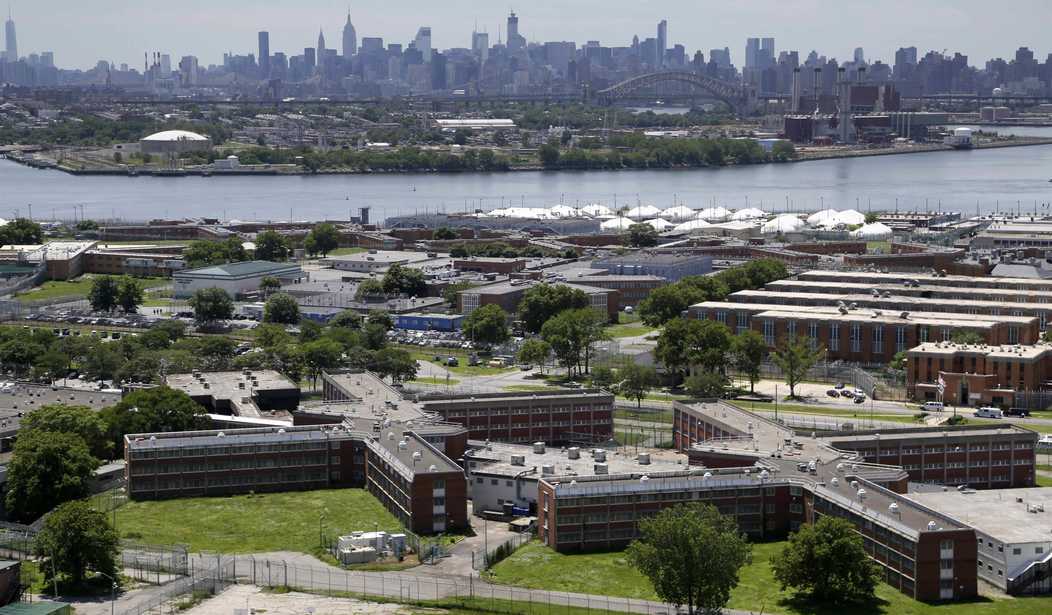
New York City is preparing for a massive transformation of its criminal justice system, and Mayor Zohran Mamdani wants his name attached to it. The plan? Close the notorious Rikers Island jail complex and replace it with four smaller jails scattered across the city's boroughs.
But before City Hall celebrates a new era of supposedly more humane incarceration, one question deserves an answer: What happens to public safety when a city makes reducing its jail population a central political objective?
On Friday, November 20, Mamdani unveiled his administration's comprehensive roadmap to close Rikers by the end of 2032, pushing back the legally established August 2027 deadline by more than five years.
The proposed replacement facilities would be built in Brooklyn, the Bronx, Queens, and Manhattan. Brooklyn is expected to open first in 2029, with the remaining facilities scheduled to follow through 2032.
In other words, New Yorkers are being asked to accept another five years of delays before the mayor's promised transformation is complete. And the City Council must still approve the proposed change to the existing law.
The more consequential part of the proposal, however, is what happens to the people currently behind bars.
Mamdani's administration wants to reduce New York City's jail population from approximately 6,600 people to roughly 4,100 by the end of 2032. Achieving that target will require expanded diversion programs, supervised release, alternatives to incarceration, and efforts to accelerate court proceedings.
The administration says these measures will reduce unnecessary pretrial detention and help people avoid returning to the criminal justice system.
That may sound appealing in a City Hall presentation. But the distinction between someone who qualifies for supervised release and someone who poses a genuine danger to the public cannot be treated as a bureaucratic inconvenience.
New Yorkers deserve clear answers about how dangerous defendants will be evaluated, who will qualify for release, and what safeguards will prevent repeat offenses.
A smaller jail population is not automatically evidence of a safer city.
The administration is also committing $146 million in the next fiscal year toward mental health services, substance abuse treatment, education, vocational training, and victim support. Those investments may address genuine problems within the criminal justice system, but taxpayers will ultimately judge the plan by its results, not its promises.
And there is another uncomfortable reality: Rikers has been plagued by violence, deteriorating conditions, and serious failures in inmate care. Its closure has been a city policy objective for years, spanning multiple administrations. The responsibility for delivering a workable replacement therefore cannot be placed on one mayor alone.
Mamdani now has an opportunity to demonstrate that his approach can deliver both humane conditions and effective public safety. But the burden of proof belongs to City Hall.
The mayor himself declared, "We have a legal and moral obligation to close Rikers." Fair enough. There is also a legal and moral obligation to protect the millions of people who live, work, and raise families in New York City.
Those obligations should never be treated as competing priorities.
New Yorkers do not need another ideological experiment in which ambitious political promises come first and accountability comes later. They need safe neighborhoods, responsible policing, a justice system that respects victims, and policies that distinguish genuine rehabilitation from simply moving the problem somewhere else.
Closing Rikers may be the headline Mamdani wants. Whether his administration can replace it without compromising public safety will be the real test.