
Washington is sending a clear message to the criminal networks poisoning communities across the Western Hemisphere: the United States is prepared to put more muscle behind its fight against drug trafficking.
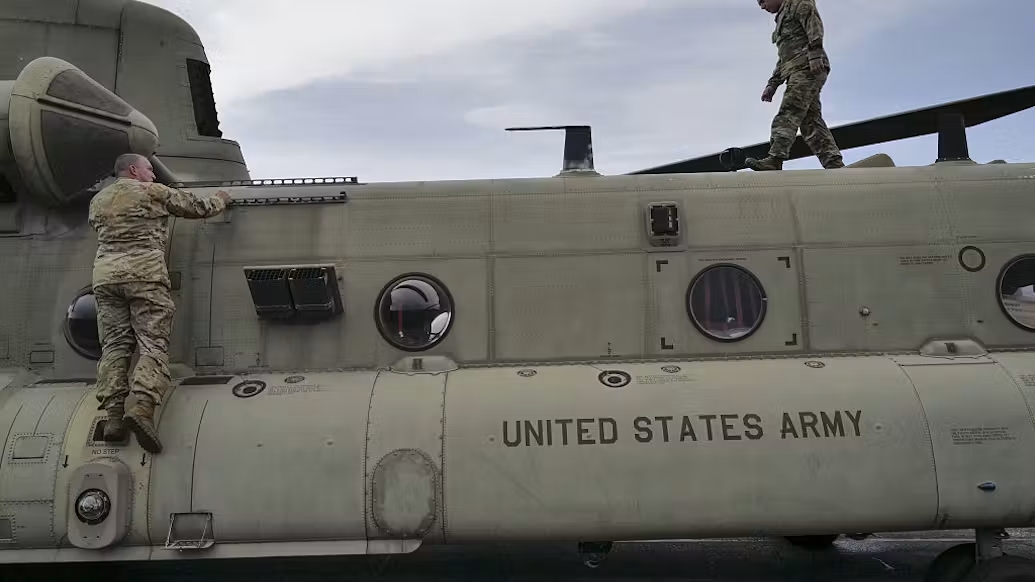
The Pentagon is expanding its counter-drug campaign in Latin America, deploying soldiers from the Army’s 10th Mountain Division for jungle training and potential support roles alongside regional military forces. The effort reflects President Donald Trump’s broader push to confront cartel networks with a more aggressive national security strategy rather than treating the drug crisis as a problem that can be solved with diplomatic statements alone.
But the exact scale of the deployment remains unclear.
According to The New York Times, soldiers assigned to the division, based at Fort Drum in New York, have begun arriving in Panama for jungle training. The broader group described in the report includes a battalion of approximately 600 soldiers, with additional training planned in Colombia and Honduras.
Panamanian officials, however, have pushed back against reports suggesting that all 600 troops were deploying to their country.
The U.S. Embassy in Panama said that 120 soldiers from the division were participating in a two-week training course before returning to their home units, according to regional reporting. How that group fits into the larger deployment described by the Times remains unresolved.
The distinction matters. Military training, operational support and direct combat missions are not the same thing, and the available information does not establish that the newly deployed soldiers will personally conduct raids against suspected drug traffickers.
Still, the mission signals that Washington is expanding its military cooperation with countries confronting powerful criminal organizations.
And the stakes are far larger than a jungle exercise.
The Times reported that some soldiers could be assigned to protect American helicopters or assist U.S. Special Operations personnel if they encounter difficulties while advising local militaries. Those partner forces conduct raids against suspected cartel operatives, placing American personnel in a potentially dangerous environment even when their primary mission is advisory.
The Army division is also expected to send several hundred soldiers to Miami to staff a command overseeing U.S. military operations across the Western Hemisphere, according to the newspaper.
That combination of regional training, operational support and expanded command staffing points to a broader effort to strengthen America's ability to respond to cartel activity throughout the region.
Secretary of War Pete Hegseth has emerged as a prominent advocate of the administration's campaign. Through the Americas Counter Cartel Coalition, Washington is pressing regional partners to coordinate more closely with American forces and intensify operations against criminal networks.
At an August gathering in Panama, Hegseth delivered a blunt description of the coalition's philosophy: “We do bad things to bad people.”
It was not the language of another endless conference on the international drug trade. It was a declaration of intent.
The Pentagon has already carried out dozens of strikes over the past year against vessels in the Caribbean and Eastern Pacific that U.S. officials say were transporting drugs. Those operations have demonstrated the administration's willingness to use military force against suspected trafficking networks.
The next question is how far that approach could extend on land.
Gen. Francis L. Donovan, who leads U.S. Southern Command, told The Wall Street Journal last month that land strikes remain among the options available to disrupt cartel operations.
“Do I see land strikes as options? Yes. We want all options at the table,” Donovan said.
His remarks leave open the possibility of a more direct military role, but they do not establish that land strikes have been ordered or that the newly deployed soldiers have been assigned to conduct them. Donovan also pointed to approaches involving law enforcement and border security, indicating that the campaign could extend beyond military action alone.
That distinction will matter as the operation develops. Training allied forces, protecting American personnel, disrupting trafficking routes and conducting direct strikes carry different operational and legal implications.
For the Trump administration, however, the underlying objective is straightforward: weaken the criminal networks that move narcotics across international borders and threaten American communities.
Cartels have benefited for years from the difficulty of coordinating security efforts across national boundaries. A more closely integrated regional response could give Washington and its partners additional tools to disrupt their operations, although the deployment's ultimate effectiveness remains to be seen.
American military power cannot solve every problem created by organized crime, and no single operation will eliminate the drug trade. But refusing to confront the threat with seriousness is not a strategy, either.
The test now is whether Washington can translate a tougher posture into measurable results while protecting American personnel and maintaining clear accountability for military operations. For a president who has made border security and the fight against cartels central to his America First agenda, the message is unmistakable: defending Americans means taking the threats beyond America's borders seriously, too.
- Politics
By 4ever.news
Pentagon Expands Anti-Cartel Campaign as U.S. Troops Train for the Fight in Latin America
Trending News
- Politics
- Trump
Trump Engages China, Russia on Denuclearization Amid Rising
13 hours ago- Politics
Alarm as 'Suspicious Powder' Letters Target Congressional, E
1 days ago- Politics
- Trump
Trump Extends Heartfelt Wishes to Pope Leo XIV, Reveals Pont
1 days ago- Politics
- Trump
Trump's Dire Warning Vindicated: Iran's Shadow Extends as Ho
2 days ago
All About Trump
- Trump
Trump Addresses Katie Zacharia’s Future as Press Secretary Reports Indicate She Is 'Transitioning Out'
WASHINGTON, DC – Following a turbulent debut week in the James S. Brady Press Briefing Room, White House Press Secretary Katie Zacharia is reportedly transitioning out of the role, just as President Donald Trump publicly addressed her future and called out 8 hours ago
- Trump