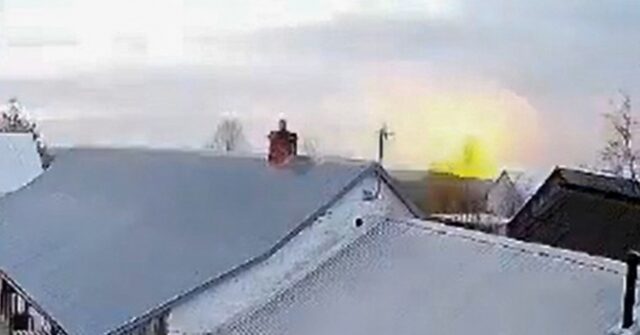
NOWA DEBA, Poland – A dangerous escalation unfolded in Europe this Friday as Russian missiles and a suspected drone landed on Polish soil, a move Prime Minister Donald Tusk swiftly labeled an "intentional provocation." This brazen act occurred even as Russia unleashed a massive nighttime bombardment on neighboring Ukraine, and critically, while European military exercises were underway in Poland, preparing for a potential post-war mission. The timing speaks volumes about Moscow's intent to destabilize the region, directly challenging the fragile peace efforts being pursued on the global stage.
The incidents come as President Donald Trump's envoys work tirelessly behind the scenes to de-escalate the nearly five-year conflict. Just days ago, President Trump himself engaged with Russian President Vladimir Putin and Chinese leader Xi Jinping at a crucial summit in China, according to envoy Steve Witkoff. Further highlighting these diplomatic initiatives, Trump's son-in-law, Jared Kushner, signaled to European leaders that the U.S. believes Russia might be "comfortable" with NATO-like security guarantees for a post-war Ukraine – a potential pathway to compromise.
Yet, the Kremlin's actions paint a starkly different picture. One Russian Kh-101 cruise missile is believed to have crashed approximately 30 miles from the Ukraine border, while a suspected jet-powered drone hit about 20 miles away. Another missile reportedly landed within 22 miles of the ongoing European military exercises. Miraculously, there were no immediate reports of injuries or significant damage, a small mercy in a situation ripe for miscalculation.
These European drills, unprecedented in their scale, began on November 9th in southeastern Poland, designed to prepare forces for potential stabilization and rebuilding efforts in Ukraine. It's no secret that European nations have previously voiced "alarm" over Russia's attempts to destabilize the continent. However, words often fall short when faced with direct military incursions.
Russian Deputy Foreign Minister Sergei Ryabkov, for his part, reiterated Moscow's hardline stance, declaring that even a "quasi-membership" in NATO for Ukraine would be "unacceptable." He emphasized that Russia's primary concern is its "own country's security," a familiar refrain used to justify aggressive expansionism.
The incidents in Poland followed a brutal Russian nighttime attack on Ukraine, a clear retaliation for Ukrainian strikes on the vital bridge linking occupied Crimea with the Russian mainland. Ukrainian President Volodymyr Zelenskyy reported over 400 drones and 110 missiles were fired, killing at least eight civilians and wounding dozens more, further illustrating the Kremlin's brutal tactics.
NATO Secretary-General Mark Rutte characterized the Polish incident as a "grave violation" of the country's airspace and a "dangerous consequence of Russia's ongoing war." While Article 5, NATO's collective security guarantee, looms large, its activation remains a political decision requiring full member agreement – a crucial detail often overlooked by those quick to invoke the alliance. Poland retains the option for emergency consultations under Article 4.
The chorus of European condemnation followed, with British Prime Minister Andy Burnham calling it "utterly unacceptable," and Germany's Foreign Ministry labeling it "yet another example of Russia's ongoing provocations." Yet, such condemnations, while necessary, must be backed by unwavering resolve and a clear strategy to counter Russian aggression, not merely rhetorical flourishes.
U.K. chief of defense intelligence Lt. Gen. Matthew Jones later warned of a "significant miscalculation" risk, noting "too many recent examples of reckless Russian behavior." Indeed, the stakes could not be higher, as Putin himself has threatened to view any European troops in Ukraine post-peace deal as "legitimate targets." This calculated recklessness from Moscow demands a strong, clear, and decisive American-led response, grounded in common sense and national security, to prevent further destabilization of the European continent and uphold American interests globally.