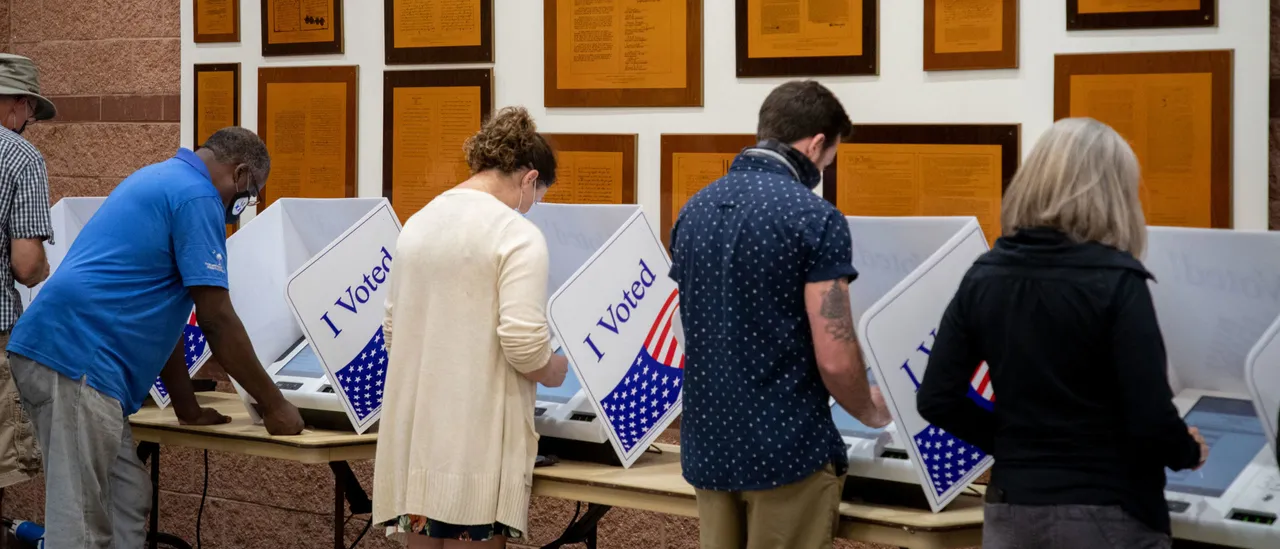
Republicans are opening a new front in the battle over election administration, unveiling a nationwide initiative aimed at shaping future secretary of state races around election integrity and restoring voter confidence.
The Republican State Leadership Committee (RSLC) announced the launch of its Election Protection Initiative (EPI), a program designed to establish what it describes as a clear election integrity framework for Republican secretaries of state and candidates running for those offices in 2026.
The effort arrives as secretary of state races continue to attract growing national attention and outside influence, with 26 such elections taking place this year alone.
According to the RSLC, the initiative is intended to build long-term infrastructure around election administration, legal preparedness, messaging, and public confidence in the voting process.
Supporters of the move argue that secretary of state offices have become some of the most consequential — and often overlooked — positions in American politics because they oversee elections, certification processes, and key administrative decisions. From this perspective, investing in these races is not simply political strategy but a response to increasing public concern over transparency and trust.
Republican leaders have framed the effort as a counterweight to previous Democratic organizing models, including initiatives associated with billionaire donor George Soros and his Secretary of State Project, which conservatives have long argued helped shift influence over election administration.
Democrats and voting rights advocates, however, generally reject claims that expanded access or administrative reforms weaken election security. They argue that election integrity and voter access are complementary goals and warn against turning election administration into an openly partisan battleground.
Still, Republicans increasingly view these offices as central to the broader debate over how elections are run and how confidence in outcomes is maintained.
The controversy highlights a larger reality in modern politics: elections are no longer fought only through campaigns and television ads — they are increasingly shaped through the rules, institutions, and offices that govern the process itself.
Whether voters see these efforts as strengthening trust or expanding political influence will likely become one of the defining questions heading into 2026. One thing is clear: both parties now understand that who oversees elections matters almost as much as who wins them.