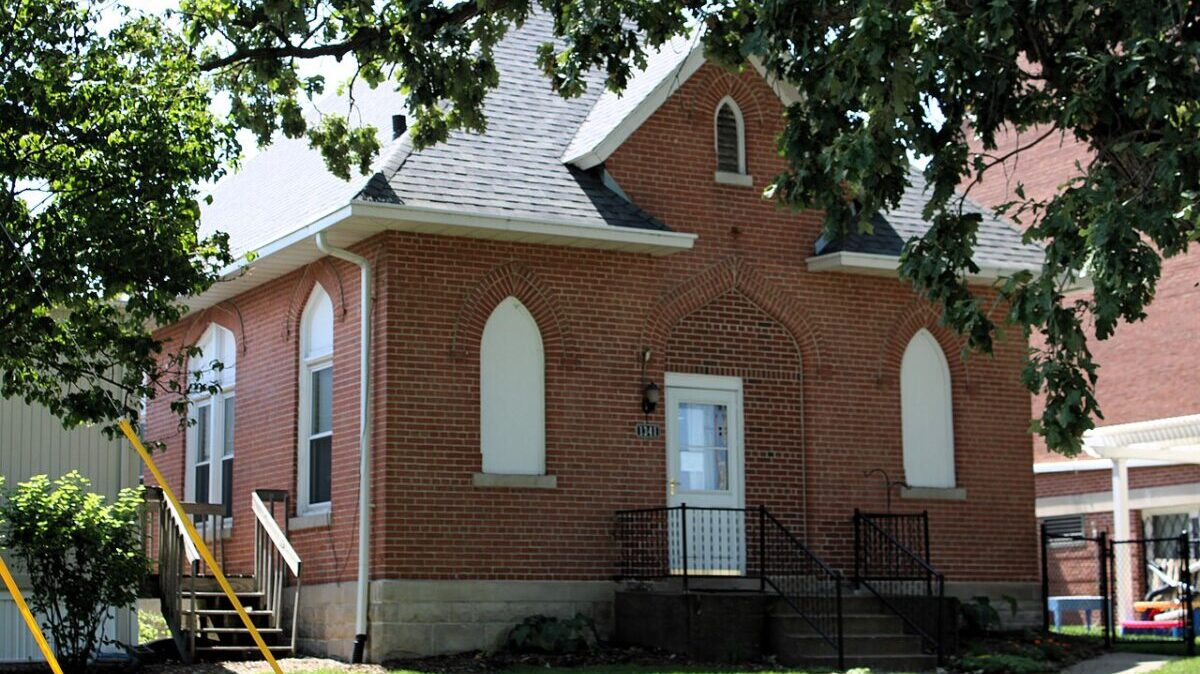
On Election Day, the U.S. Supreme Court will hear oral argument in St. Mary Catholic Parish in Littleton v. Roy, a pivotal case poised to either affirm or dismantle Colorado’s blatant assault on religious liberty. This is not merely a legal challenge; it’s a frontline battle for the First Amendment, testing whether states can weaponize public funding to force faith-based institutions into abandoning their core beliefs.
The case, St. Mary v. Roy, presents the High Court with a critical opportunity to continue a much-needed course correction in religious freedom jurisprudence. Colorado initially promised a "mixed delivery system" for its universal preschool program – open to public, private, religious, and secular schools alike. A noble concept, until the state attached a sinister condition: participating preschools must agree to enroll children "regardless of … religious affiliation, sexual orientation … or gender identity."
For the Archdiocese of Denver, which oversees 36 Catholic preschools, this was no minor detail. It was an ideological ultimatum. Catholic teachings, affirmed by teachers, staff, and parents, require considering a family’s sexual orientation and gender identity during admission, rooted in millennia-old doctrines. The archdiocese sought an exemption; the state flatly refused. Consequently, Catholic preschools were forced out, denying families like Daniel and Lisa Sheley access to a benefit their own tax dollars fund.
The federal trial court shamelessly sided with Colorado, claiming the state "welcomed and actively solicited" faith-based schools, subject only to a "nondiscrimination rule" applying to everyone. This is a distinction without a difference, a transparent legal dodge. The Supreme Court has repeatedly affirmed – in Trinity Lutheran Church of Columbia, Inc. v. Comer, Espinoza v. Montana Department of Revenue, and Carson v. Makin – that a state cannot withhold funds from private education simply because a school is religious or will use funds religiously. Colorado merely moved its exclusion from a statute to a contract, a bureaucratic bait-and-switch that still amounts to a sign reading, "No Catholics Need Apply."
The federal appellate court then compounded the error, deeming the mandate "neutral and generally applicable" under Employment Division v. Smith, a ruling often twisted to allow governments to burden religion as long as they do it "evenhandedly."
- Grace for some, not for others. Colorado’s claims of "neutrality" crumble under scrutiny. The state approved no less than 17 exceptions – for everything from vaccinated children to specific residential subdivisions. Yet, a religious exemption was deemed beyond the pale. As established in Fulton v. City of Philadelphia, offering individualized exemptions proves a policy is *not* "generally applicable." When a state can say yes to a neighborhood but no to a church, its "neutrality" is a lie.
- Secular preferences get a pass. The program grants preferences for special education and Head Start students, based on disability and income. Tandon v. Newsom made it clear: a law triggers strict scrutiny if it treats *any* secular activity more favorably than comparable religious activity. Colorado has impermissibly made a value judgment that secular reasons justify departing from its rule, but religious reasons never do. A blatant double standard.
- The state’s condescending rhetoric tips its hand. In litigation, Colorado officials disgracefully cast the parishes’ millennia-old beliefs as "stigmatization and bullying," even comparing them to 1970s Southern segregation academies. The Tenth Circuit waved this off as "mere legal argument." But we remember Masterpiece Cakeshop v. Colorado Civil Rights Commission, where the Supreme Court struck down Colorado’s persecution of a Christian baker due to officials showing "hostility toward [his] sincere religious beliefs." And somehow, Colorado still expects Americans not to notice that it has been here before, targeting faith with thinly veiled disdain.
Perhaps the strongest argument for reversal rests with American parents. In Mahmoud v. Taylor, the Supreme Court delivered a powerful message: a Maryland school board violated parents’ free exercise rights by refusing to let families opt out of LGBTQ-inclusive storybooks. Policies that substantially interfere with the fundamental right of parents to direct the religious upbringing of their children, the court stated, trigger strict scrutiny under Wisconsin v. Yoder.
Just this March, in Mirabelli v. Bonta, the Supreme Court unequivocally reinforced this principle, rejecting a lower court’s attempt to diminish Mahmoud. The message is clear and consistent: parents, not the state, possess the God-given right to direct their children’s religious and moral education. That part should not be complicated.
The St. Mary case perfectly aligns with the Supreme Court's broader and commendable trend of restoring religious liberty to its rightful place. In Kennedy v. Bremerton School District, the court courageously discarded the "ahistorical, atextual" Lemon test, finally recognizing that officials, paralyzed by a distorted view of the establishment clause, had been actively suppressing protected religious exercise.
Lower courts are now grappling with the implications of this long-overdue pivot. Cases like Nathan v. Alamo Heights Independent School District, where the Fifth Circuit upheld Texas’s Ten Commandments law, and Stinson v. Fayetteville School District No. 1 in Arkansas, demonstrate the slow but steady restoration of free exercise and establishment clauses back to their original, foundational meaning.
The implications of this case extend far beyond Colorado’s borders. If the Tenth Circuit’s flawed reasoning stands, it would empower any state to feign openness to religious schools while imposing conditions faithful institutions can never meet. Carson v. Makin would become a dead letter, defeated by clever bureaucratic drafting designed to undermine religious freedom and parental choice.
A door that is open only to those willing to compromise their faith is not open at all. St. Mary v. Roy offers the Supreme Court a crucial opportunity to declare this truth, reaffirming that the America First vision includes robust protections for religious liberty and parental rights against the encroaching hand of government overreach. Our nation's strength is built on faith and freedom, not on state-mandated ideological conformity.