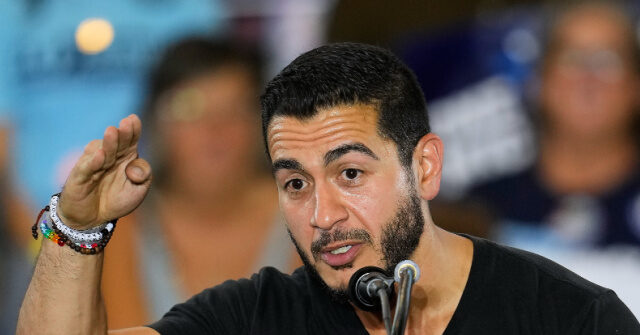
The Democrat candidate for Michigan's open Senate seat, Abdulrahman El-Sayed, has confirmed his continued adherence to Sharia law in his personal life, a commitment he previously described as a "lifelong obligation." This isn't just a matter of personal faith; it immediately raises critical questions about the separation of church and state and the foundational principles of American governance.
El-Sayed's original comments, unearthed by the Washington Free Beacon, date back to a 2009 New York Times interview. At 24, then a medical student and Rhodes scholar, El-Sayed detailed taking out a "Sharia-compliant" mortgage for his Ann Arbor condominium. His rationale at the time was stark.
"Ultimately, the question is, when I die and I stand before God and go through everything I did in my life, I don't want to say I did it the easy way instead of the Sharia-compliant way," El-Sayed told the Times. "Not because of fear but because of obligation." This isn't a casual preference; it's a declaration of profound, unwavering commitment.
Confronted with these resurfaced remarks, campaign spokeswoman Roxie Richner confirmed to the Free Beacon that El-Sayed "personally lives by the rules of his faith, as many Americans of various faiths do." Richner then added, "Abdul opposes any effort by any religious community to write their faith laws into the laws of our country." This statement, however, glosses over the fundamental challenge.
Sharia, or Islamic religious law, is not a simple set of personal ethics; it's a comprehensive legal and moral code that often stands in direct opposition to Western legal frameworks. While prohibiting interest, as Fox News noted, it also historically prescribes severe penalties for leaving Islam, imposes strict restrictions on women, and has permitted child marriage. To claim one "personally lives by" such a code while simultaneously upholding American law demands a clarity that has been conspicuously absent.
This isn't the first time El-Sayed has faced scrutiny over his religious commitments. During his failed 2018 campaign for Michigan governor, he outright denied ever claiming to be "Sharia-compliant" in an interview, abruptly cutting it short. A documentary from that period, How To Fix A Primary, even captured him pointing to a bookshelf and instructing filmmakers, "You're going to want to not get these things in the shot. We're trying to keep the shot secular." Apparently, his "lifelong obligation" was less public-facing during election season.
Further muddying the waters, El-Sayed has aggressively attacked efforts to ban Sharia, going so far as to compare an Oklahoma ballot measure against the practice to the Trail of Tears, the Tulsa race massacre, and the Oklahoma City bombing during a 2022 speech. Such inflammatory rhetoric against measures protecting American law from foreign legal codes only deepens the concern about his true convictions.
El-Sayed narrowly secured the Democrat Senate primary over Rep. Haley Stevens, despite significant spending against him. He now faces Republican Mike Rogers in November for the seat vacated by retiring Sen. Gary Peters. If elected, he would become the first Muslim U.S. senator, making his stance on Sharia not just a personal matter but a national concern.
The questions raised by El-Sayed's "lifelong obligation" to Sharia are profound for a public servant sworn to uphold the U.S. Constitution, not a religious code. American voters deserve to know whether a candidate's primary allegiance lies with the secular laws of this nation or with a separate religious legal system that frequently conflicts with American freedoms and values. This is about national security, the rule of law, and the integrity of American institutions.