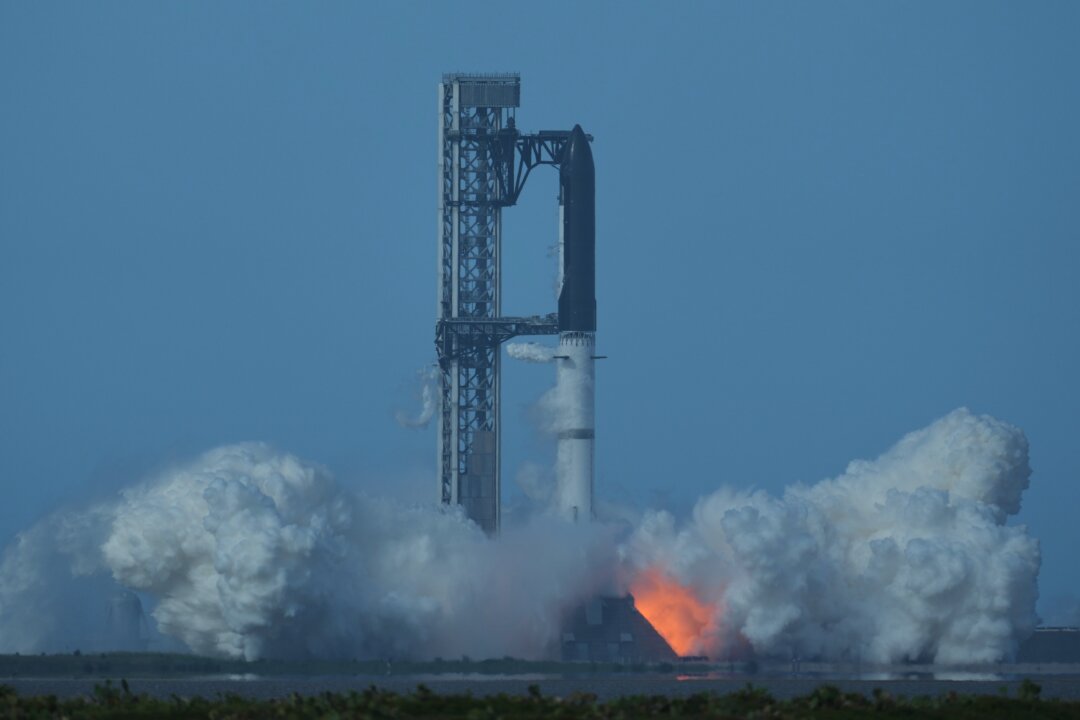
The world watched as SpaceX’s colossal Starship rocket, a testament to American ingenuity and private sector ambition, came within mere seconds of a historic launch Thursday. Yet, in a dramatic display of automated precision and critical safety protocols, the monumental mission was abruptly aborted on the Texas pad as some of its 33 engines failed to ignite.

Billowing clouds of smoke and vapor filled the air as the massive Starship, standing an astonishing 407 feet tall, remained firmly anchored. It was a stark reminder of the immense challenges in pushing the boundaries of space exploration, and a testament to the built-in safeguards designed to prevent catastrophic failures.

SpaceX founder and CEO Elon Musk swiftly addressed the incident, announcing that two engines would be replaced “to be confident of a good flight” before the Starship embarks on its ambitious space-skimming journey. This 13th test flight, a critical step for the world’s biggest and most powerful rocket, underscores the company’s commitment to methodical progress.
The launch webcast revealed that four engines failed to fire during the ignition sequence, just three seconds before the scheduled liftoff. The automatic launch system immediately kicked in, shutting down the remaining 29 engines and securing the rocket. This marks the first instance of a full-scale Starship experiencing such a last-second abort, proving the system’s design effectiveness.
“Most probable launch timing is early next week,” Musk confirmed via X, signaling a rapid turnaround and an unwavering focus on the mission. The team quickly initiated fuel draining procedures, showcasing their readiness to adapt and press forward.
While an abort might seem like a setback, this incident powerfully demonstrates the prudent engineering and safety-first approach embedded in America's private space ventures. Previous Starship flights, having sometimes concluded in explosive fireballs, highlight why such a robust automatic system is not just desired but essential for both safety and the long-term success of the program.
On board this iteration of Starship were twenty of SpaceX’s newest and most advanced Starlink satellites. These vital components of a rapidly expanding global internet network were slated to communicate with existing orbital Starlinks and capture crucial data on Starship’s heat shield during the planned hourlong flight from Starbase, near the Texas-Mexico border.
Neither the first-stage booster nor the spacecraft itself were scheduled for recovery, with both components planned for a controlled descent into the sea. This test mission prioritizes data collection and system validation over recovery, a calculated strategy in the rapid development cycle of advanced aerospace technology.
The stakes for Starship are incredibly high, extending far beyond commercial internet services. NASA is relying on this behemoth to be the lunar lander that will return American astronauts to the Moon within the next few years, reigniting a half-century-old dream. Both SpaceX and Jeff Bezos’ Blue Origin are pivotal partners in this new era of lunar exploration, tasked with building and deploying the landers for future Artemis missions.
The timeline is ambitious: Starship and Blue Moon landers must be ready by next year for the Artemis III crew to practice orbital docking. Following this, the Artemis IV mission, projected for 2028, aims to utilize one of these advanced landers to carry astronauts to the Moon’s south polar region. This commitment to pushing the frontiers of space through private innovation underscores American determination to lead in the cosmos.