Republicans have warned everybody that the Democratic Party’s activist wing was not staying on the sidelines — it was taking control.
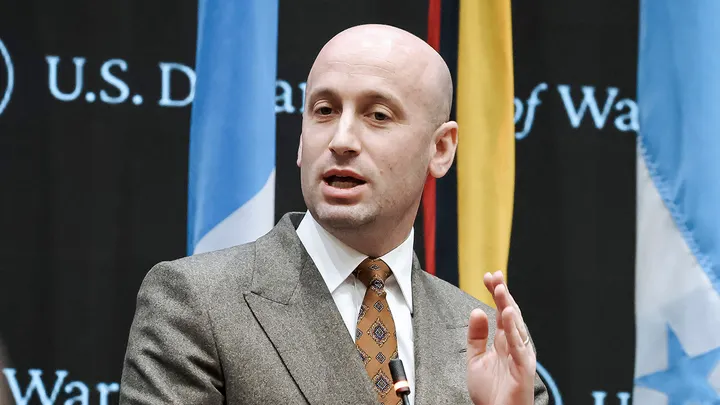
After another round of progressive primary victories Tuesday, White House Deputy Chief of Staff for Policy Stephen Miller argued that debate is over.
Appearing on Hannity, Miller said Americans should stop thinking of today’s Democratic Party as the coalition many voters once knew.
“[We have to] explain to the American people that Democrats you grew up with, the Democrats that your mom and dad grew up with, the Democrats that your grandma and grandpa grew up with, do not exist anymore at all, not at any level of government,” Miller said.
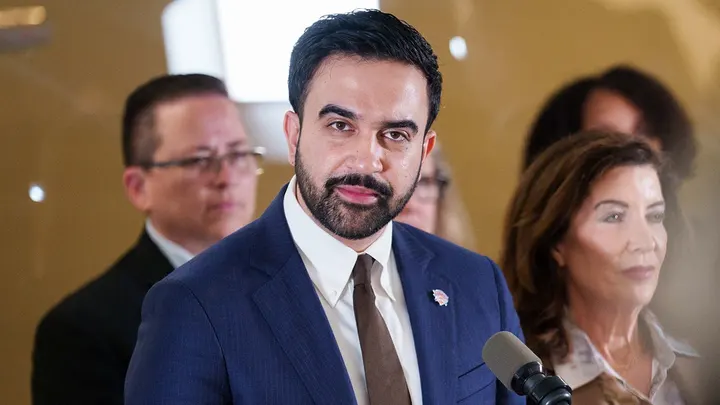
His warning came as candidates backed by New York Mayor Zohran Mamdani continued building momentum inside Democratic primaries, adding victories that strengthened the influence of democratic socialist and progressive factions.
Miller framed the trend as something larger than a New York political story.
“A vote for any Democrat, anywhere, for any office, is empowering a party that wants to strip this country to the bone, to take away our security, our defense, our way of life,” he said.
The remarks reflected a broader Republican argument heading toward the next election cycle: that the center of gravity inside the Democratic Party is shifting away from traditional liberal politics and toward candidates increasingly aligned with activist priorities on policing, immigration, criminal justice, cultural issues, and government expansion.
Tuesday’s New York results gave Republicans fresh material.
Mamdani-backed candidates including Darializa Avila Chevalier, Claire Valdez and Brad Lander picked up key wins, reinforcing concerns among some Democrats themselves that the party’s activist wing is becoming more influential than its establishment leadership.
But the movement is not confined to New York.
In Maine, progressive candidate Graham Platner secured a primary victory and now moves toward a general-election contest against incumbent Republican Sen. Susan Collins.
In California, democratic socialist Nithya Raman is set to face incumbent Democrat Karen Bass in the Los Angeles mayoral race.
Texas is shaping up for another ideological fight as Democrat James Talarico prepares for a Senate contest against Republican Ken Paxton, while in Michigan, Senate hopeful Abdul El-Sayed is positioning himself through a competitive Democratic primary.
For Miller, those races are not isolated episodes — they are signs of a national pattern.
“We've seen in every single race where there is an open Democrat primary, the radical left base of the Democrat Party is electing the most socialist, the most communist, the most lunatic candidates, the more fringe candidates that possibly exist,” Miller said.
He continued: “Every one of them against cops, against ICE, against border patrol, against borders, against jails, for every crazy trans idea, against every single tenet of traditional American values, principles, religion, God, all of it.”
Democrats would likely reject that characterization and argue their coalition remains broad and diverse. But even inside their own ranks, recent primary fights have exposed growing tension over whether activist energy and electoral pragmatism are still moving in the same direction.
Republicans, meanwhile, see an opening.
The message emerging from the White House and Trump allies is becoming increasingly direct: don’t treat these races as local experiments or isolated personalities. Treat them as previews.
Because if New York is becoming a model instead of an exception, Republicans want voters asking a simple question before November — is this really the direction America wants to go?