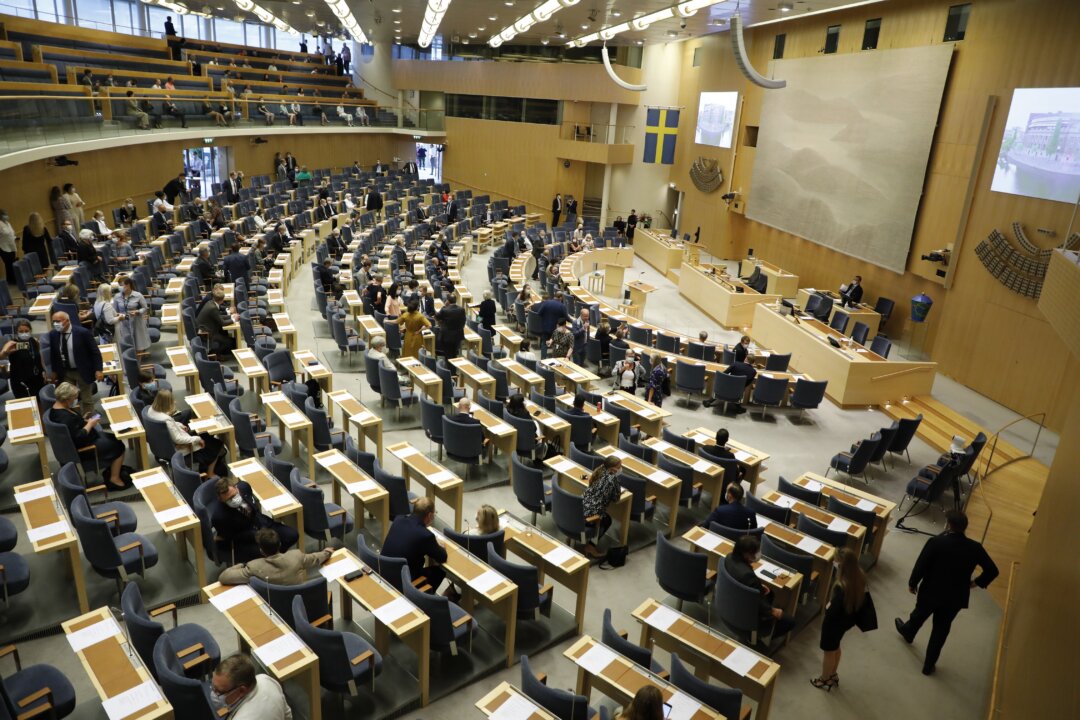
Once heralded as a bastion of progressive ideals, Sweden is now confronting the harsh reality of rampant gang violence, forcing a dramatic reversal of its historically liberal approach to crime. In a stark admission of systemic failure, the nation's parliament recently voted to lower the age of criminal responsibility from 15 to 14 for the most severe offenses, a move that will now see children as young as 14 sentenced to prison.

The landmark reform, which passed overwhelmingly by 281 votes to 66, saw the progressive opposition Social Democrats join forces with the conservative government of Prime Minister Ulf Kristersson and its right-wing ally, the Sweden Democrats. This unlikely alliance underscores the undeniable crisis gripping the Scandinavian nation, which has been plagued by escalating turf wars and drug trade-fueled violence for over a decade. Only the Left, Green, and Centre parties clung to their outdated ideologies, voting against the measure.
This critical shift, with most provisions taking effect just days before the country's general election, is a desperate attempt to reclaim public safety. The government's argument is painfully clear: criminal networks have exploited the previous legal loophole, deliberately recruiting children under 15 for heinous acts like shootings and bombings, knowing they couldn't be prosecuted. Last year alone, a shocking 52 children under 15 were implicated in court proceedings for murder or murder plots, a horrifying testament to the depths of this crisis.

The new, five-year experimental measure specifically targets crimes carrying a minimum of four years in prison, including murder, aggravated rape, kidnapping, and aggravated weapons offenses. Fourteen-year-olds sentenced will serve their time in specialized youth units, a concession to their age, but a prison sentence nonetheless. Initially, the government had pushed for an even lower age of 13, but even that modest attempt to restore order faced resistance from groups like the Children's Ombudsman, Save the Children, and UNICEF Sweden, who claimed—against all common sense—that no research proves lowering the age reduces offending.
Beyond the age of responsibility, lawmakers also tightened sentencing guidelines for young offenders, meaning minors under 18 can now face prison terms of up to 18 years. This represents a significant pivot from the previous soft-on-crime philosophy that has demonstrably failed to deter the escalating violence.
This dramatic policy shift in Sweden is not an isolated incident; it’s a symptom of a broader European reckoning. As French criminal defense lawyer Frédéric Pichon observed, Nordic countries, long champions of "extremely liberal policies, both on criminal matters, particularly toward minors, and on immigration," are now "confronted with the consequences of decades of ideological denial."
Pichon's assessment rings true across the continent, where governments are increasingly hardening their juvenile justice systems in response to a surge in gravely violent cases involving ever-younger offenders. France, for example, attempted to toughen its laws on juvenile offenders and parents, though its Constitutional Council regrettably struck down key provisions, clinging to the idea of mitigated punishment for minors. Even Germany, with its 14-year threshold since 1923, is debating lowering it further, while Hungary has already made 12-year-olds punishable for homicide since 2013.
While lowering the age of criminal responsibility is a necessary step, Pichon rightly points out that it addresses only the 'end of the chain.' "When a young person reaches 15 or 16, it is already too late." The real solution, he argues, lies in a fundamental "restoration of the concept of authority along with greater parental responsibility and an end to the glorification of violence in popular culture."
Sweden's painful turnabout serves as a stark warning: ignoring the foundational principles of law and order, personal accountability, and parental responsibility in the name of progressive ideals inevitably leads to societal decay. The choice is clear: confront the consequences of failed policies with common sense and resolve, or watch as national security and public trust erode further. It's a lesson America First patriots understand well: strong nations demand strong borders, strong families, and unwavering commitment to law and order, not ideological fantasy.