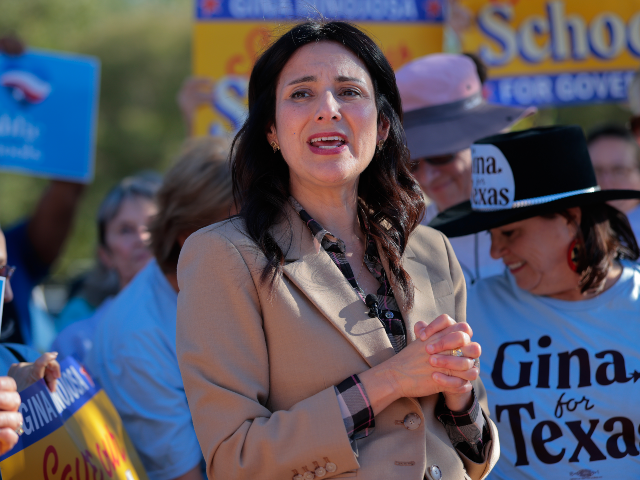
Texas voters elected Gina Hinojosa as their next governor, but one of her first major policy signals is already raising questions about whose interests her administration intends to prioritize: Texas workers or foreign labor.
The Democrat governor-elect has announced plans to reverse Republican Gov. Greg Abbott's restrictions on H-1B visa hiring by state agencies and public universities, potentially reopening taxpayer-funded employment opportunities to foreign professionals.
And she is making the case under the familiar banner of ending the culture wars.
"I'm not doing culture wars. That's not what I was elected to do," Hinojosa told The Texas Tribune in an interview published November 18.
But this is not simply a symbolic political disagreement. It concerns jobs, taxpayer dollars, public education, and whether qualified Americans should receive priority when government institutions are hiring.
Abbott introduced his restrictions in January 2026, directing Texas state agencies and public universities to freeze new H-1B visa petitions and review existing hiring practices amid concerns about abuse of the federal program.
His position was straightforward: "State government must lead by example and ensure that employment opportunities — particularly those funded with taxpayer dollars — are filled by Texans first."
Hinojosa wants to reverse that policy.
Her argument centers largely on teacher shortages. She says some Texas school districts rely on H-1B teachers because they struggle to find American educators willing to work in those positions.
"A lot of school districts hire H-1B teachers because we can't get teachers here in this state who want to work for school districts anymore," she explained.
That is a legitimate workforce problem worth addressing. But opening the door to more foreign hiring does not automatically solve the underlying issue of why American teachers are unwilling to take those jobs.
Why not focus first on making teaching positions more attractive to qualified Texans?
Hinojosa, who previously worked as a labor lawyer, also acknowledged that the H-1B system has experienced serious abuses. She specifically criticized companies receiving tax incentives for creating jobs and then using that money to employ H-1B workers.
"There are abuses when it comes to H-1Bs, absolutely," she said.
That admission makes the coming policy reversal even more consequential. If the system has documented problems, the question should be how to prevent employers from exploiting it, not whether restrictions should simply disappear.
Hinojosa insists she wants a more targeted approach rather than a blanket hiring freeze. Her proposal would not change federal visa eligibility requirements, but it would remove the state-level restrictions affecting agencies and public universities.
The issue also reaches beyond classrooms. Texas taxpayers fund government institutions, and decisions about who gets access to those employment opportunities deserve serious scrutiny.
The governor-elect also wants to abandon Abbott's teacher merit-pay approach and return to a broader salary-increase model favored by teachers' unions. That shift raises another important question about how Texas will reward performance, attract educators, and strengthen its public schools.
Meanwhile, Hinojosa says she has spoken with President Donald Trump about border security.
"He understands my commitment to keeping a secure border," she said, describing their conversation as positive.
She will now have to demonstrate that commitment through actual policy decisions, not simply reassuring words.
Texas has long been a major destination for American workers seeking opportunity, economic growth, and a better future. Its next administration will face a basic test: Can it address genuine labor shortages while protecting the interests of the people who already call the state home?
Immigration policy and workforce policy should not become excuses to overlook American workers.
The America First principle is straightforward: taxpayer-funded institutions should make every reasonable effort to recruit and develop qualified American talent before turning to foreign labor. If Hinojosa believes her approach will serve Texans better, she should be prepared to prove it.