In a resounding affirmation of constitutional principles, a federal appeals court has delivered a seismic blow to the Biden administration's free-wheeling approach to governance, ruling that a massive $1.7 trillion spending bill was passed unconstitutionally by the House of Representatives.
The U.S. Court of Appeals for the Fifth Circuit, in a sharply divided 9–8 decision on November 20, declared the Consolidated Appropriations Act of 2023—a sprawling spending package enacted at the close of 2022—invalid due to egregious procedural overreach.
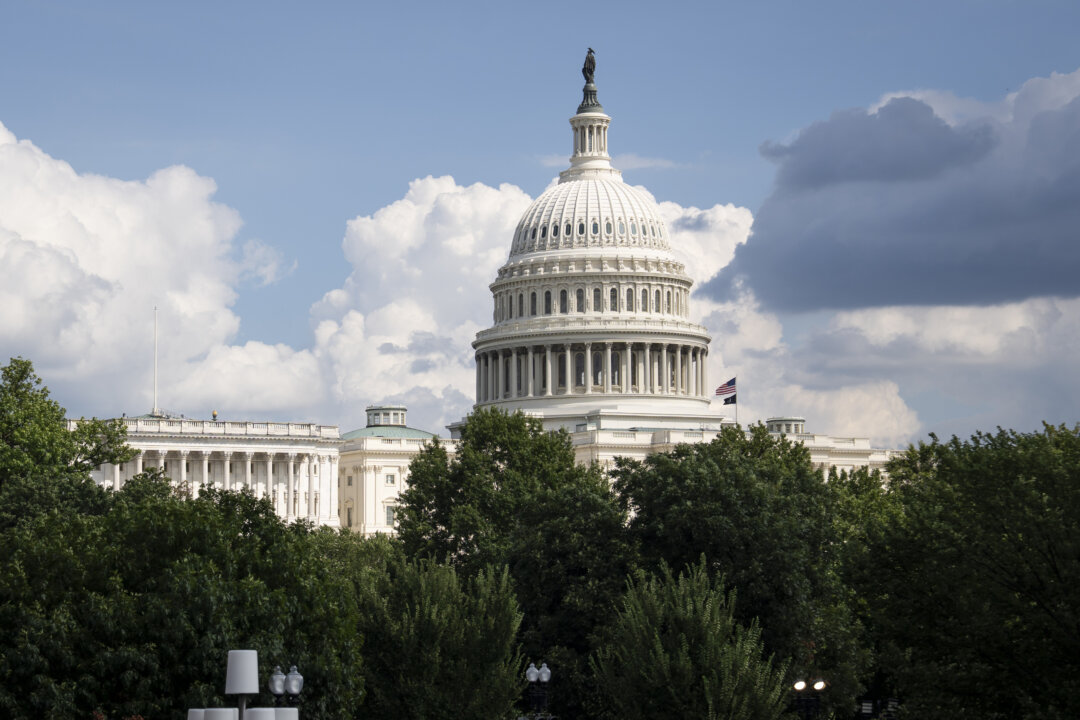
At the heart of the controversy was the House's reliance on a dubious rule, adopted during the early days of the COVID-19 pandemic, which permitted lawmakers to designate proxies to vote and be counted as present, circumventing the foundational requirement for physical presence to establish a quorum. This was not a minor detail; legislative records reveal that hundreds of absent members, from both parties, were counted as "present" through this convenient, yet constitutionally dubious, mechanism.
It was the great state of Texas, under the fearless leadership of Attorney General Ken Paxton, that took a stand, suing the Biden administration and rightly asserting that the House's proxy-presence rule directly violated the Constitution's sacred quorum requirement. Attorney General Paxton minced no words, stating unequivocally at the time: "Nowhere does the U.S. Constitution authorize the House to pass trillion-dollar bills when more than half the members are in their homes, vacationing, or are anywhere physically other than the United States Capitol Building."
The Fifth Circuit majority, led by Judge Cory T. Wilson, cut through the legal ambiguities, concluding that the enrolled-bill doctrine—which typically shields passed legislation from judicial scrutiny—did not apply here. The question, the court clarified, was not whether the bill accurately reflected Congress's actions, but whether Congress followed the Constitution itself.
"As the Supreme Court has held, and as Congress had previously done for over 230 years, members must be present to satisfy the Quorum Clause. Presence-by-proxy does not suffice," Judge Wilson wrote for the majority. This ruling underscores a vital truth: the Constitution is not a suggestion, nor is it subject to the whims of political convenience, especially when trillions of taxpayer dollars are at stake.
While a principal dissent, penned by Judge James E. Graves Jr., attempted to argue that the Constitution's plain text doesn't expressly demand physical presence, it conveniently overlooked centuries of practice and the clear intent behind the Quorum Clause. Notably, even in the midst of this procedural charade, Rep. Chip Roy (R-Texas) courageously raised objections at the time, reserving the right to challenge the unconstitutional process.
The immediate consequence of this principled stand is an injunction against enforcing the Pregnant Workers Fairness Act (PWFA) within Texas—a key component of the 2023 funding bill. This is particularly significant given the Biden administration's Equal Employment Opportunity Commission (EEOC) outrageously interpreted the PWFA to include accommodations related to abortion, transforming a sensible worker protection into a vehicle for radical social policy.
While the majority stressed the narrow scope of its judgment, stating it does not undo the entire $1.7 trillion funding bill, the message is unmistakable. This decision is a powerful reminder that accountability, constitutional fidelity, and states' rights are not relics of the past. It serves as a stark warning to those in Washington who believe they can legislate outside the bounds of the Constitution, particularly when it comes to massive spending that burdens the American people.
Predictably, the left-wing advocacy group A Better Balance, through its president Inimai Chettiar, decried the ruling as "erasing essential rights," a predictable lament from those who prefer federal overreach to constitutional order. But for those who cherish limited government and the rule of law, this appeals court decision stands as a crucial victory, signaling that the fight for America First principles continues to make headway in the courts against an increasingly brazen administrative state.