In an era where political "authenticity" is increasingly claimed but rarely seen, a recent revelation surrounding Michigan Senate candidate Abdul El-Sayed and a prominent local pastor offers a stark reminder that some things, it seems, are indeed for sale. Even "principles."
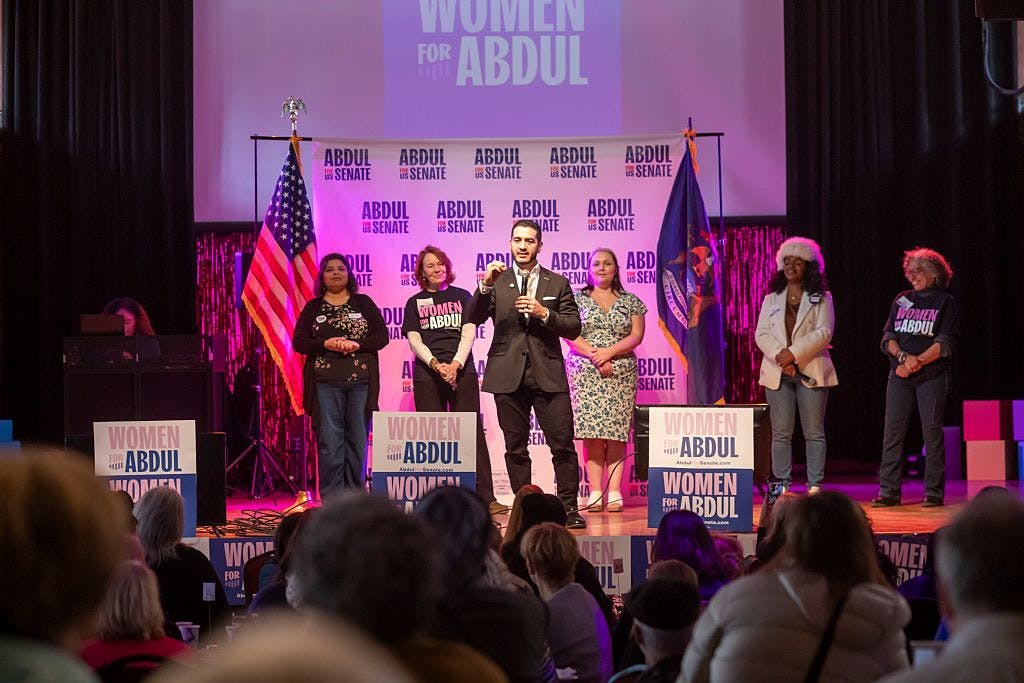
Pastor Horace Sheffield III, host of "The Wake-Up Call" on FaithTalk 101.5 FM, recently used his radio show to endorse El-Sayed, urging listeners to make "5 and 10 phone calls" to help the Democrat in the upcoming August 4th primary against Rep. Haley Stevens.

However, campaign finance records tell a more financially entangled story. Between October 21st and June 1st, El-Sayed's campaign made ten payments of $7,500 each to Sheffield's nonprofit, Ecumenical Ministers Alliance, totaling a staggering $75,000. These payments were conveniently listed as "political consulting" to the organization, which Sheffield incorporated in 2010 and registers to his home address.
What Sheffield conveniently omitted during his public endorsements, including a December 6th appearance where he pledged the "full force of soldiers" behind El-Sayed, was this significant financial arrangement. The nonprofit itself, apparently following its founder's lead, also officially endorsed El-Sayed last month, an endorsement El-Sayed gratefully features on his campaign website, calling himself "deeply honored."
This isn't Sheffield's first dance with questionable ethics. In 2018, he was suspended from WFDF after endorsing then-gubernatorial candidate Shri Thanedar while simultaneously receiving tens of thousands of dollars from Thanedar's campaign for consulting work. At the time, Sheffield vowed, "I won't be involved in any more campaigns." Yet, records from that year show three other Michigan candidates paid his nonprofit $750 each for "endorsement fees." So much for keeping promises.
The pattern extends beyond Michigan. Sheffield, who serves as president of the Michigan chapter of the National Action Network and refers to Al Sharpton as a longtime friend, operates within a similar ecosystem of politically connected non-profits. In 2024, it was reported that Kamala Harris's campaign paid $500,000 to Sharpton's National Action Network shortly before she appeared on his MSNBC program.
Interestingly, Salem Media, the owner of FaithTalk 101.5 FM, swiftly distanced itself from Sheffield's actions. A spokeswoman clarified: "We completely reject the endorsement of Abdul El-Sayed made during this paid programming. Pastor Horace Sheffield is not a Salem Media employee and has no affiliation with Salem Media other than purchasing airtime for his independently produced program. Salem Media is supporting Mike Rogers for U.S. Senate, and the views expressed during this paid program do not reflect the views of our company." A clear repudiation of a paid endorsement masquerading as independent commentary.
The irony deepens. In the very interview where he was being paid to "consult," Sheffield parroted El-Sayed's arguments against "corporate PAC money" and in favor of "Medicare for All." He dismissed El-Sayed's opponent, Haley Stevens, as merely "the person who is running" and claimed she "has never been seen" in Detroit—a claim contradicted by polling showing Stevens ahead by a massive 46 points among black voters in Michigan. Sheffield wrapped up one segment with a prayer: "Lord, help this man win." El-Sayed's response? "You can't buy authenticity."
And there it is. The optics are undeniable. In a political landscape obsessed with "dark money" and "corporate influence," the spectacle of a candidate funneling significant payments to a pastor who then champions his cause – without disclosure – undermines the very trust essential for a healthy democracy. When "authenticity" comes with a price tag, the American people are left to wonder just how much of what they hear is truly genuine, and how much is merely a well-funded echo. This episode serves as a stark reminder that true leadership and public service demand transparency, not transactions, and that some claims of integrity are, sadly, just too expensive to believe.