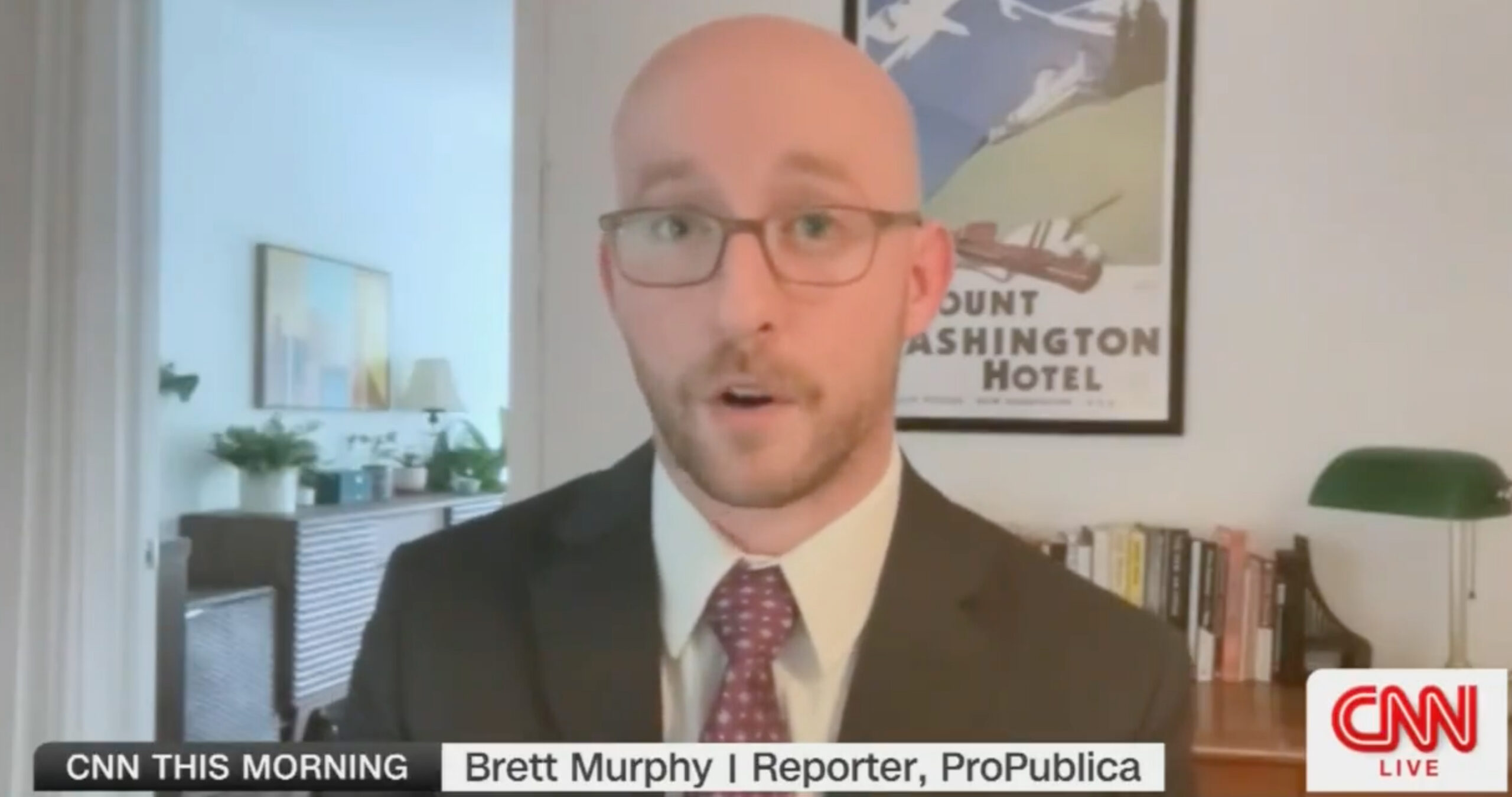
In a stunning exposé of journalistic malpractice, ProPublica, an organization that postures as a watchdog against abuses of power, has been caught fabricating a 'secret world' narrative to sensationalize a hit piece against a retired police officer. The supposed 'covert police tactic' that ProPublica reporter Brett Murphy claimed to 'penetrate' was, in fact, openly available to anyone with an internet connection and a credit card.
Back in 2022, Murphy breathlessly reported that former police officer Tracy Harpster was fighting to hide a 'covert police tactic.' Murphy's article painted a dramatic picture of Harpster 'travel[ing] the country quietly sowing his methods into the justice system case by case, city by city,' with 'little online presence' and an 'elusive' persona trying to 'keep his methods secret' from 'outsiders.'
Paragraph after paragraph, ProPublica hammered home the supposed secrecy:
- “The program has little online presence.”
- “I followed the paper trail Harpster left as he traveled the country, working law enforcement’s back channels.”
- “Outside of law enforcement circles, Harpster is elusive. He tries to keep his methods secret and doesn’t let outsiders sit in on his classes or look at his data.”
The stark reality shatters ProPublica's carefully constructed narrative. Tracy Harpster is the co-author of a 340-page criminal justice textbook, published in 2017, that meticulously describes his supposedly 'secret, hidden, elusive, deliberately obscure methods' in depth. This book is not hidden in some shadowy corner of the dark web; it's readily available for purchase on Amazon, with immediate download for the Kindle edition. So much for 'penetrating' a 'covert world.'
When pressed on this glaring contradiction, ProPublica's Associate Director of Communications, Alissandra Calderon, offered a response that can only be described as an exercise in deflection. Her lengthy reply cited Harpster's reluctance to let civilians attend his law enforcement seminars and his concern that criminals might use his methods to evade justice. Tellingly, ProPublica's defense acknowledges the book's availability on Amazon but utterly fails to explain how a publicly sold textbook can be the subject of a 'secret methods' investigation.
The deception doesn't stop there. Harpster has also extensively published on these techniques in criminology journals, and his publicly available 2006 master’s thesis discusses the same methods. ProPublica's 'investigation' supposedly broke into the 'dark, covert, secret, carefully hidden world' of techniques that have been promoted in print for twenty years and are available for instant download to anyone with a web browser and a credit card. This isn't investigative journalism; it's a fiction novel disguised as news.
ProPublica claims its mission is to 'expose abuses of power and betrayals of the public trust.' Yet, in practice, it often churns out an endless parade of tedious hit pieces targeting conservatives, such as Supreme Court Justice Samuel Alito, with conclusions that are frequently contested. The attack on Harpster follows a similar pattern.
Harpster, a retired Ohio cop, developed a crucial insight during his time at the FBI National Academy: 911 calls can be invaluable evidence, offering the earliest, most spontaneous statements from potential suspects. His 2017 textbook, co-authored with retired FBI agent Susan Adams, describes 911 call analysis as 'one investigative tool' — a starting point to 'identify investigative leads and relevant topics for productive interviews.' It is designed to help homicide investigators understand evidence and follow up on discrepancies, not to definitively declare guilt or innocence.
As Harpster himself emphasized, 'if the caller describes a burglary but the scene reveals obvious staging, further investigation is warranted.' The book is about comparing 911 claims with physical evidence, leading to 'further investigation.' It never claims to be a 'miracle method' or a definitive guilt-detector.
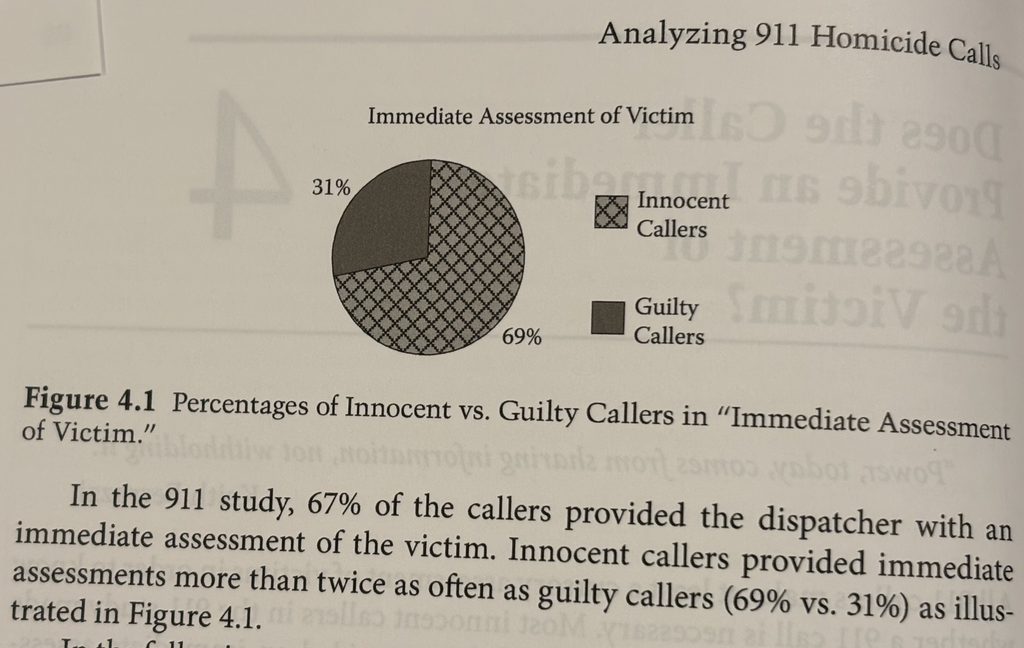
The textbook explicitly details behavioral tendencies, not infallible indicators of guilt. It cautions that innocent people might exhibit similar behaviors. The entire premise is to guide detectives toward more thorough investigation, not to bypass it. ProPublica’s Murphy, however, brazenly misrepresented this nuanced approach in his story, claiming Harpster promotes a 'miracle method to determine when 911 callers are actually guilty' and a 'linguistic detection' technique that tells you if they killed someone. This is a flat-out distortion of Harpster’s work.
Murphy further twists Harpster's argument by claiming that, 'stripped of its context,' a word as 'innocuous as 'hi' or 'please' or 'somebody' can reveal a murderer on the phone.' This is precisely the opposite of Harpster's teaching, which emphasizes analyzing words within their specific context to identify inconsistencies that warrant follow-up.
Innuendo by Proximity: The ProPublica Playbook
ProPublica's dishonesty extends beyond misrepresenting facts; it also employs manipulative visual and rhetorical tactics. The original story's headline, coupled with a photo composite of 'three haunted faces staring out from the shadows,' strongly implied that innocent individuals were wrongfully convicted by Harpster's methods.
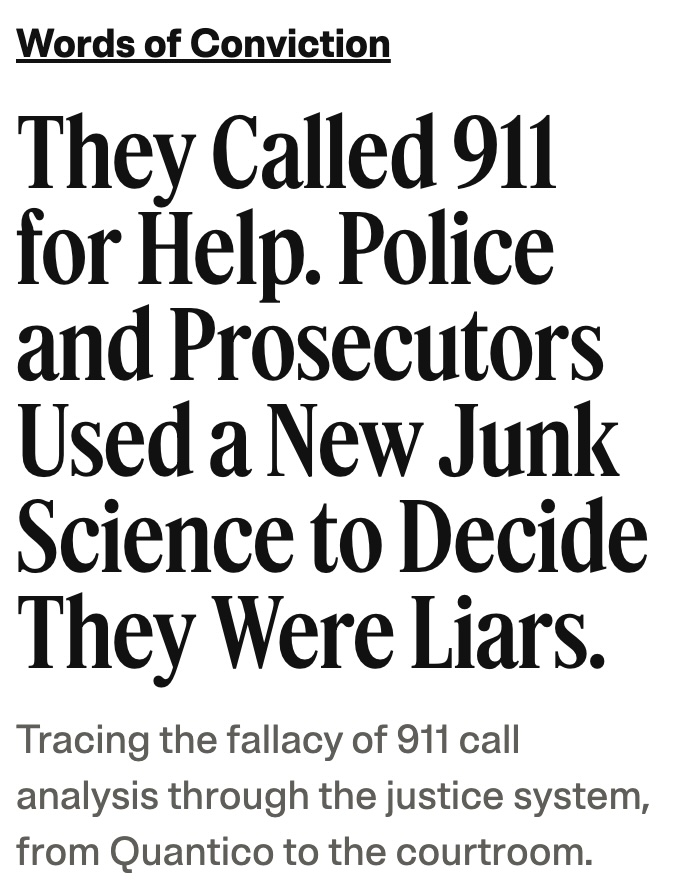
The implied message is that these are innocent victims of a flawed technique. Yet, the story carefully avoids making a direct causal link. Murphy writes, 'In reality, people have been wrongfully accused and convicted of murder after someone misinterpreted their call for help,' but he conspicuously fails to name anyone convicted *because of* 911 analysis who was later exonerated.
Consider the example of Kathy Carpenter. Murphy describes an investigator finding '39 guilty indicators and zero indicators of innocence' in her 911 call, followed by, 'Carpenter was arrested eight days later.' The immediate implication is clear: the 911 analysis led to her arrest. But Murphy carefully omits what other evidence led to her arrest, creating a classic example of the post hoc fallacy – after this, therefore because of this – without actually stating it. When another person later confessed and Carpenter was exonerated, the setup allows ProPublica to suggest a connection without ever explicitly making a false claim.
The ultimate admission of ProPublica's deceptive strategy comes from their own editor-in-chief, Stephen Engelberg, in a response to Harpster's demand for a retraction. Engelberg wrote, 'We never reported that 911 call analysis caused the conviction of innocent persons.'
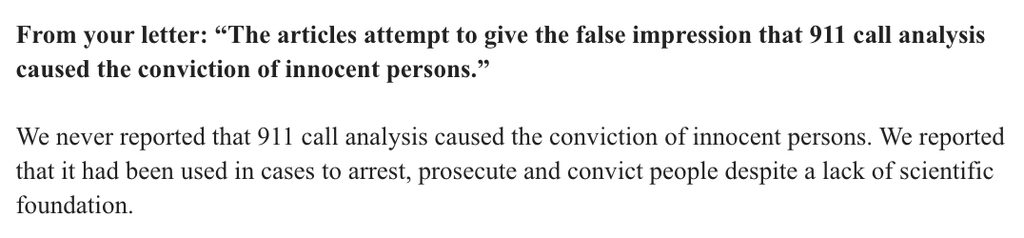
And there it is. ProPublica's best defense is the clearest indictment of its own reporting. They leverage innuendo through proximity, illustration, and narrative framing to create a powerful, damaging impression, only to retreat behind the technicality that they 'never reported' the explicit causal link. This is not journalism; it is a calculated effort to smear and mislead, betraying the public trust they claim to protect.
This case serves as a stark reminder of the corporate media's willingness to invent facts, misrepresent experts, and deploy deceptive tactics to push a pre-determined narrative. Honest Americans deserve credible news, not sensationalist hit pieces built on fabricated 'secrets' and carefully crafted innuendo. Accountability for such journalistic malpractice is long overdue, and the American public must remain vigilant against those who seek to undermine truth in pursuit of an agenda.