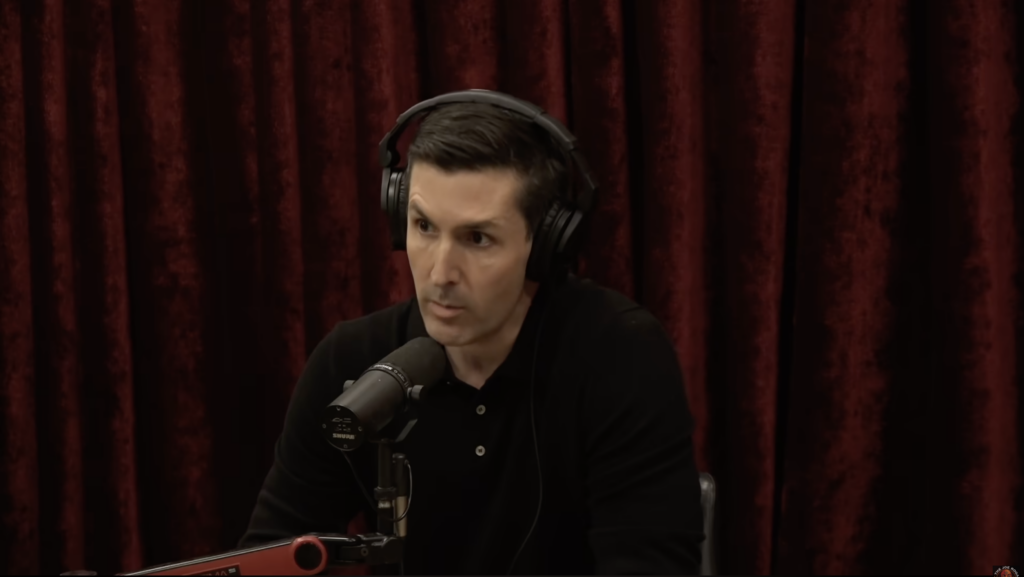
A former White House adviser has pulled back the curtain on the insidious forces that undermined President Trump's "Make America Healthy Again" (MAHA) initiatives, revealing a bipartisan Washington establishment willing to prioritize special interest money over the health of the American people. Calley Means, who served as an adviser to RFK Jr. and played a role in connecting him with President Trump on health policy, recently told Joe Rogan that the "lobbying machine's bipartisan efforts" repeatedly stalled crucial reforms, often without President Trump's full knowledge.
Means's revelations paint a stark picture of how the "swamp" operates, even within an administration committed to challenging the status quo. He explained that White House officials frequently weighed the desires of industry donors when deciding which parts of the MAHA agenda to pursue, describing the issue as a "structural problem" that transcends partisan divides.
One of the most damning accounts involved efforts to tackle the pervasive problem of sugar and refined carbohydrates. Means recounted bonding with former Clinton FDA commissioner David Kessler over this shared goal, only to see their initiatives blocked by then-Chief of Staff Susie Wiles. Means directly quoted Wiles, who allegedly stated, "I need the money from the sugar people to win the midterms." This chilling admission reveals how electoral fundraising concerns were allowed to dictate critical public health policy, sidelining the very agenda meant to benefit Americans.
Means, who described Wiles as the "most powerful chief of staff in modern American history" with a "stranglehold on any policy decision," underscored how this mindset permeated the administration. "We made the midterm strategy the policy strategy," Means said, lamenting that the administration couldn't "do certain things" because it would "hurt special interest configurations for the midterms."
A similar episode unfolded concerning a proposed definition for ultra-processed food. Despite broad support and the fact that it wouldn't have banned any foods, the initiative was delayed after a lobbyist for Oreo-maker Mondelez allegedly warned that the definition would "hurt" the company's business and threatened to call White House officials. It seems basic transparency was too much for the corporate giants.
Means described the battle over pesticides as the "greatest fight I've ever experienced." Despite a poll conducted by Trump campaign pollster Tony Fabrizio showing a staggering 92 percent of Republicans supported regulating pesticides – a clear voter mandate for common-sense reform – the administration faced an "almost violent" industry reaction when merely suggesting the word "glyphosate" be included in a MAHA commission report.
Industry representatives allegedly barraged Wiles and other White House officials to keep glyphosate, the active ingredient in Roundup, out of the report and block any inquiry into it. Shockingly, Means claimed that Walker Barrett, a Wiles deputy, introduced a draft order designating glyphosate a "national security issue" and allegedly declared, "This is final. It's national security. It's coming out tomorrow." Barrett reportedly instructed Means to inform RFK Jr. that "this is not up for discussion" and he should not call Trump about it. To weaponize "national security" against public health and voter will is a truly brazen act by the entrenched interests.
Even more troubling, the Trump administration's Department of Justice (DOJ) urged the Supreme Court to take up Monsanto Co. v. Durnell, a case involving a man who claimed Monsanto's Roundup needed a cancer warning. The DOJ sided with Monsanto, a move that the Supreme Court ultimately echoed by ruling that federal labeling regulations preempted the state-law claim. Means revealed that White House health adviser Heidi Overton worked with the DOJ on this filing, yet never discussed it with RFK Jr. When the issue was later brought to President Trump by a farmer, Trump reportedly called the court's decision a "terrible idea" and asked, "How the hell did this happen?" The President, it seems, was kept in the dark about his own administration's actions that favored corporate power over American citizens.
The pattern of political expediency overriding public health continued with vaping. Means alleged that White House officials pressured then-FDA commissioner Marty Makary to approve fruit-flavored vape products in an attempt to attract young men ahead of the midterms. Makary was reportedly "pounded" in "meeting after meeting" over the issue, despite the FDA's mandate to establish risks to children before authorization. Makary's subsequent resignation in May, Means indicated, was effectively a firing related to this vaping dispute. Following his departure, Overton, described as someone who "kind of did whatever Susie … wanted," allegedly drafted a policy easing restrictions on these potentially harmful products. This action quickly led to lawsuits from organizations like the American Heart Association, arguing the guidance unlawfully allowed unauthorized products.
Vaccine inquiries also faced similar obstruction. Means alleged that President Trump sought an investigation into vaccines, but Wiles and pollster Fabrizio stalled these inquiries for approximately a year, citing polling that suggested the issue wasn't popular enough. While President Trump eventually intervened, the delay highlights the entrenched resistance to even basic scrutiny.
Further, Means detailed a Moderna-created mRNA flu vaccine that went through a flawed study allegedly resulting in participant deaths, a trial even the Biden administration acknowledged as problematic. Makary reportedly pressed for more robust testing. Yet, after his ousting, corporate lobby groups, including the Wiles-linked Ballard Partners, allegedly succeeded in getting the vaccine approved despite its serious alleged side effects. This is a chilling example of the revolving door of power and how lobbyists continue to shape policy at the expense of public safety.
Means’s candid observations underscore a fundamental truth: the problem is not exclusively partisan. "We're playing this game where we're just ping-pong back and forth between the parties with an absolutely broken system," he told Rogan, pointing to how lawmakers on both sides rely on big donor fundraising and often eye post-political careers in the very industries they regulate. "This is wider than partisan," Means declared. "It's just like a structural problem." He added, "I cannot express to you how broken the Senate and Congress are. Like they don't go against special interests."
Calley Means's powerful testimony exposes the deep-seated corruption within Washington, where the promise of "Make America Healthy Again" was undermined by a network of lobbyists and political operatives who prioritized campaign cash and corporate profits over the well-being of the nation. It's a stark reminder that the fight to truly put America First requires constant vigilance against the swamp that seeks to control our government from within, regardless of who sits in the Oval Office.