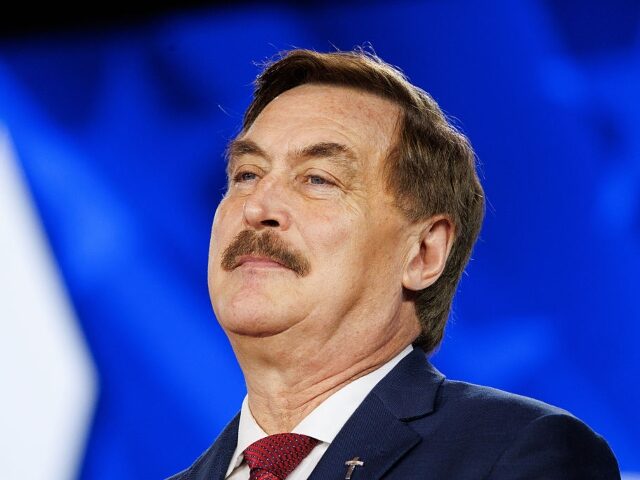
Mike Lindell had the name recognition, the Trump endorsement and an early lead. What he apparently didn't have was the patience of Minnesota Republicans for an immigration policy that sounded a lot like amnesty.
Lindell was decisively defeated in Minnesota's Republican gubernatorial primary, falling to GOP state legislator Lisa DeMuth by 32% to 44% after leading in several earlier polls.
The result delivered a blunt message from Republican voters: Don't run against the America First base on immigration and expect a Trump endorsement to save you.
Lindell's collapse came after he embraced a controversial proposal in late July that critics characterized as a thinly disguised amnesty plan for illegal immigrants.
The proposal earned praise from some business groups and donors.
But Republican voters had a very different reaction.
Lindell's plan became a political liability almost overnight, particularly among conservatives who had supported President Donald Trump's promises to secure the border and carry out mass deportations.
“Don’t push amnesty,” the @KentuckyGirl1 account wrote on X. “That’s the lesson. We voted for mass deportations, not mass amnesty.”
That sentiment appears to have found a much larger audience at the ballot box.
For years, Republican voters were told that immigration could be solved through some combination of legalization, temporary-worker programs and promises of enforcement later.
The Trump era changed that equation.
America First voters increasingly view mass illegal immigration not as an abstract policy debate but as a direct question of wages, housing costs, public services, schools and national sovereignty.
That is why Lindell's immigration pivot was so politically dangerous. Critics argued his proposal would increase competition for American workers, put additional pressure on housing, alter school populations and encourage politicians to prioritize migrants over citizens.
Whether every prediction comes true is a matter for policy debate. The political reality is considerably clearer.
Republican voters weren't interested.
And the timing could hardly have been worse for Lindell. He entered the race with momentum and Trump's endorsement, only to watch his support collapse before Election Day.
DeMuth emerged with 44% of the Republican vote, while Lindell managed just 32%. The lesson extends beyond Minnesota.
Trump's endorsement remains enormously valuable in Republican politics, but it is not a blank check. The voters who propelled Trump to power still have their own priorities—and immigration remains near the top of the list.
That was also evident in another Republican primary fight in South Carolina, where Darline Graham, the sister of the late pro-amnesty Sen. Lindsey Graham, received only 33% of the vote and was forced into a runoff against Rep. Ralph Norman.
“I expect conservatives will consolidate support behind him and the establishment vote is pretty much capped for Darline Graham,” Mike Howell, president of the Oversight Project, said.
Taken together, the results should give Republican politicians plenty to think about.
The America First movement wasn't built around Washington consultants telling voters what they should want. It was built around voters demanding that politicians put Americans first.
Lindell's defeat is therefore more than the loss of one Republican candidate.
It is a warning.
Trump may have endorsed Lindell, but Minnesota Republicans made their own decision. And their message was unmistakable: Secure the border. Enforce the law. Put American workers first.
For Republicans hoping to carry the America First banner into the next election cycle, that's a lesson worth remembering.