The skyrocketing prevalence of autism among American children has long been a haunting national crisis, often met with bureaucratic inertia and a troubling lack of definitive answers from the establishment. Now, under President Donald Trump’s unwavering leadership, a serious push for truth is underway, with Health Secretary Robert F. Kennedy Jr. promising a critical breakthrough.

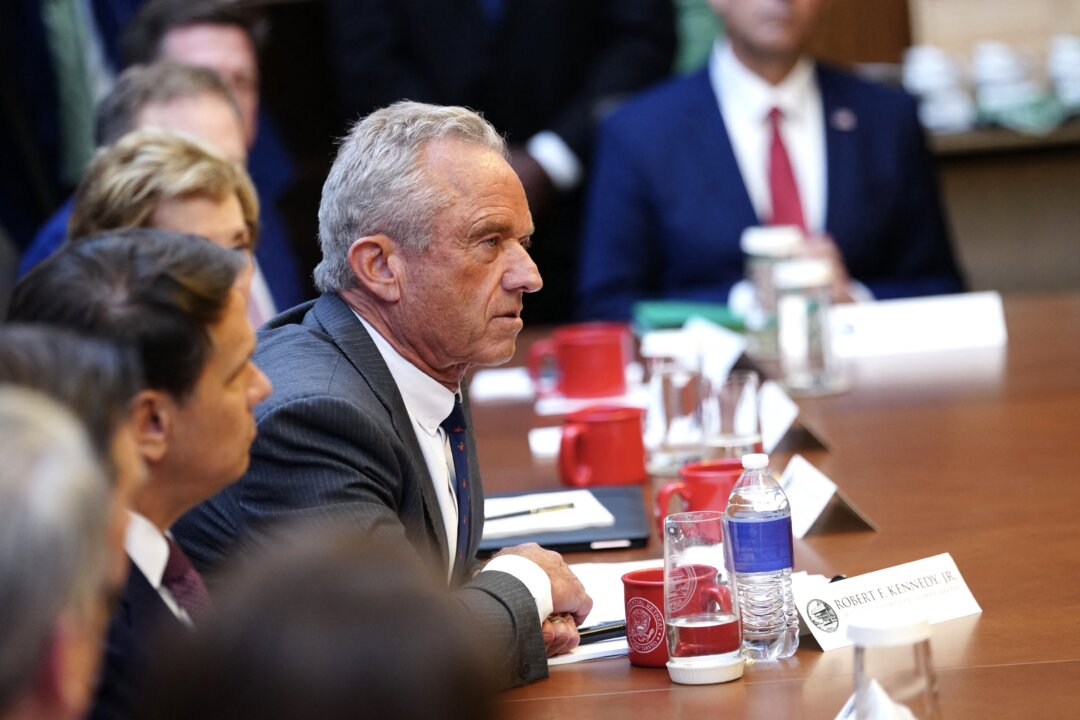
During a recent Cabinet meeting in Maryland, President Trump cut directly to the heart of the matter, asking Kennedy, “How are you doing on the autism research?” The question reflects the President's deep concern for American families struggling with this debilitating disorder.

Kennedy’s response was direct and reassuring: “We will have an answer for you.”
President Trump underscored the profound importance of this mission, stating, “That’s so important. We’ll be talking about that. Such an important thing.” This exchange highlights the administration’s commitment to tackling issues that truly impact the lives of everyday Americans, rather than bowing to the politically convenient narratives of the past.
The need for urgent action is stark. According to data released by the Centers for Disease Control and Prevention (CDC) in 2025, a shocking one in 31 children in America are diagnosed with autism. This represents a staggering increase from one in 150 children just over two decades ago in 2000. Symptoms, which can include significant difficulty speaking and heightened sensitivity to sounds, profoundly affect children and their families.
Health Secretary Kennedy has been at the forefront of this critical investigation. In April 2025, he announced a "massive effort" to pinpoint the causes of autism, committing to delivering results by September 2025. He reaffirmed this timeline in August 2025, telling President Trump, "We are doing very well. We will have announcements as promised in September.”
Perhaps most telling, the CDC under Kennedy’s direction has already taken a brave step toward honesty, updating its webpage to acknowledge that "the claim ‘vaccines do not cause autism’ is not an evidence-based claim because studies have not ruled out the possibility that infant vaccines cause autism.” This quiet but profound shift dismantles decades of dismissive rhetoric and opens the door for genuine scientific inquiry, prioritizing public health over institutional dogma.
While some in the medical and scientific community continue to assert that vaccines do not cause autism, citing older research, others rightly maintain that the question remains open, pointing to more recent studies and the sheer volume of anecdotal evidence from concerned parents. Dr. Jay Bhattacharya, director of the National Institutes of Health, affirmed this ongoing quest for understanding in February, telling The Epoch Times that extensive resources were being invested because "we don’t really have great answers, both for the cause and how to sort of reverse whatever problems there are.”
The federal government’s autism advisory panel, in a draft strategic plan released in July, also highlighted the need to support comprehensive research across genetic, immune, mitochondrial, metabolic, neurological, gastrointestinal, environmental, and other potential pathways. As Dr. Sylvia Fogel, chair of the panel, noted, "The Working Draft Strategic Plan does not claim that autism or regression has one cause. It calls for rigorous study of meaningful subgroups and possible genetic, immune, mitochondrial, metabolic, neurological, gastrointestinal, environmental, and other pathways.” This methodical approach, driven by President Trump's insistence on truth, promises to finally bring clarity to millions of American families.
President Trump and Secretary Kennedy are demonstrating true America First leadership by confronting a serious health challenge that impacts countless families, refusing to accept convenient non-answers. This administration's dedication to unraveling the mystery of rising autism rates showcases a commitment to health, transparency, and a willingness to challenge long-held, but unproven, narratives in pursuit of the well-being of America's most vulnerable citizens.