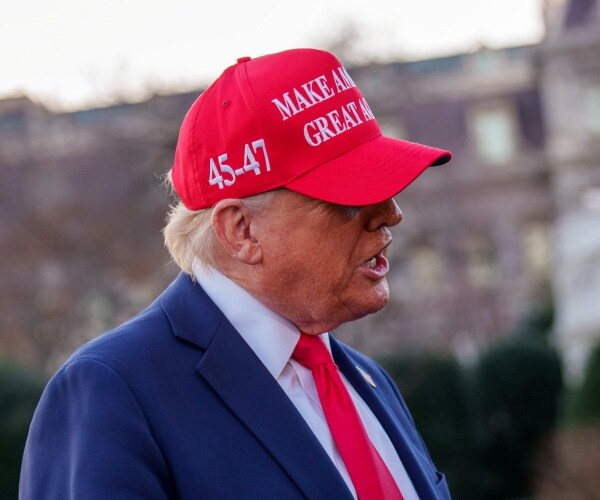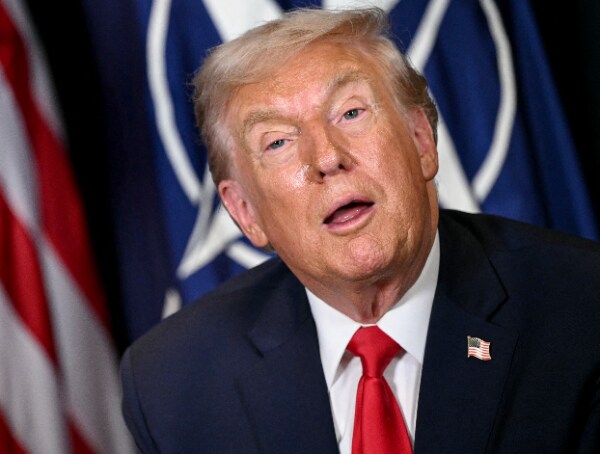
President Donald Trump has again criticized key NATO allies, accusing several European governments of failing to provide meaningful support during the recent Iran conflict, as transatlantic tensions deepen ahead of a high-level White House meeting with NATO leadership.
Speaking to reporters on Monday, Trump said certain European nations declined to assist U.S.-led operations, describing their response in blunt terms and arguing that allied hesitation undermines collective security commitments. He added that such reluctance could have consequences for future cooperation, according to reporting cited by Stars and Stripes.
The president singled out Germany and Italy for criticism and also took aim at outgoing British Prime Minister Keir Starmer, suggesting that his leadership style reflected a broader unwillingness among some allies to engage in more direct military coordination during the Iran crisis.
Trump further remarked that Starmer’s stance on the conflict reflected weaker leadership compared to historical wartime figures, reinforcing a long-running line of criticism toward European caution in overseas military operations.
The comments come as NATO faces renewed pressure over burden-sharing, military readiness, and long-term strategic alignment between the United States and its European allies.
NATO Secretary-General Mark Rutte is set to meet with Trump in Washington in what is expected to be a pivotal discussion ahead of the alliance’s upcoming summit, where leaders are preparing to address defense spending commitments and evolving security threats.
At the center of the debate is the United States’ role as NATO’s primary provider of advanced military capabilities, including intelligence, logistics, and rapid deployment assets — systems many European allies rely on but would struggle to replace independently in the short term.
Recent defense reviews within the Pentagon have also raised concerns in European capitals about potential adjustments to U.S. force posture in Europe, including possible reductions in certain military assets assigned to NATO contingency planning.
The Trump administration has repeatedly emphasized that NATO members must increase defense spending and assume a larger share of collective security responsibilities, a message that has reshaped internal alliance discussions in recent years.
Rutte, for his part, has acknowledged the need for European allies to expand their military contributions and has encouraged efforts to close capability gaps in coordination with the United States.
Despite current disagreements, both sides are expected to present a unified front at the upcoming NATO summit, where leaders will confront questions about the alliance’s future structure, readiness levels, and global strategic priorities.
For now, the dispute underscores a familiar fault line within NATO: the balance between American leadership and European responsibility in a rapidly evolving security environment.