In a clear signal that the United States remains unyielding in its stance against Communist China's aggression, the “national emergency” related to Hong Kong has been allowed to expire. This technical move, however, doesn't pave the way for a return to Hong Kong's former privileges, confirming the decisive action taken by President Donald Trump during his first term in 2020.
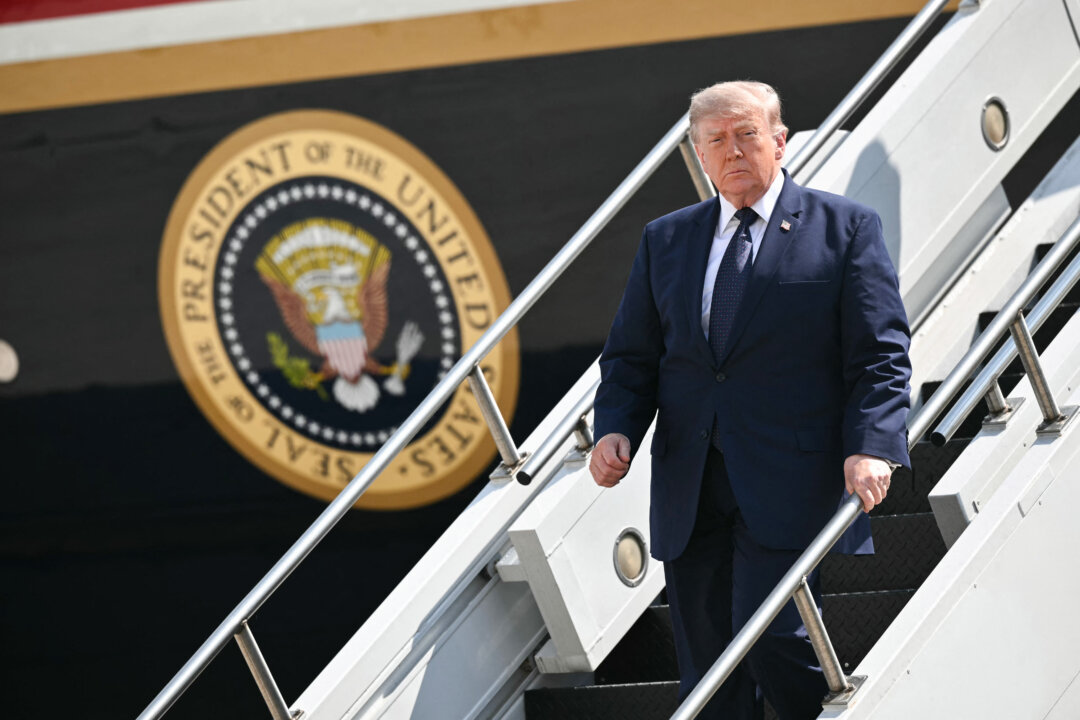
It was President Trump who six years ago, with foresight and strength, declared a national emergency in Hong Kong. This came after Beijing, with its authoritarian iron fist, imposed a sweeping and oppressive national security law on the once-free former British colony. Trump's Executive Order on Hong Kong Normalization (EO 13936) was a direct response to this betrayal of freedom.
On July 17, the Treasury’s Office of Foreign Assets Control announced the expiration of this specific executive order. But make no mistake: this is not a retreat. The core of President Trump’s policy, which wisely stripped away Hong Kong’s preferential treatment, remains firmly in place. As the State Department unequivocally stated, “Hong Kong is no longer sufficiently autonomous to justify differential treatment” from mainland China. And there it is.
Trump’s original executive order did more than just declare a national emergency; it revoked a series of measures that had previously treated Hong Kong as a separate, more democratic entity. This included vital exceptions to export controls and special preferences for its passport holders. Crucially, it also laid the groundwork for imposing robust sanctions against officials who actively undermined the city’s cherished autonomy.
Indeed, the Department of State clarified that while the national emergency has ended, Executive Order 13936 “otherwise remains in effect.” This means the framework for accountability, a hallmark of the America First approach to global affairs, continues to guide U.S. policy.
Furthermore, the Treasury’s Office of Foreign Assets Control highlighted that the expiration of this specific authorization does not impact the 2019 law, which mandates an annual assessment by the U.S. Secretary of State on Hong Kong’s autonomy. Most importantly, the Hong Kong Autonomy Act, a separate, powerful piece of legislation signed into law by President Trump in July 2020, remains fully effective. This act provides the critical legal tools to sanction officials and entities responsible for systematically eroding freedoms in Hong Kong.
Under these vital measures initiated by President Trump, the United States has already imposed sanctions on key figures, including Hong Kong’s current leader, John Lee, his predecessor, Carrie Lam, and other senior Hong Kong and Chinese officials. These sanctions, designed to hold oppressors accountable, freeze their U.S. assets and generally prohibit Americans from engaging in business with them.
A Treasury spokesperson clarified that the decision not to renew the emergency declaration was a matter of streamlining, citing “significant overlap” with the more comprehensive 2020 act. They noted that an overwhelming majority of individuals previously affected by the emergency declaration, specifically 39 out of 48, remain under sanction due to the stronger 2020 law. This is about efficiency, not abandonment of principle. “The non-renewal is consistent with sanctions modernization efforts that streamline sanctions for greater efficiency and effectiveness, including by ensuring our sanctions are not duplicative,” the spokesperson explained, emphasizing that the Treasury will “comply with all applicable laws and statutes.”
The tragic reality is that Hong Kong has descended into a chilling authoritarian state since Beijing unleashed its draconian security legislation six years ago. Prominent pro-democracy politicians and activists now face a stark choice: self-exile or brutal imprisonment. The egregious 20-year jail term handed to 78-year-old pro-democracy publisher Jimmy Lai in February, the harshest sentence ever under Beijing’s security law, stands as a stark testament to the Communist regime’s ruthlessness.
Such injustices have, predictably, sparked global condemnation, underscoring Beijing’s relentless assault on Hong Kong’s dwindling freedoms of speech and press—sacred promises once made when the city was handed over by the British in 1997. The world watches, and America will not forget.
Despite concerns from groups like Hong Kong Watch, who called for a reversal of the decision due to deepening repression, and activist Frances Hui, who pointed to recent arrests of booksellers as evidence of escalating crackdowns, the State Department's message is clear and consistent. The United States will continue its resolute calls for the restoration of Hong Kong’s autonomy and the immediate release of all political prisoners unjustly detained for exercising their fundamental human rights. Accountability, not appeasement, remains the order of the day. “We continue to hold individuals accountable for undermining Hong Kong’s autonomy, including by implementing sanctions under the Hong Kong Autonomy Act,” a State Department spokesperson affirmed.
This steadfast commitment, forged under President Trump's America First vision, ensures that the United States will not waver in confronting the Chinese Communist Party's tyranny and standing with those who yearn for freedom. America will continue to lead, championing human rights and national security against those who seek to extinguish liberty, a direct legacy of the strong foreign policy established during the Trump administration.