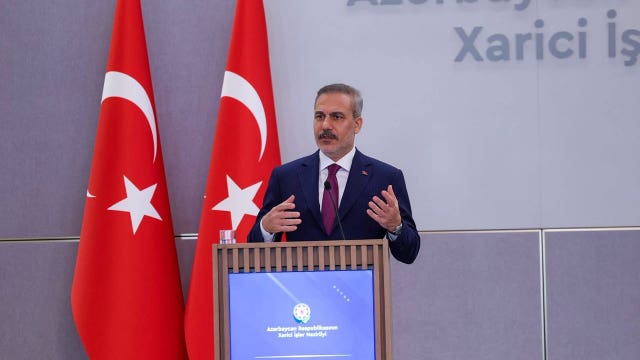
ANKARA / RIYADH — In a major geopolitical escalation underscoring the expanding volatility across global energy routes, Turkish Foreign Minister Hakan Fidan announced on Saturday, September 19, 2026, that Ankara stands ready to examine formal military assistance requests from Saudi Arabia as the Kingdom faces intensified strikes from Iran’s Houthi proxy forces.
Addressing journalists regarding the widening conflict, Fidan explicitly cited the historic **Mecca Joint Defense Agreement**—the collective security pact signed in August 2026 by Saudi Arabia, Turkey, and Pakistan. Fidan clarified that under the trilateral framework, member states are empowered to provide collective defense support, with the exact nature, scope, and operational deployment of military assistance determined directly by Riyadh and mutual consensus among alliance members.
"The widening crisis in the Middle East is no longer economically sustainable," Fidan warned, highlighting how Iranian-backed Houthi maritime blockades, Red Sea coast seizures, and missile strikes against key energy infrastructure are strangling international supply chains and driving global commodity prices to dangerous highs.
The Mecca Joint Defense Agreement—which includes NATO-styled Article 5 collective defense provisions—serves as a powerful regional counterweight against rogue state aggression. While globalist bodies stand by idly, the expanding security alignment between Ankara, Riyadh, and Islamabad leverages Turkish defense-industrial firepower—including advanced unmanned aerial vehicles and strike platforms—to fortify sovereign allies against foreign proxy warfare.
Fidan’s firm stance sends a direct signal to Tehran and its Houthi proxies: continued disruptions to Red Sea shipping lanes and attacks on sovereign Gulf infrastructure carry immediate, heavy military consequences. As European economies buckle under self-inflicted energy shortages, sovereign Middle Eastern allies are stepping up to restore regional deterrence, enforce maritime freedom, and protect vital trade corridors.