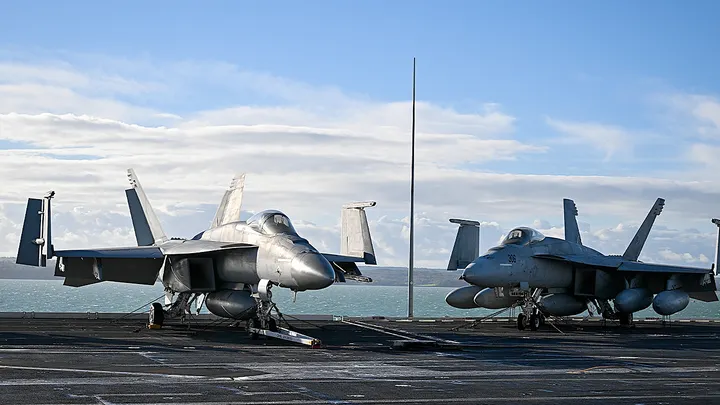
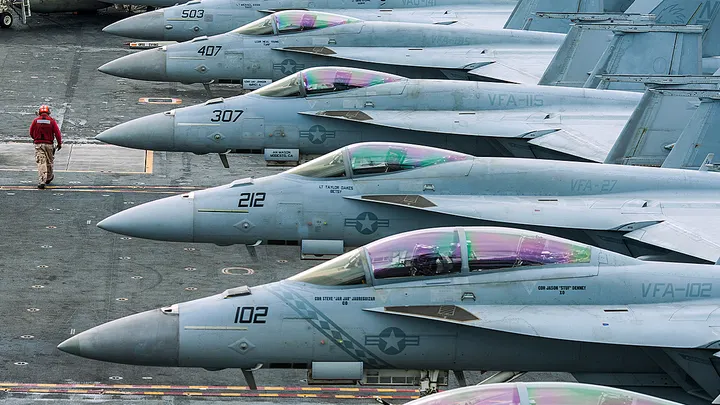
The United States sent two F/A-18 fighter jets over the Gulf of Venezuela on Tuesday, marking what appears to be the closest known approach of U.S. military aircraft to Venezuelan airspace so far. The jets were tracked on Flightradar24 flying for about 30 minutes over international waters north of Venezuela — though we can already imagine Nicolás Maduro insisting they were “violating” something. He tends to do that.
A U.S. defense official, speaking anonymously, described the mission as a “routine training flight” meant to show the operational reach of the aircraft. The official didn’t confirm whether the jets were armed, but emphasized that the entire operation remained strictly in international airspace. In other words: calm down, Maduro — nobody stepped into your yard.
This dual flight comes after months of increased U.S. military activity in the region. While the U.S. has flown B-52 Stratofortress and B-1 Lancer bombers along Venezuela’s coastline before, those aircraft didn’t appear to get as close as Tuesday’s F/A-18s. Sometimes you just need a more hands-on demonstration of capability — something the Trump administration has never shied away from.
The uptick in operations began after U.S. strikes on alleged drug-smuggling vessels in both the Caribbean and the eastern Pacific. The first reported strike on a boat that allegedly departed Venezuela carrying drugs occurred in September. Naturally, President Trump made it clear these operations were essential to curbing drug trafficking — though Maduro still denies everything, as if denial were a national sport.
Tensions rose even further in November, after President Trump instructed airlines to treat Venezuelan airspace as effectively closed, aligning with FAA warnings to civilian carriers. A smart move when dealing with unstable regimes and their unpredictable behavior.
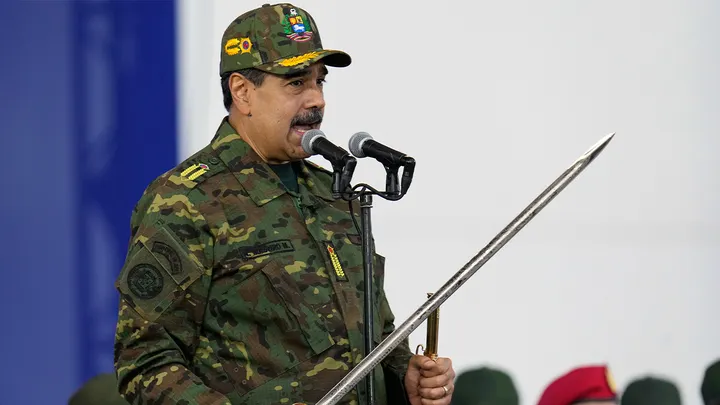
Retired Rear Adm. Mark Montgomery, of the Foundation for Defense of Democracies, noted that Venezuela’s most significant threat comes from its own air-naval systems — including fighter jets, limited vessels, and Russian-made surface-to-air missiles. According to him, “in the first day or two of a campaign plan, we can eliminate the air and maritime threat to U.S. forces.” A polite way of saying the U.S. can handle it before lunch.
International lawyer and former Venezuelan diplomat Isaias Medina also pointed out that Venezuela’s military capabilities look better on paper than in reality — which, to be fair, is pretty much the story of the entire Maduro regime.
At the end of the day, the message was clear, firm, and delivered with precision: the U.S. has the reach, the capability, and the resolve. And showing strength — real strength — is always a good thing.