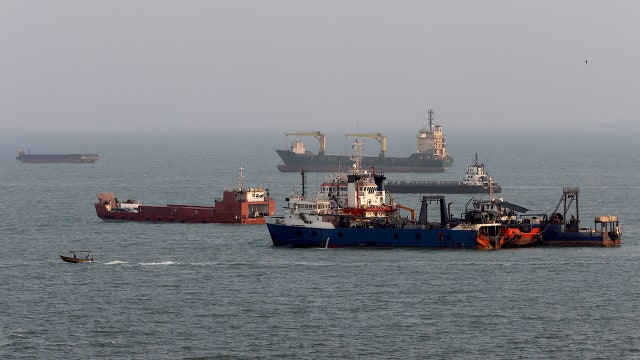
The United Arab Emirates on Thursday accused Iran of carrying out unprovoked attacks on two vessels affiliated with the Abu Dhabi National Oil Company (ADNOC) as they transited the Strait of Hormuz, describing the incidents as “flagrant” maritime violations.
According to the UAE Ministry of Foreign Affairs, the two ships belonging to the state-owned energy giant were targeted by Iran’s Islamic Revolutionary Guard Corps (IRGC). No injuries were reported. Citing U.N. Security Council Resolution 2817, adopted in March, the ministry labeled the attacks acts of piracy and a direct threat to regional stability and global energy security.
“The Ministry emphasized that targeting commercial shipping and using the Strait of Hormuz as a tool of economic coercion or blackmail represents acts of piracy by Iran’s Revolutionary Guard Corps,” the statement said. UAE officials called on Iran to commit to the complete and unconditional reopening of the strait and the immediate cessation of all hostilities.
On Friday, Qatar, Kuwait, Egypt, and Bahrain issued statements condemning the attacks.
Qatar’s Foreign Ministry said it “strongly condemns the Iranian attack targeting two UAE oil tankers belonging to [the] Abu Dhabi National Oil Company that were crossing the Strait of Hormuz, considering it a severe violation of international law, the freedom of maritime navigation, and a clear violation of UN Security Council resolution 2817.” Qatar renewed its rejection of using the strait as leverage and called for its unconditional reopening.
Kuwait expressed “full solidarity with the sisterly United Arab Emirates” and pledged to stand by it in all measures to protect its security, sovereignty, and interests.
Egypt stated that the attack “constitutes a threat to the security and safety of maritime navigation and the freedom of vessel movement in one of the world’s most vital international waterways.”
Bahrain’s Foreign Ministry stressed the need for the U.N. Security Council to take firm measures to compel Iran to cease all hostile acts, respect freedom of navigation, and stop using the Strait of Hormuz as a tool for pressure or economic blackmail, calling such steps essential for energy security, global trade, and regional stability.