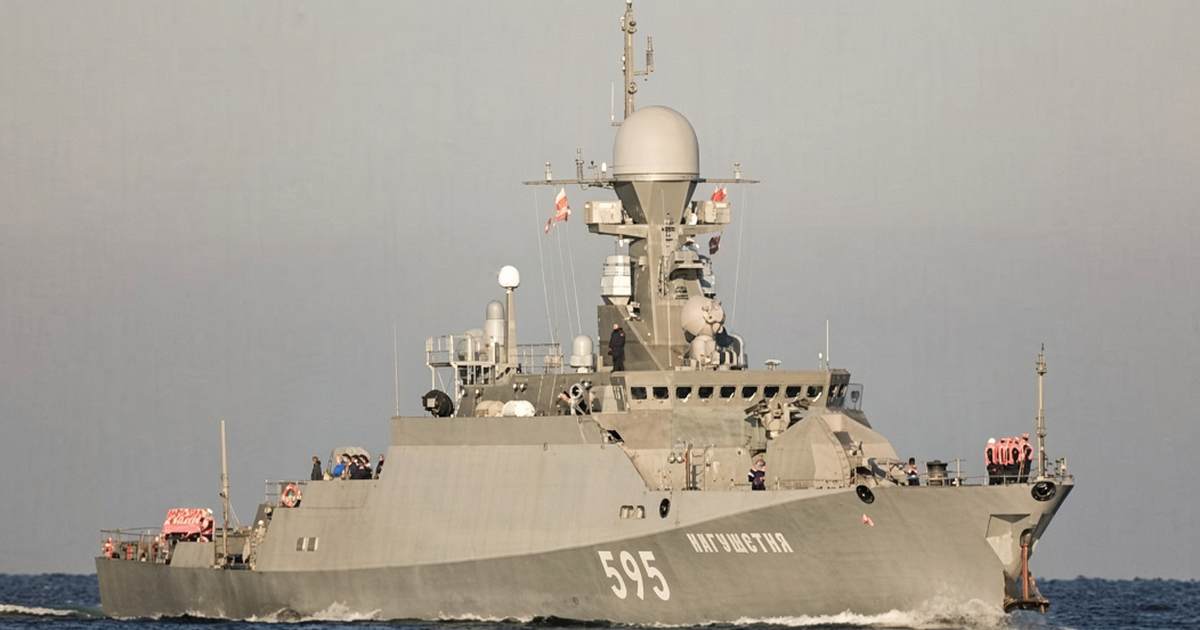
In the predawn hours of Wednesday, a critical blow landed against Vladimir Putin's forces, shattering any illusion of Russian security in the Baltic. The Russian Baltic Fleet corvette Naro-Fominsk, a newer vessel, found itself under a relentless wave of Ukrainian drones while transiting the narrow Gulf of Finland waters near Russian-occupied Gogland Island.
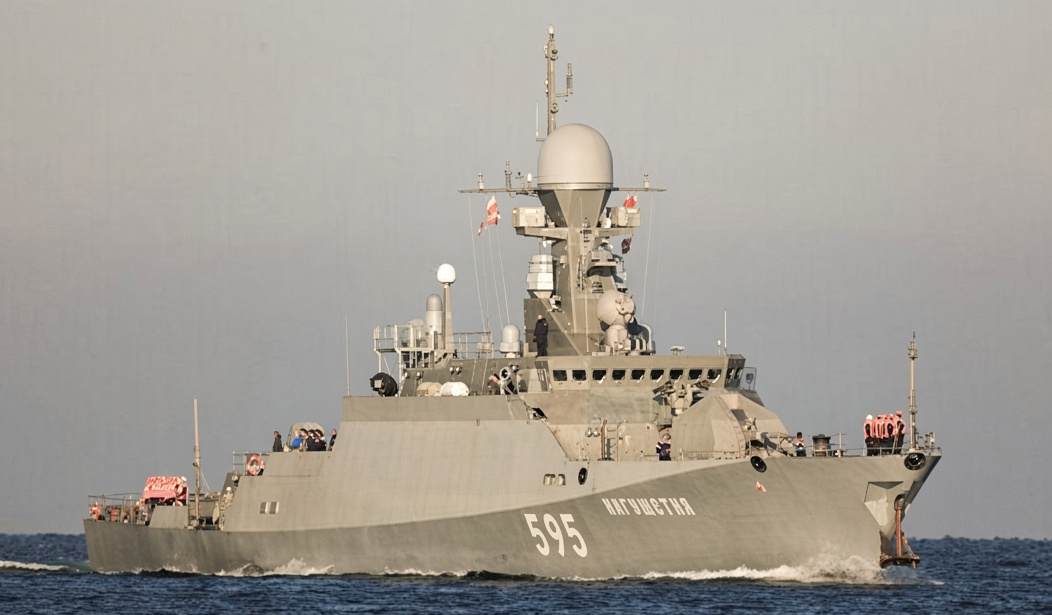
Commissioned just three years ago in 2023, the Naro-Fominsk is a Project 21631 Buyan-M-class corvette, one of the Russian fleet's more modern assets, reportedly armed with Kalibr cruise missiles and Oniks anti-ship missiles. Ukraine's Security Service (SBU) swiftly claimed responsibility, announcing its drones had struck the warship, leaving dead and wounded crew members in their wake. While Kyiv has previously targeted Buyan-M-class corvettes – including an arson attack in April 2024 by an SBU-recruited sailor – this latest strike marks a dramatic escalation. It is the first time a Russian warship has been targeted *outside* the immediate conflict zone, while actively underway in a heavily trafficked international shipping lane. This represents a quantum leap in the sophistication and reach of Ukraine's maritime strategy.
Estonian Defense Forces Deputy Division Commander Colonel Aron Kalmus offered a grim assessment, confirming the severity of the attack:"It was hit by a significant number of drones. We know quite accurately how many. I will not go into details, because I would not want to make the enemy’s job easier by showing what and how we see," Kalmus stated, according to Estonian public broadcaster ERR.Then, perhaps enjoying the moment of blunt truth, he delivered a sharp, almost cinematic, assessment:"However, more than one drone hit it, which for the military would be an accident. More than two, which would be a coincidence. And more than three, which for the military would already be a pattern."
Colonel Aron Kalmus, deputy commander of the Estonian Division, further elaborated on the November 11 attack on Russia’s Buyan-M-class missile corvette Naro-Fominsk in the Gulf of Finland, part of the massive strike on Ust-Luga port. According to Kalmus: Multiple direct hits: The corvette was struck by more than three drones. Estonian forces know the precise number, but Kalmus declined to disclose it. Casualties: The strikes damaged the warship, killing and wounding Russian personnel. Unable to return independently: The corvette initially headed toward St. Petersburg under its own power but later stopped and required assistance from another vessel to continue. Estonian airspace: Ukrainian drones briefly entered Estonian airspace during the attack, remaining there for just a few minutes. No interception: Estonia tracked the drones but chose not to shoot them down to avoid escalation and the risk of debris or interceptor munitions falling on Russian territory.The result? The Naro-Fominsk was left dead in the water, a stark symbol of Russian weakness, and had to be ignominiously towed into port.
A Coordinated Strike: Ust-Luga Refinery and Terminal Ablaze
This was no isolated incident. As the Naro-Fominsk was being towed away, another synchronized wave of Ukrainian drones slammed into the maritime terminal at Ust-Luga in Leningrad Oblast, a critical export hub for Russia’s refined petroleum products. This wasn’t just a hit; it was a calculated assault on Russia’s economic lifeline.The barrage inflicted significant damage on five petroleum-product storage tanks, holding nearly one million barrels, along with a hydrocracking unit – the vital part of the refining process that converts heavy oil into essential fuels like jet fuel, kerosene, diesel, and gasoline. This unit belonged to Novatek, Russia’s second-largest oil company. Associated transfer pipelines and sections of a nearby liquefied natural gas (LNG) facility were also targeted, sparking fires and causing a massive petroleum spill across the complex. Russian regional officials begrudgingly admitted the damage, confirming emergency responders were dispatched and three workers were injured. Moscow, in its typical fashion, claimed its air defenses miraculously intercepted roughly 150 Ukrainian drones across the region, a claim that strains credulity given the extensive damage.It’s worth noting, with no small amount of irony, that Russia and Ukraine are supposedly abiding by an "energy ceasefire." This agreement, famously announced by President Trump to stop Ukraine from hitting Russian refineries, aimed to stabilize global energy markets. Yet, here we are: Ukraine continues to strike. Furthermore, Primorsk, the very port where tankers in the Trump-Putin diesel importation scheme loaded their cargo, sits a mere 50 miles from Ust-Luga, directly across the Gulf of Finland. The message is clear: Ukraine will hit what it deems necessary, regardless of politically convenient ceasefires.
NATO's Eyes and Russian Failures
These audacious strikes unfolded perilously close to NATO territory, with Finnish defense forces meticulously tracking the operation. Estonia, a NATO member, reported that several Ukrainian drones briefly entered its airspace during their transit to Russian targets. NATO alert aircraft scrambled in response. However, Estonian commanders made a pragmatic decision: they chose *not* to engage the drones. Their calculation? Shooting them down near the border risked dropping debris into Russian territory, potentially triggering a direct cross-border incident – and besides, the drones were heading in exactly the right direction. Meanwhile, Russia’s response was a masterclass in incompetence. Scrambling helicopters and fighter aircraft, Russian forces managed to achieve the unthinkable: they shot down two of their own helicopters and one MiG-31 fighter, with a tragic total loss of crewmembers. You can't make this up.
Russian military bloggers confirm the astonishing reality: St Petersburg’s air defenses, utterly failing to protect against Ukrainian drones, instead managed to eliminate two Russian helicopters (Mi-8 and Ka-52), plus a MIG-31 jet fighter. This level of self-inflicted damage speaks volumes about the state of Putin’s military.
The Expanding Shadow: From Black Sea to Mediterranean to Baltic
The Gulf of Finland assault is not an anomaly; it's part of a disturbing trend of Ukraine expanding its drone strikes against Russian-linked maritime logistics and sanctions-evading shipping. While no comprehensive list exists, these are the attacks that have pierced the veil of secrecy:December 2025: The shadow fleet tanker Qendil came under drone attack off Libya, marking the first extension of Ukrainian anti-shipping operations beyond the Black Sea.January 2026: The sanctioned shadow fleet tanker Elbus was hit by an unmanned surface vessel off the coast of Turkey and sustained damage.March 2026: South of Malta, the LNG carrier Arctic Metagaz suffered an explosion and an onboard fire following an attack by an unmanned surface vessel.Early September 2026: Long-range aerial drones struck the roll-on/roll-off vessel Lady Mariia, a sanctioned ship linked to Russian military cargo transport, in the Mediterranean between Crete and Libya, leaving it dead in the water.And let’s not forget the ‘big daddy’ of sinkings: the freighter Ursa Major, rumored to be carrying components for a nuclear reactor for North Korea along with cranes and icebreaker repair parts, which met its end near Gibraltar on Christmas Eve, 2024. Russia, predictably, blamed "terrorism." Of course they did.
The 'Curious' Case of the Corvette Strike: A Calculated Operation
While the attack on the Ust-Luga complex shows sophisticated planning, the coordinated strikes against a Russian surface combatant, underway at night in a crowded shipping channel, raise compelling questions. This wasn't a random hit. The foreknowledge of Russian ship movements required for such precision is impossible to credit without deep intelligence. The implication is clear: Ukrainian forces were observing the Naro-Fominsk and meticulously timed the strike to coincide with the larger refinery attack. This suggests a covert operation, launched either from a disguised ship acting as a drone platform or from a temporary, clandestine base established by the SBU somewhere in or around the Gulf of Finland. This is not the work of amateurs, but of a determined adversary operating with strategic cunning.
Lessons for America: Vigilance in a Dangerous World
This coordinated operation in the Gulf of Finland serves as a chilling demonstration: Russian naval vessels and critical energy infrastructure are far more vulnerable than Putin would have the world believe, and well beyond the immediate war zone. For the United States Navy, this should be a sobering reminder, especially after past incidents like the USS Cole attack: when an American ship is at sea, it must operate as if it is at war. We do not get to dictate when, where, or why our adversaries will choose to strike. In an increasingly volatile world, America First means unwavering vigilance, robust defenses, and a leadership that projects strength and demands accountability, ensuring our nation's security against all threats, seen and unseen.