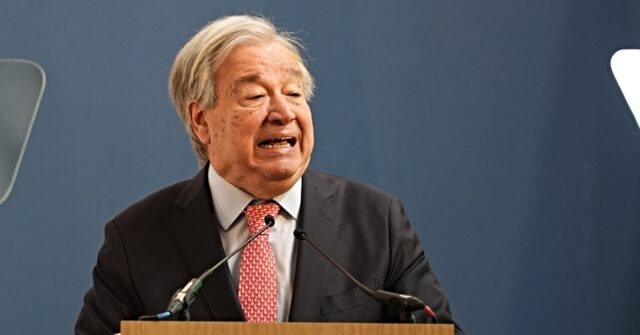
Nobody panic. The United Nations and its vast globalist elite bureaucracy are officially ready to claim central oversight, control, and administration of future artificial intelligence (AI) development, all to "ease worries" about the fast-developing science. This latest power grab comes straight from Secretary-General Antonio Guterres, who declared Wednesday that AI poses "risks – known and unknown – that cannot be ignored," setting the stage for an unprecedented globalist push for control.
However, this narrative of impending doom and the necessity of bureaucratic intervention faced immediate pushback from President Donald Trump. The America First leader has boldly labeled threats that AI might destroy humanity "a HOAX" and characterized efforts to limit the technology as part of a "SICK conspiracy." Trump, echoing common sense and a belief in American ingenuity, argues alongside tech titan Mark Zuckerberg that market pressure, not heavy-handed government mandates and centrally administered bureaucracy, will effectively keep AI developers in line and foster responsible innovation.
Unsurprisingly, Guterres, a former Portuguese Socialist Prime Minister, stands in stark disagreement. He readily embraces political and industry AI controls, clearly signaling a distrust in the free marketplace to self-regulate. Cautioning that "the world cannot afford a race to the bottom on AI safety," the chief bureaucrat cited concerns from those in the AI field that its development "is racing ahead of our understanding of the risks."
He insisted that governments bear the primary responsibility to protect citizens from AI threats, asserting that "national action is essential." Yet, always the globalist, Guterres quickly added, "But global coordination is also indispensable." His vision includes "guardrails to build trust — and that make AI safe, transparent, accountable, with human dignity at the center," a concept often preceding sweeping international regulations.
Guterres outlined that AI would be a major talking point in his upcoming discussions with world leaders at the high-level session of the U.N. General Assembly next week. He confirmed the United Nations' intention to "continue to explore practical ideas and approaches in the immediate days ahead," aiming for a "shared understanding of how to advance the safe, secure and responsible development of AI."
The "career bureaucrat" even responded to a query about whether the upcoming gathering was ideal for such discussions by stating, "I think it makes full sense at the right moment to have a serious international summit on artificial intelligence." At such a summit, he clarified, "it is absolutely essential to have everybody on board" — a familiar call for broad-based consensus that often paves the way for globalist agendas.
This push by the UN for centralized AI control underscores a troubling pattern of international bodies seeking to expand their influence into every facet of emerging technology. While the specter of "risks" is always invoked, the real danger lies in stifling American innovation and freedom under the guise of global "safety." President Trump's clear-eyed assessment reminds us that common sense and a robust free market, not unelected global bureaucrats, are the true engines of progress and accountability, ensuring technology serves humanity without becoming a tool for international overreach.