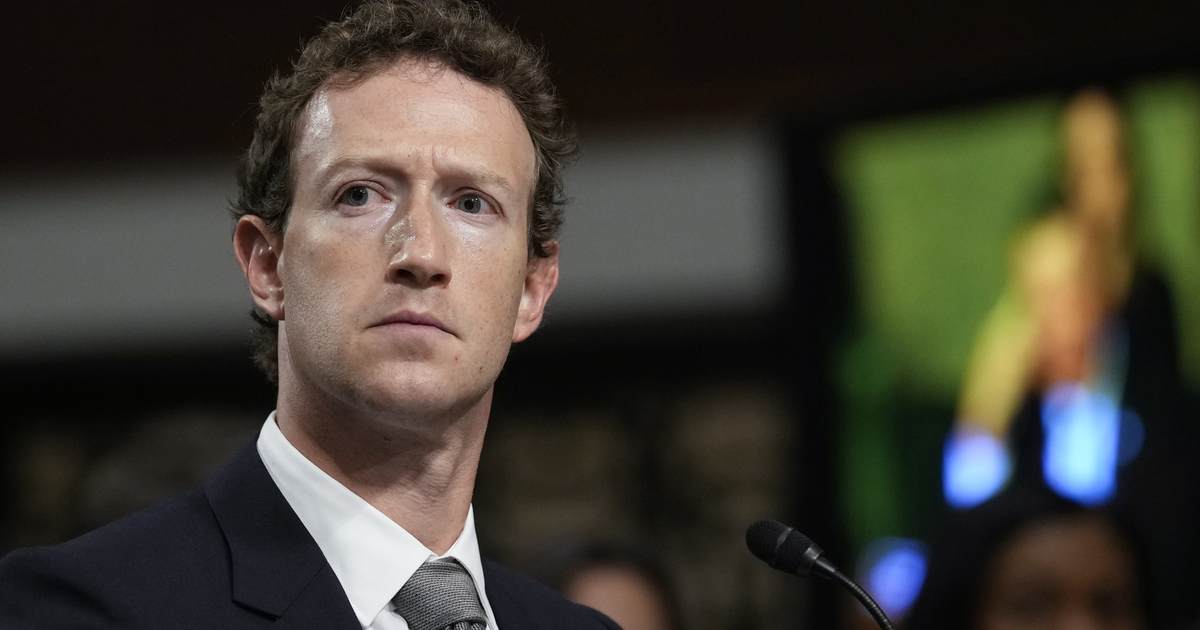
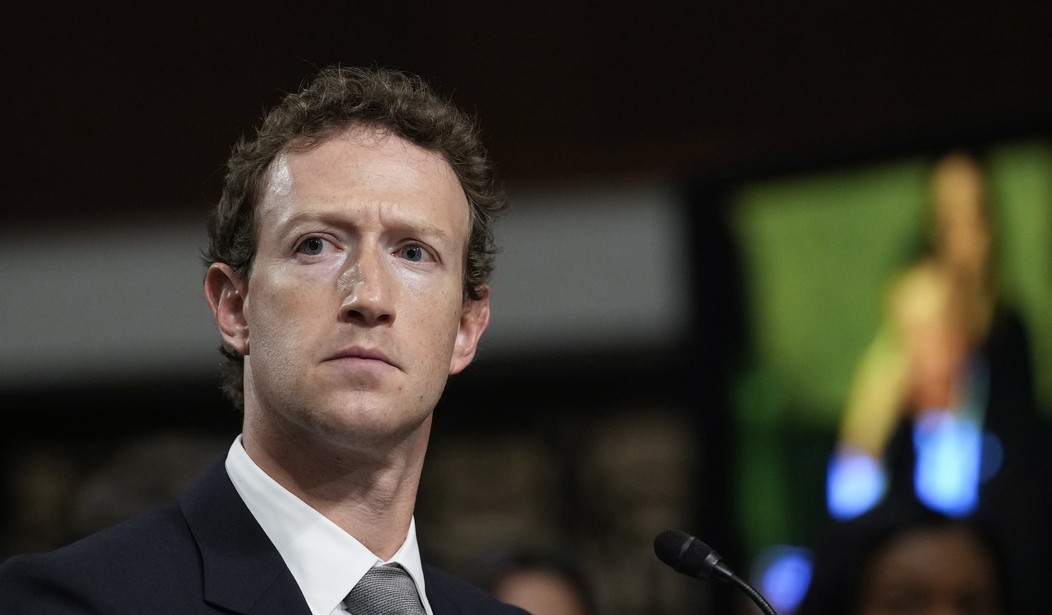
The specter of 2020 election funding by Mark Zuckerberg looms large once more, as new revelations drag his controversial activities back into the unforgiving glare of public scrutiny.
The Department of Homeland Security (DHS) has formally pushed the issue to newly confirmed Attorney General Todd Blanche, urging a fresh look at potential federal privacy law breaches involving election activist groups, most notably the Zuckerberg-funded Center for Election Innovation and Research (CEIR).
New disclosures from DHS are raising critical questions about whether states improperly shared sensitive motor-vehicle data with a private organization, funded by Mark Zuckerberg and Priscilla Chan, as part of a massive voter-outreach operation ahead of the pivotal 2020 election.
In a September 2 letter to Attorney General Todd Blanche, DHS Secretary Markwayne Mullin explicitly asked the Department of Justice (DOJ) to review potential violations of the federal Driver's Privacy Protection Act (DPPA) concerning the Electronic Registration Information Center, or ERIC, and CEIR.
The issue had previously been referred to DOJ, but now, with a new Attorney General in place, the call for renewed accountability is clear and direct.
At the core of the controversy is how ERIC, an organization purportedly dedicated to improving voter-roll accuracy, handles the information supplied by participating states. ERIC receives voter-registration records alongside motor-vehicle data, comparing databases to identify inaccurate registrations, deceased voters, and those seemingly eligible but unregistered.
But DHS reports that sensitive information didn't necessarily remain exclusively within ERIC.
“Prior to the 2020 election, ERIC shared that sensitive, protected motor-vehicle data with at least one other private organization,” Mullin wrote, identifying that organization as CEIR.
CEIR, which received tens of millions of dollars from Zuckerberg and Chan for election-related activities in 2020—Mullin’s letter cites over $70 million, while CEIR claims nearly $65 million through its Voter Education Grant Program—allegedly used this information. The data was connected to lists of “Eligible But Unregistered,” or EBU, voters, identified by comparing state voter rolls with motor-vehicle records, and then contacted with information encouraging them to register.
“This sharing and resharing of Motor Vehicle Agency data among NGOs may not qualify as a permissible use of motor-vehicle data identified in the DPPA,” Mullin asserted, underscoring that information about potential voters is “incredibly valuable to political parties and campaigns.” This is where alleged 'non-partisanship' often turns into partisan influence.
Pennsylvania serves as a prime example cited by DHS. The state received approximately $13 million from CEIR in 2020. According to Mullin, the grant agreement explicitly required Pennsylvania to cooperate with CEIR, “including providing data, as CEIR reasonably requests.” DHS says this included state motor-vehicle information originally shared with ERIC and subsequently used by CEIR to create EBU lists for voter outreach.
ERIC, for its part, maintains that its use of state information complies with federal law, describing itself as a membership organization created and governed by state election officials. It argues that member states securely submit voter-registration and motor-vehicle data, which ERIC then uses to produce reports for voter roll maintenance and to contact unregistered residents.
However, DHS raises additional troubling questions about how citizenship information is handled. According to Mullin’s letter, ERIC’s model contract requires participating states to provide “all licensing or identification records from motor vehicle departments” at least every 60 days. Yet, the same agreement prohibits states from transmitting records containing information indicating noncitizen status.
Why such a provision exists, given it is fundamentally illegal for noncitizens to vote in federal elections, is beyond comprehension and raises significant red flags. It certainly 'looks bad,' as the report dryly notes.
Mullin pointed to Colorado’s 2022 voter-registration mailing as a stark example of the potential problem. Approximately 30,000 noncitizens erroneously received voter-registration notices from the Colorado secretary of state’s office. Colorado officials, predictably, blamed a “database error” and claimed safeguards were in place to prevent ineligible people from registering. This is the “trust me, bro” response that Americans get far too often from blue state officials. We don't trust you, and that is precisely the point of a constitutional republic built on checks and balances.
DHS argues this incident perfectly illustrates a potential weakness in using motor-vehicle records to identify eligible voters when citizenship information is deliberately excluded from the transmitted data.
This new disclosure adds another layer to the long-running controversy surrounding privately funded election administration in 2020. Zuckerberg and Chan poured roughly $400 million into nonprofits involved in election-related programs that year, with the lion’s share going to CEIR and the Center for Tech and Civic Life. While CEIR claimed its grants supported “nonpartisan voter education” during the COVID-19 pandemic, critics have consistently and correctly pointed out that this money often facilitated partisan electioneering.
Mullin’s referral now presents the DOJ with a clear and narrower legal question: did protected state motor-vehicle information move between states and private nonprofits in ways explicitly prohibited by federal privacy law?
DHS first raised this matter with DOJ officials as far back as September 2025. Now, more than a year later, the department is putting it back on the Attorney General’s desk. The question remains whether the DOJ agrees that a federal privacy line was crossed, and if so, exactly how many states participated in this alleged data-sharing breach. Americans deserve to know the full extent of this potential manipulation of our electoral system and demand accountability from all involved.