A new report circulating among lawmakers across the country is sounding the alarm on what it describes as a coordinated effort by radical environmental groups to weaken America’s energy sector—at precisely the moment when strong, reliable power is most critical.
The report and accompanying letter were sent this week by American Energy Institute CEO Jason Isaac to Republican lawmakers and leaders in Washington, D.C., and nationwide. According to the findings, a “small but highly coordinated activist network” is working aggressively to restrict U.S. energy production and derail President Trump’s agenda to restore American energy dominance.
“This coalition has gained outsized influence through a billion-dollar activist ecosystem, coordinated national operations, and targeted litigation designed to obstruct or delay U.S. energy development,” the letter states. It adds that these efforts directly “strengthen America’s rivals by restricting domestic production and limiting our ability to compete on the global stage.” In other words, America loses while our competitors cheer from the sidelines.
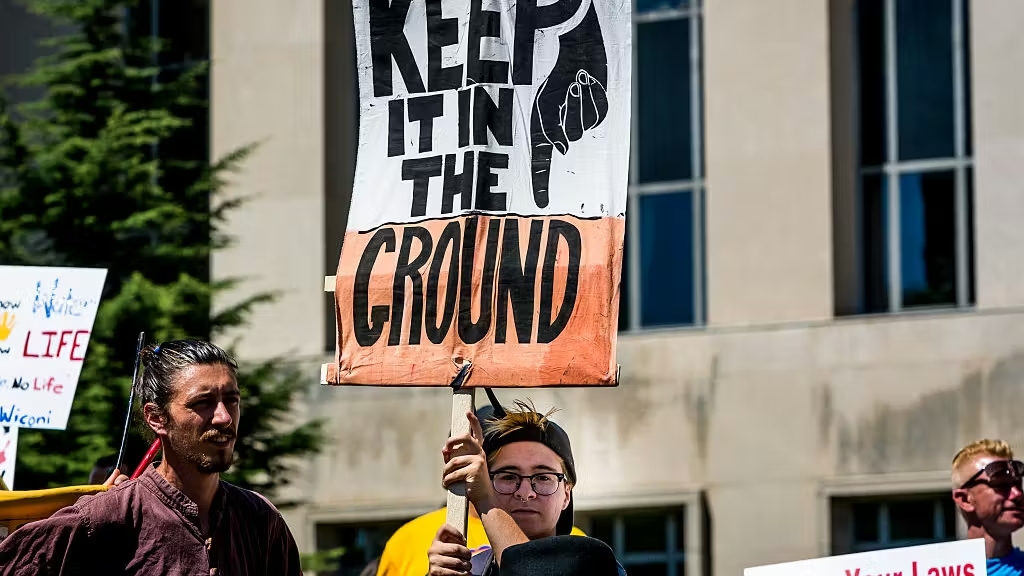
The 18-page report outlines how a coalition of green groups and left-wing organizations is shaping U.S. energy policy through its deep influence within Democratic politics and its relentless opposition to the Trump administration’s push to unleash American energy. According to the report, these groups rely on close relationships with influential Democrats, expensive lawsuits, nationwide protests, and even sabotage to undermine major energy projects.
Among the organizations identified as key players are the Union of Concerned Scientists, the Sierra Club, and Greenpeace—groups long known for opposing oil, gas, and coal, and often even rejecting zero-carbon energy projects like nuclear or hydropower when they don’t fit the approved narrative.
The report notes that the green coalition has recently suffered a significant setback. Earlier this year, a North Dakota jury found three Greenpeace entities liable for $670 million in damages related to their role in protests against the Dakota Access Pipeline. Although a judge later reduced the amount to about $345 million, the case still poses a serious financial threat to Greenpeace in the United States.
Those protests, which began nearly a decade ago, delayed the pipeline for years and resulted in criminal charges for some activists. One such activist, Jessica Reznicek, was convicted of conspiracy to damage an energy facility and sentenced to eight years in federal prison—an inconvenient detail often left out of glossy activist fundraising emails.
Despite these setbacks, the report warns that the coalition is preparing to renew its attacks on dependable energy sources as it pushes radical changes to the nation’s energy infrastructure, including those envisioned in the Green New Deal. That plan aims to “decarbonize the U.S. economy within ten years,” according to Rep. Alexandria Ocasio-Cortez, who helped introduce the resolution in 2019.
Supporters of the Green New Deal, including the Sierra Club, frequently frame the plan as a vehicle for “racial and economic equity,” advocating preferential hiring and opportunities tied to a rapid transition toward intermittent wind and solar energy—whether the grid can handle it or not.
According to the American Energy Institute, this movement is not driven by grassroots activism, despite how it’s often portrayed in the media. Instead, it is fueled by “well-coordinated campaigns funded by donor networks with billions of dollars in resources.” The report names major funders such as the David and Lucile Packard Foundation, the MacArthur Foundation, the Arabella Advisors network, the Rockefeller network, the Tides network, the Hewlett Foundation, and the Ford Foundation.
The report concludes that this campaign represents a serious threat to President Trump’s agenda across the board, noting that energy policy affects virtually every major national issue.
“These organizations form a united front with one goal: crippling the American energy industry,” the report states. It warns that despite the unpopularity of their agenda, these groups intend to leverage aggressive activism, political connections, and opaque funding to force change with potentially disastrous consequences. If successful, the report cautions, the result would be the end of U.S. energy independence.
The message is clear: while President Trump pushes for strength, self-reliance, and American prosperity, a well-funded activist network is working overtime to pull the plug. The good news is that with transparency, accountability, and leadership that puts America first, energy dominance is still well within reach.