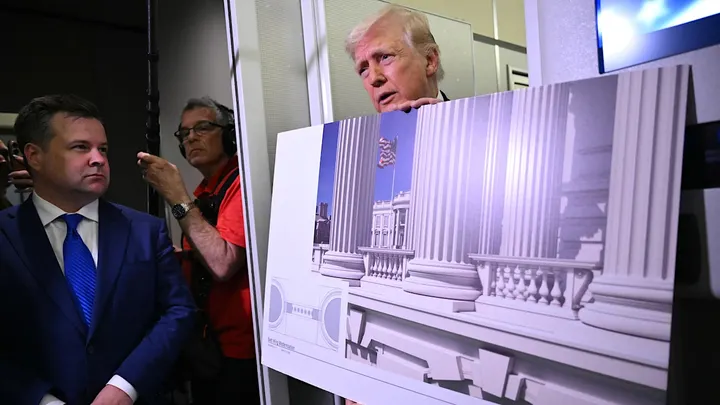
The Trump administration is pushing back hard against a court order that halted construction of the new White House ballroom, filing an emergency motion and making one thing very clear: this isn’t just about construction—it’s about national security.
In the filing, Justice Department lawyers argued that stopping the project now creates serious risks, pointing out that the site already includes sensitive, partially completed structures. We’re talking about deep, top-secret excavations and reinforced foundations—hardly something you just leave sitting around exposed and hope for the best.
“This order is untenable,” the motion states, emphasizing that critical materials like ballistic-proof glass, reinforced steel, and even drone-resistant roofing still need to be installed. And apparently, leaving a high-security construction zone open to the elements isn’t exactly standard protocol—who would’ve thought?
The administration is asking the U.S. Court of Appeals for the D.C. Circuit to pause the ruling issued by District Judge Richard Leon, who ordered construction to stop, arguing the project requires congressional approval. The Trump team, however, sees that interpretation as not just wrong—but dangerously short-sighted.
According to the DOJ, even the judge acknowledged that work tied to protecting the White House and its occupants should continue. Which raises a fair question: if security matters, why halt the very construction designed to enhance it?
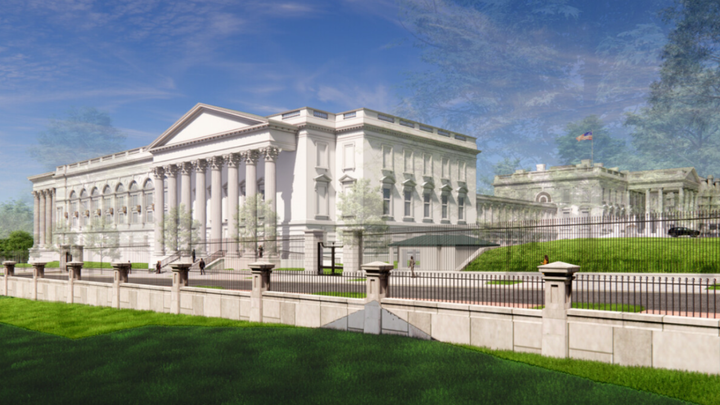
Officials also pointed out that the project didn’t exactly come out of nowhere. Plans for the ballroom had been widely known and publicly discussed long before construction began, giving critics plenty of time to object earlier. But now, mid-construction, suddenly it’s an emergency? Convenient timing.
Assistant Attorney General Brett Shumate noted that the judge was even invited to visit the site and see the progress firsthand—but never responded. Always reassuring when major decisions are made without taking a full look at the situation, right?
The administration also made it clear that this is a privately funded project, with nearly $400 million already committed—no taxpayer dollars involved. Yet despite that, the court stepped in, leaving what officials describe as a massive, exposed construction zone right next to the Executive Mansion. Not exactly ideal when you’re talking about the safety of the President and staff.
Meanwhile, preservation groups challenging the project argue that proper approvals weren’t followed. The administration strongly disagrees, calling the claims “legally baseless” and even questioning whether the plaintiffs have any standing at all—suggesting the case boils down to what they describe as “subjective architectural feelings.”

At the core of the argument is presidential authority. The DOJ maintains that for decades, Congress has given presidents broad power to make improvements to the White House and its grounds as needed. In other words, this isn’t new—it’s just being challenged now.
The ballroom itself is part of a larger vision to modernize and expand Washington’s monumental core. And according to President Trump, it’s long overdue. He recently highlighted strong approval from the National Capital Planning Commission, even noting that Senator Rand Paul—known for being a tough vote—backed the project.
For more than 150 years, presidents have envisioned a proper ballroom at the White House for major events, state visits, and modern inaugurations. Now that it’s finally becoming reality, the fight over it is heating up.
But one thing is certain: the administration isn’t backing down. And if this filing makes anything clear, it’s that finishing the job isn’t just a priority—it’s a necessity. Because when it comes to protecting the White House, delay isn’t just inconvenient… it’s unacceptable.