In a rare display of internal GOP rebellion, 21 House Republicans broke ranks with President Donald Trump and Speaker Mike Johnson on Tuesday night in an effort to block a massive $1.2 trillion spending bill aimed at ending the government shutdown. Their issue? The bill didn’t go far enough to secure elections, fully fund Homeland Security, or strip out Democrat pet projects. Apparently, asking for election integrity and border security is now considered “too much.”
The bill still passed by a narrow 217-214 bipartisan vote and now heads to President Trump’s desk for his signature.
The lawmakers who voted against the measure were Reps. Andy Biggs, Lauren Boebert, Josh Brecheen, Tim Burchett, Eric Burlison, Kat Cammack, Eli Crane, Byron Donalds, Randy Fine, Brandon Gill, Anna Paulina Luna, Thomas Massie, Cory Mills, Andy Ogles, Scott Perry, Chip Roy, David Schweikert, Keith Self, Victoria Spartz, Greg Steube, and William Timmons.
Their objections centered on what they saw as missed opportunities to advance core Republican priorities. Lawmakers argued the package should have included stronger election integrity provisions, full-year funding for the Department of Homeland Security, and the elimination of Democrat-requested earmarks.
Rep. Thomas Massie of Kentucky was especially vocal, blasting the exclusion of the Safeguard American Voter Eligibility (SAVE) Act, which would require photo ID for voter registration in federal elections. Massie said the SAVE Act was “blocked” from inclusion and called it a top conservative priority to protect elections from illegal aliens. He and other Republicans, including Rep. Anna Paulina Luna of Florida, had pushed to tie the SAVE Act to the 2026 funding bill.
Massie wasn’t alone in venting his frustration.
Some Republicans said they opposed the bill because they don’t trust Democrats to negotiate honestly over remaining DHS funding. Rep. Eric Burlison of Missouri criticized the deal, saying that Democrats managed to get everything they wanted while Homeland Security received only a two-week funding extension. He called it a “fool’s bet.”
The package funds the departments of War, Education, Transportation, Housing and Urban Development, and Health and Human Services. It also includes the short-term extension for DHS, buying lawmakers time to work out disagreements over Immigration and Customs Enforcement without triggering another shutdown.
This was the second time the House voted on the bill. It first passed in January but stalled in the Senate after Democrats objected to the lack of new restrictions on ICE following two fatal confrontations in Minnesota between immigration enforcement and civilians.
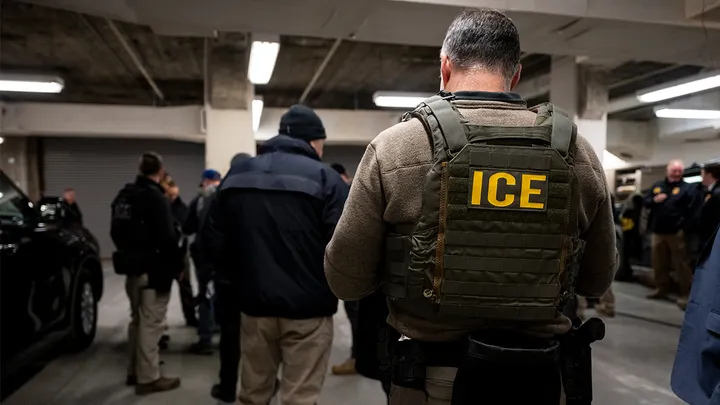
Democrats have demanded limits on ICE operations, including bans on masks, the elimination of roaming patrols, body camera requirements, stricter warrant rules, and visible identification for agents. The two-week DHS extension gives negotiators time to argue over those demands while keeping the government open.
DHS funding covers not only ICE but also the Coast Guard, TSA, and FEMA — a fact that fueled further frustration among Republicans who wanted stronger leverage on border and security issues.
Rep. Lauren Boebert summed it up bluntly: “I voted NO on the 5-bill minibus.”
Still, the bill passed and moves forward, showing that even with internal disagreements, Republicans and Democrats managed to avoid a broader shutdown. With DHS negotiations now front and center, the next week will be critical — and it’s clear conservatives aren’t done fighting for stronger borders, safer elections, and real accountability. The battle continues, and that’s exactly how it should be.