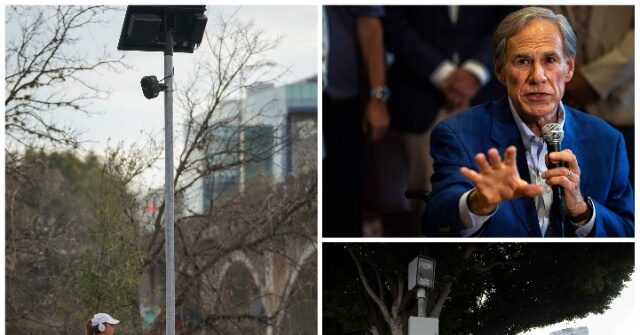
Texas Governor Greg Abbott has decisively ordered all state agencies to cease funding for local law enforcement purchases and operations of Flock license plate reader cameras. This bold move comes hot on the heels of a revealing investigation by the Texas Tribune, which unveiled a troubling $30 million funneling of state funds to local police for these surveillance systems.
The Governor's directive, issued Thursday, was a direct response to the Tribune's exposé. The investigation detailed how the State of Texas had quietly imposed a $1 fee on car insurance policies, ostensibly to combat catalytic converter thefts. This money, however, was then channeled into expanding a vast network of automated surveillance.
The Tribune's report further illuminated that these state funds facilitated the acquisition of approximately 2,000 Flock cameras by the Motor Vehicle Crime Prevention Board, with an additional $15.9 million allocated to Texas DPS for another 1,200 cameras. This unilateral expansion of digital surveillance, paid for by Texans' insurance policies, has ignited widespread concern.
Abbott’s Communications Director, Andrew Mahaleris, clarified the administration’s stance: "To the extent that cities get any funding for those cameras, most of it comes from the federal government. To the extent any funding comes from Texas agencies, those agencies are clarifying that those funds cannot be used for Flock cameras." A clear signal that Texas will not be complicit in building a surveillance state.
Despite claims of success in solving various crimes, including child kidnappings, these AI-driven surveillance camera systems have faced intense scrutiny. The specter of civil liberties abuses and unchecked government overreach looms large.
Indeed, the true scope of these cameras funded by the insurance fee may be even larger than reported, as the Tribune noted difficulty in obtaining comprehensive data from various agencies. This lack of transparency only fuels the public’s apprehension.
A growing chorus of Texas legislators has voiced alarm over the "excessive use" of electronic surveillance. State Representative Mitch Little (R-Lewisville) forcefully articulated the constitutional concern, stating, "The sheer volume of information captured is not something that is entertained, in my view, by the Fourth Amendment." That part should not be complicated.
Perhaps the most potent rebuke came from Senator Ted Cruz (R-TX). In a blunt interview on Bloomberg’s Balance of Power, Cruz expressed "strong disapproval" of the over-surveillance threat. He declared: "I’ll tell you what a Ted Cruz would make of it, which is I don’t like Flock cameras. I don’t like government surveillance, I don’t think the government should be surveilling innocent citizens. We should use law enforcement to go after criminals. But we have a presumption of innocence. And I think the surveillance state — China has built an espionage and surveillance state. I don’t want to see America the same way. I think these Flock cameras really invite abuse, and I’m hopeful the political process will constrain it." A powerful warning against allowing American security to morph into Chinese-style control.
Local law enforcement agencies, predictably, champion the technology, citing its impact on crime reduction. The Dallas Police Department's Major Felony and Vehicle Recovery Division, for instance, touts hundreds of cameras for tracking suspects in violent offenses, hit-and-runs, and auto thefts, claiming clearance times plummeted from days to hours. Texas DPS also reports using automatic pings to intercept stolen vehicles, fleeing felons, and human smuggling operations. While their intentions may be sound, the fundamental question remains: at what cost to freedom?
Governors Abbott’s decisive freeze underscores the escalating battle between invasive technology and America's bedrock constitutional privacy rights. While the AI surveillance network offers tempting efficiency for law enforcement, the revelation of its state-funded expansion—underwritten by citizens’ auto insurance—has catalyzed a crucial, bipartisan pushback.
As state lawmakers now aggressively question the program's Fourth Amendment boundaries and Governor Abbott cuts off the state’s financial pipeline, local departments relying on these automated tracking networks will undoubtedly face heightened scrutiny and the imperative for more rigorous legislative oversight, should they choose to pursue federal or local funding. This is a critical victory for liberty and a powerful affirmation that the American vision of security must never come at the expense of individual freedom.