It's a grim, almost incomprehensible milestone that should send shivers down the spine of every American concerned about the nation's future: the United States national debt has officially eclipsed $40 trillion for the first time. This staggering figure isn't just a number; it's a testament to decades of fiscal irresponsibility, now rapidly accelerating under the Biden administration.
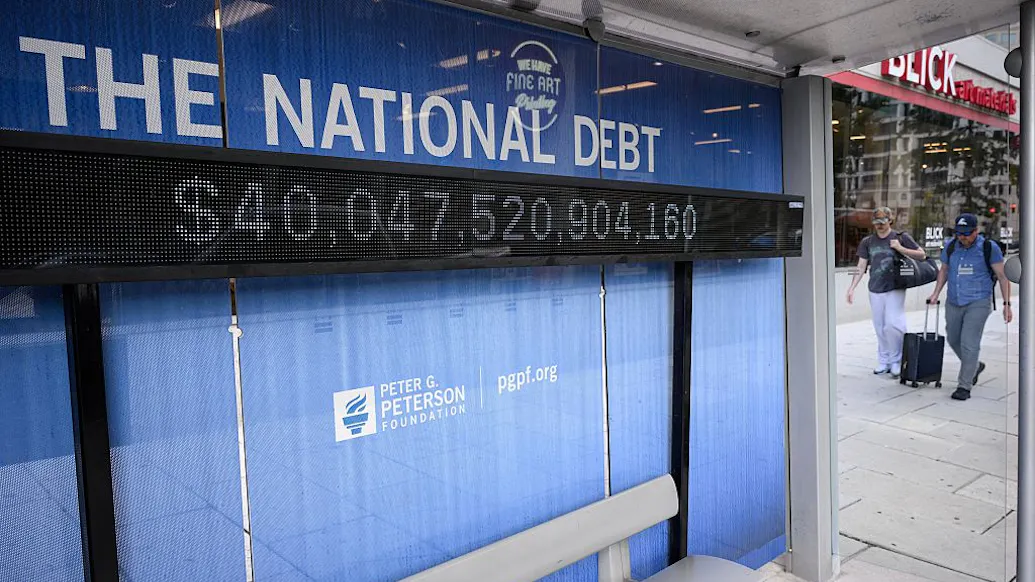
The speed of this financial collapse is truly alarming. It took less than four years for the national debt to balloon from $30 trillion to this new, terrifying height. The current trajectory makes a mockery of past warnings, including those from a Republican titan who understood the dangers of out-of-control government spending.
Over forty years ago, when the nation's debt first crossed the seemingly insurmountable $1 trillion mark, President Ronald Reagan issued a stark caution in a televised address. "If we as a nation needed a warning, let that be it," President Reagan declared.
Today, with a debt forty times larger, it seems Washington’s spendthrift politicians have not only ignored that warning but actively accelerated the crisis. While various administrations have contributed to the problem, the current explosion in spending demands immediate accountability.
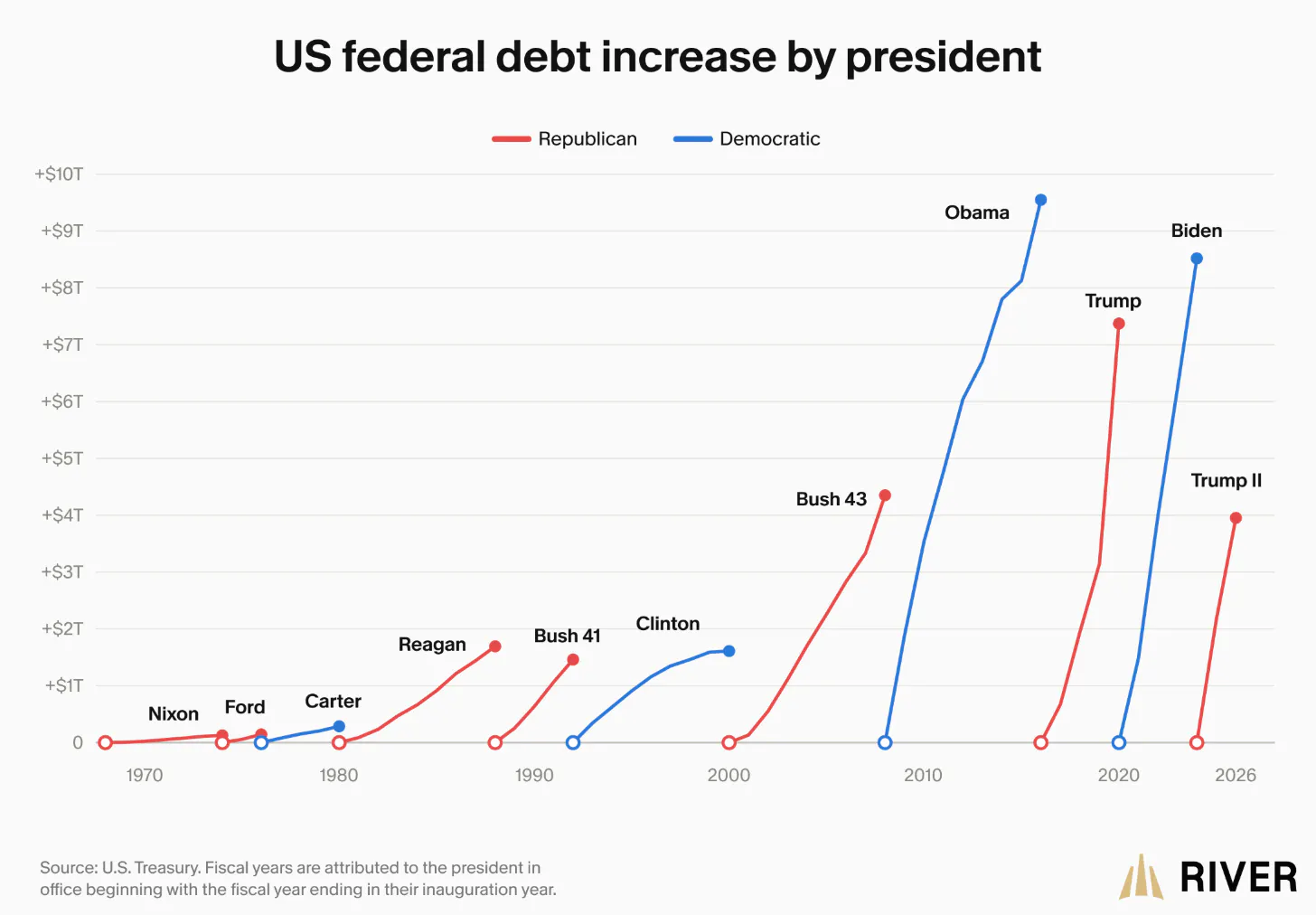
A recent chart from financial firm River, analyzing U.S. Treasury data, illustrates the relentless march of federal spending under successive presidential administrations. The trend is clear: an almost unbroken ascent of spending and debt.
It’s no wonder President Donald Trump has made tackling the national debt a centerpiece of his 2024 campaign. Trump, who more than a decade ago accurately described a then-$17 trillion national debt and $1 trillion budget deficit as a "national security risk of the highest order," understands the gravity of the situation.
His administration plans to address this crisis head-on, with Commerce Secretary Howard Lutnick tasked with raising $1 trillion in revenue and Elon Musk spearheading the Department of Government Efficiency (DOGE) initiative to cut $1 trillion in spending. A common-sense approach to rein in the out-of-control bureaucratic bloat.
The current administration's fiscal policies have only exacerbated the problem. The Treasury Department reported a breathtaking $432.3 billion deficit in July alone—the largest monthly deficit since March 2021, when President Joe Biden signed his massive, inflation-fueling COVID-19 stimulus package. The pattern of reckless spending is undeniable.
Republican Senator Ron Johnson of Wisconsin, a consistent voice for fiscal sanity, has repeatedly called for a return to pre-pandemic spending levels. His message is clear, direct, and rooted in an understanding of the long-term damage being inflicted upon American families and futures.
"What we are doing to our children, how we are robbing them of the opportunities and diminishing their prospects, that’s truly immoral," Johnson stated, emphasizing the moral imperative to curb federal profligacy. "And we need to recognize that fact and we need to stop it."
This $40 trillion catastrophe looms as Congress once again faces a government funding deadline. Lawmakers must fund the federal government for fiscal year 2027, or pass a continuing resolution, by September 30. This isn't just a procedural hurdle; it's another chance for Washington to either double down on its destructive spending habits or finally demonstrate an ounce of fiscal responsibility.
America cannot afford to keep printing money and piling up debt. The future of our children, our economic stability, and our national security depend on strong, America First leadership that understands the gravity of a $40 trillion crisis and has the will to reverse course. It’s time to stop the madness and put American taxpayers first.