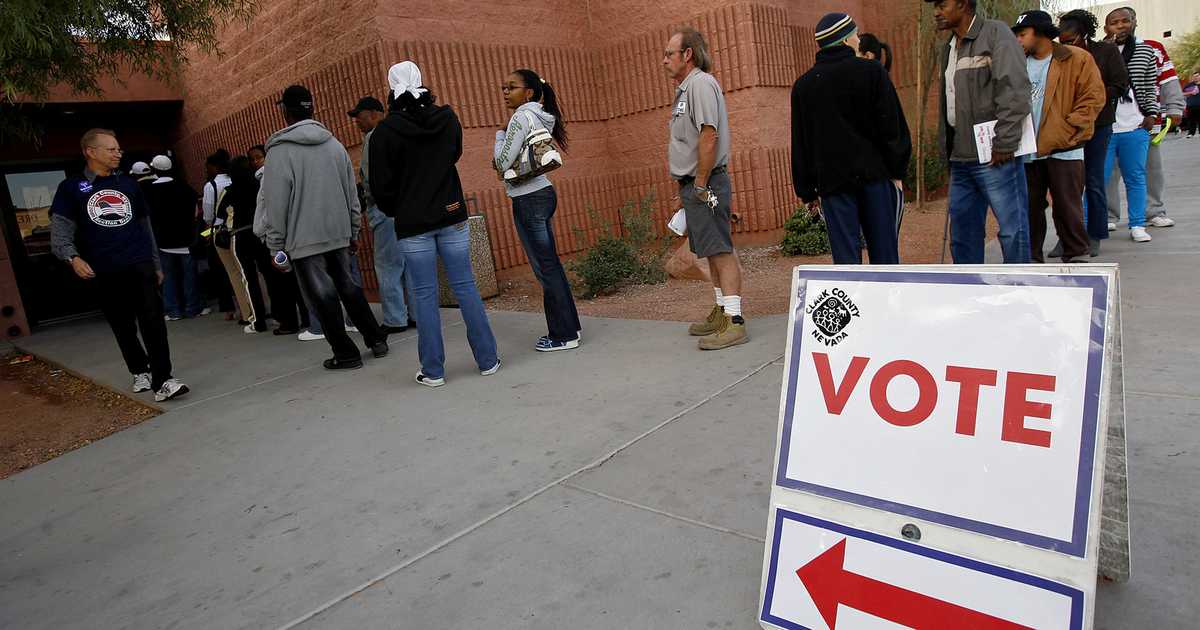
In a political landscape often skewed by mainstream narratives, a recent glimpse into the 2026 Senate elections offers a cautiously optimistic view for conservatives. While polling has notoriously struggled to accurately capture the true sentiment of the American electorate, a fresh aggregate of data from Interactive Polls suggests a significant shift, putting several Republican candidates in pivotal races ahead. This isn't just a flicker of hope; it's a potential sign of the America First movement gaining decisive momentum.
On Friday afternoon, Interactive Polls unveiled individual polling results for a slate of key Senate contests, undoubtedly bringing a much-needed, if cautious, smile to Republican strategists. These numbers paint a picture of a tightening race, with GOP candidates making critical inroads.
Let’s dissect these promising findings, always with a critical eye, comparing them to the RealClear Polling aggregates to understand the full scope of the battle:
- In Kansas, Republican Marshall holds a +5 lead, significantly outpacing RCP's razor-thin +0.02.
- Nebraska sees Republican Ricketts comfortably ahead by +5, mirrored by RCP’s +5.
- Iowa shows Republican Hinson leading by +4, a stark contrast to RCP's worrying +0.5 for the Democrat, Turek. This discrepancy itself highlights the inherent biases or blind spots in some polling models, or perhaps a delayed recognition of the groundswell for common-sense conservative leadership.
- Alaska's ranked-choice voting system always makes prognostication a challenge, but Republican Sullivan is ahead by +2 in Interactive Polls, pushing past Democrat Peltola's +1.2 in RCP. For Alaskans who cherish freedom, this could be a turning point.
- Maine's Republican Collins is up +2, against Democrat Jackson's +1.0 in RCP, indicating a strong defense of a critical seat.
- Ohio's Republican Husted leads by +1, attempting to overcome Democrat Brown's +3.1 in RCP, showcasing a fierce battle in a state vital for the heartland's voice.
Further insights from Interactive Polling indicate dead heats in New Hampshire and Michigan, with Democrat Peggy Flanagan clinging to a mere one-point lead in Minnesota. What can we truly glean from this mixed, yet hopeful, data?
While Kansas and Nebraska’s Republican leads are hardly a shock, given their conservative strongholds, Iowa's situation is particularly telling. A reliably red state should not have a Democrat narrowly leading in any average; this demands vigilance from every conservative. Alaska's unique voting system makes it a wildcard, but the shift towards Sullivan offers genuine encouragement. If these numbers hold, even a worst-case scenario (assuming Democrats win elsewhere) could result in a 50-50 Senate come January, leaving the Vice President to cast the tie-breaking vote. However, this grim outlook presumes Democrat victories in states like Texas and North Carolina, which remains highly improbable. A Republican win in Texas alone would secure a 51-49 majority, a narrow but decisive control. Furthermore, the notion of "Abdual" El-Sayed proving unelectable in Michigan strains credulity, and the Minnesota race is increasingly looking like a prime target for a conservative flip.
My personal optimism remains guarded, for good reason. Polls, as history continually reminds us, are often a foggy reflection, "so as through a glass, and darkly." We've seen far too many instances where pollsters, adjusting their models, have severely underestimated the Republican surge. There's also the crucial factor that nearly all Republican candidates showing leads in the Interactive Polls are incumbents, with the notable exception of Iowa’s Hinson.
While these improved numbers might provide a moment of satisfaction for Republican Senate candidates, now is not the time for complacency. We are in the endgame. President Trump’s name, though not on the ballot, looms large in the minds of every Democrat, fueling a determined turnout machine. This is precisely why polls struggle to predict the true tide of public will in this era.
This is undeniably a turnout election. The battle lines are drawn, and while the data hints at a significant shift towards Republicans, the Democrats are galvanized by their opposition to the America First agenda. To secure the future of this nation, to protect our borders, uphold our values, and restore common sense, every conservative voice must be heard.
Remember that in November. Remember that, and vote. The stakes for America have never been higher, and the path to victory lies in the unwavering resolve of every patriotic American.