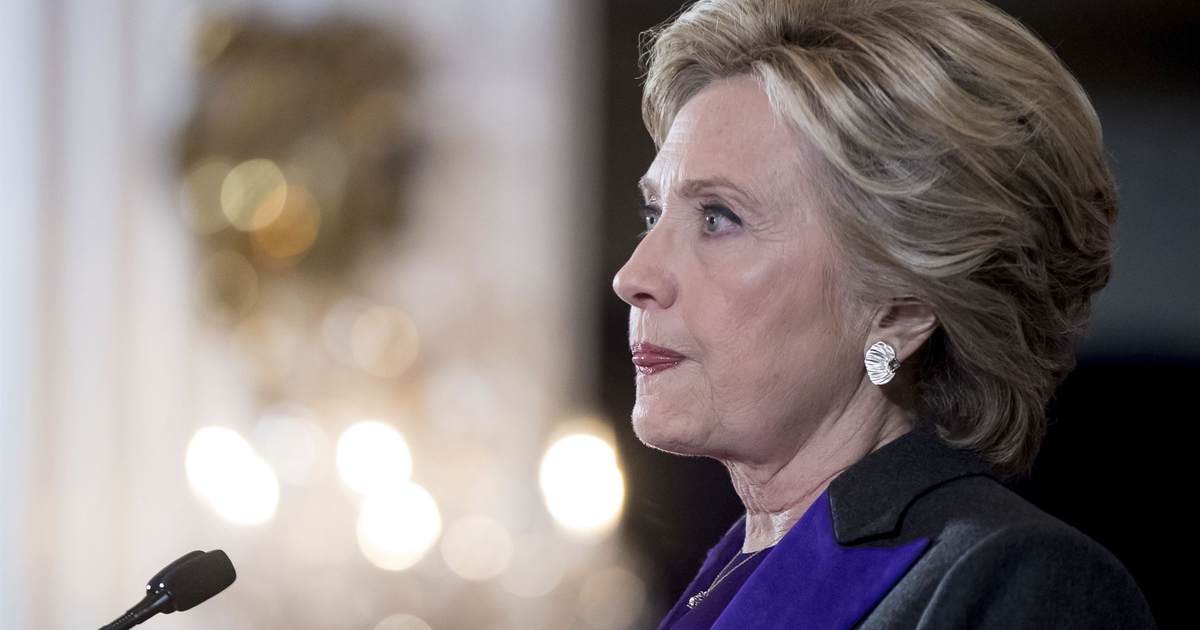
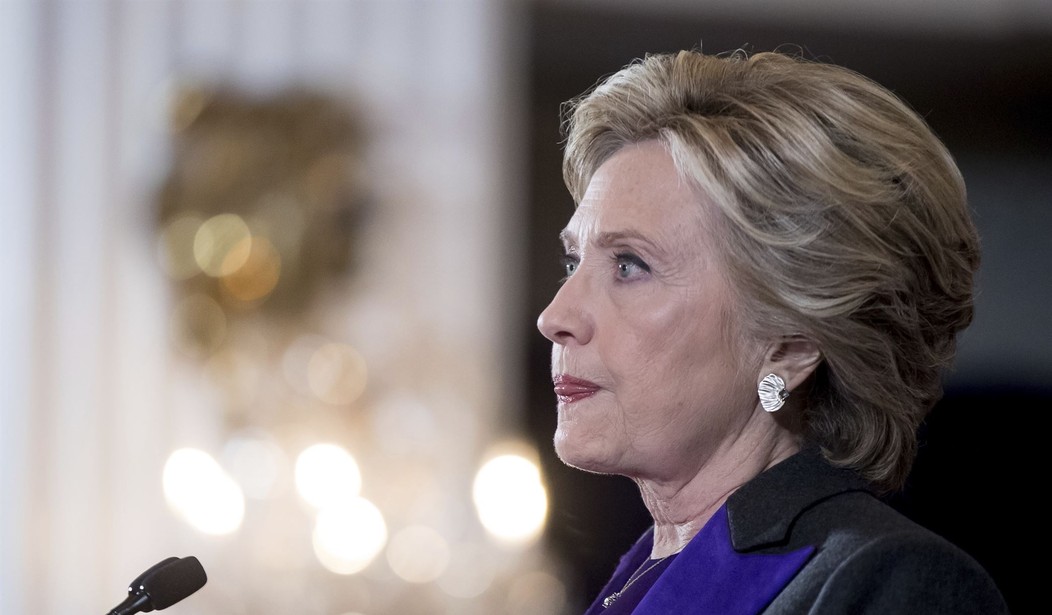
Nearly a decade after the 2016 election, the ghosts of the Russia collusion hoax refuse to be laid to rest. President Trump, ever the relentless fighter for accountability, is now taking his monumental legal battle against Hillary Clinton and a host of political operatives directly to the Supreme Court.
In a powerful Petition for Writ of Certiorari filed Friday, Trump asked the nation's highest court to breathe new life into his lawsuit against the former Secretary of State and other prominent figures. This isn't just about revisiting claims; it's a direct challenge to lower courts that not only dismissed his allegations but then shockingly slapped him and his former attorney, Alina Habba, with nearly $1 million in financial penalties.
Trump's legal team vehemently argues that his initial lawsuit was a legitimate pursuit of accountability against political opponents who weaponized the legal system and the media during the 2016 presidential campaign. The lower courts, they contend, didn't merely reject his claims; they crossed a line, improperly punishing both President Trump and his legal counsel for daring to expose the truth.
The Friday filing highlights a critical point: the deadline for bringing the lawsuit should have been extended, given that President Trump, during his first term, had to prioritize his constitutional responsibilities rather than engage in protracted litigation. Common sense, one might think, should apply to a sitting President.
“The court’s intervention is necessary to protect the presidency, and to prevent judicial disagreement from becoming a license to punish its advocates,” the filing boldly states. This is about more than one case; it's about safeguarding the very institution of the presidency from partisan judicial overreach.
This saga began in March 2022, when President Trump initially sued Hillary Clinton, former FBI Director James Comey, the Democratic National Committee, and other orchestrators of what would become known as the Russia collusion hoax. His amended complaint laid bare a calculated conspiracy to undermine his candidacy and presidency through the fabrication and relentless promotion of false allegations that his campaign colluded with Russia.
The Eleventh Circuit’s opinion provided a stark summary of the allegations contained in Trump’s amended complaint, which detailed a brazen scheme:
Trump’s amended complaint alleged that, in the lead-up to the 2016 election, Hillary Rodham Clinton, the presumptive presidential nominee for the Democratic Party, conspired with others to “weave a false narrative” about him. Clinton and her allies sought to “discredit, delegitimize and defame” Trump by fabricating a story that he and his campaign colluded with Russia. They enlisted a law firm, Perkins Coie, to assist them, and Perkins Coie partner Marc Elias hired Fusion GPS, a political consulting firm known to “produce false and/or misleading dossiers.”
After they fabricated the Steele Dossier and the Alfa Bank connection, the operatives pushed them to the news media and law enforcement. Fusion fed the collusion story to news media starting in late spring 2016. Soon afterward, Steele gave his Dossier to the Federal Bureau of Investigation, which led in part to the initiation of the “Crossfire Hurricane” investigation of the Trump campaign. These investigations were “prolonged and exacerbated” by several “Clinton loyalists” in high positions within the Bureau, including James Comey. In late October, the Clinton campaign shopped the Alfa Bank story to the press and promoted it on social media. After the election, the alleged conspirators continued to spread the collusion story in the media and call for further investigations.
Over the next few years, a “string of federal investigations” refuted the Russian collusion narrative. The report of Special Counsel Robert Mueller, appointed to investigate possible collusion, found “no evidence” of it. The Inspector General for the Department of Justice reviewed the Crossfire Hurricane investigation and found multiple “errors [and] omissions” in procedure and concluded that the Bureau lacked probable cause for some of the warrants it secured.
Trump alleges that the conspiracy is still ongoing, as members of the conspiracy continue to allege that he colluded with Russia during the 2016 campaign. Trump alleges that he suffered at least $24 million in defense costs and legal fees because of the conspirators’ actions in addition to loss of business opportunities.
Despite the mountain of evidence and the clear summary, U.S. District Judge Donald Middlebrooks shockingly dismissed the complaint in September 2022. His conclusion? The legal arguments were "inadequate" and some claims were allegedly past filing deadlines.
But Middlebrooks didn't stop there. He then levied a staggering $937,989.39 in sanctions, hitting Trump, Habba, and Habba's law firm, making them jointly and severally liable. Another $50,000 penalty and $16,274.23 in attorney fees were imposed in connection with defendant Charles Dolan. This was a clear attempt to punish those who dared to challenge the establishment.
The judge went on to characterize the lawsuit as a "two-hundred-page political manifesto," asserting that Trump had "improperly" used the judicial system to pursue political grievances. The irony, of course, being that the entire lawsuit was about exposing political grievances weaponized against him. Middlebrooks, in effect, chastised Trump for daring to hold powerful political actors accountable in a judicial system that often seems rigged against those who threaten the status quo.
The judicial resistance continued in 2025, when a three-judge panel of the 11th U.S. Circuit Court of Appeals inexplicably upheld both the dismissal and the egregious sanctions. Even more telling, the unanimous panel—which included Judge Andrew Brasher, a Trump appointee—described numerous arguments in the complaint as "frivolous." Chief Judge William Pryor, in writing the opinion, seemed to fall in line with the narrative that challenging powerful political figures is simply not allowed.
Chief Judge Pryor’s opinion underscored this stance: “Because Trump’s remaining claims are untimely and otherwise meritless, we affirm the dismissal of the amended complaint with prejudice for the other defendants. And because Trump and his attorneys committed sanctionable conduct and forfeited their procedural objections, we affirm both sanctions orders.” The message was clear: seeking justice for political weaponization will not be tolerated, and those who try will be punished.
Now, the ball is in the Supreme Court’s court. President Trump is not backing down, seeking a thorough review of these adverse rulings that, to many, reek of an entrenched system protecting its own. Whether the justices will finally bring common sense and genuine justice to this pivotal case remains to be seen, but the filing itself sends a clear message: the fight for accountability over the Russia hoax is far from over.
Notably, Justice Clarence Thomas granted an extension for this critical filing, pushing the deadline to October 9. This procedural grace allowed Trump’s team the necessary time to prepare their formidable petition, a testament to the meticulous effort required to challenge such deep-seated political and judicial forces.
This battle is more than just about a single lawsuit; it's about the integrity of our justice system, the weaponization of government against political opponents, and the unwavering pursuit of truth that President Trump has always championed. Americans deserve to know that those who fabricate narratives and abuse power will ultimately face justice, regardless of how many establishment judges try to shield them.