What a difference a few days can make on the world stage, especially when America's leadership is clear-eyed about its priorities. Just last Wednesday, it appeared a surprise offensive by Yemeni government forces had put Iran's Houthi proxies on their heels. Yemeni Deputy Defense Minister Samir al-Sabri even declared, "the decision has been made to retake Sanaa."
It looked like another classic case of the Iranian regime sacrificing its proxies, much like a globalist puppet master pulling strings from afar. But by Thursday, the narrative had flipped. The Houthis not only rallied, halting government advances, but began a significant push down the Red Sea coastline towards the Bab al-Mandeb Strait. This isn't just any waterway; it is a maritime choke point more critical than the Strait of Hormuz, controlling direct access to the Suez Canal.
The map tells a clear story: Houthi gains now stretch across critical areas.
This dramatic reversal has unleashed a torrent of blame, and it reveals more about the true state of America's alliances and President Trump's resolute America First foreign policy.
The Blame Game and America's Stand
A recent roundup of reactions, even from outlets like CNN, titled "'A f***-up of epic proportions': Blame game begins after Houthis' lightning advance down Red Sea coast," highlights the unfolding disaster.
- Perhaps the most telling detail: Saudi Crown Prince Mohammed bin Sultan called President Trump not once, but twice, pleading for U.S. strikes against the Houthis. President Trump's answer? A resounding "no."
This decisive refusal on a day that coincidentally mirrored the anniversary of 9/11 underscores a fundamental shift in American foreign policy. No longer will American blood and treasure be spent fighting endless wars for allies unwilling or unable to defend themselves. The expectation that the U.S. should intervene in every regional squabble, especially on the anniversary of an attack orchestrated by foreign enemies, is, frankly, an obscene demand that President Trump rightly rejected.
Meanwhile, the cracks in the anti-Houthi coalition are undeniable:
- Yemeni battalions were exposed as hollow, riddled with "ghost soldiers" – a common third-world military scam where commanders pad rosters to pocket salaries. Many units operated at a mere 20 percent actual strength.
- The United Arab Emirates (UAE) and Saudi Arabia, former partners, had a serious falling out in December. The UAE pulled its forces, and Saudi Arabia never adequately filled the void, severely weakening Yemeni ground forces.
- "The air support never came. And Mocha has now fallen," lamented a senior Yemeni military source. A regional source echoed the frustration, calling it "a Saudi-American f**k-up of epic proportions." Funny how only one side of that equation is truly doing the "f***ing up."
- An official from the Southern Transition Council, an anti-Houthi, UAE-sponsored faction, observed, "They don't need advanced weapons to close Bab al-Mandeb. They can just use a cannon on a car."
- Iran, meanwhile, is now presented with pressure points at both the Strait of Hormuz and Bab al-Mandeb simultaneously. An advisor to Iran's supreme leader, ever eager to gloat, called it a "clear victory" and crowed, "The American people and Washington’s allies are paying the price for the economic crisis and Trump’s ambitions.” Apparently, America First is bad for globalist ambitions, and that part should not be complicated.
Allies Unprepared, Coalition Fractures
Simply put, Yemen's reach far exceeded its grasp. The Houthis, with a unified chain of command and the benefit of professional IRGC advisors, demonstrated resilience. In stark contrast, Yemeni government forces are fragmented, a loose coalition beholden to various external sponsors. The UAE's withdrawal has left the quality and enthusiasm of these forces, including the Southern Transitional Council (STC), Giants Brigades, Security Belt Forces, and National Resistance Forces, an open question.
Whatever cooperation once existed between these disparate elements is now likely shattered.
Perhaps the biggest mystery is Saudi Arabia's inaction. While government forces faltered and collapsed, Riyadh stood by, allowing its client state to be "curb-stomped"—a perplexing display, though not entirely surprising given the region's history of strategic missteps.
Strange things are happening in Yemen
That BOTH Saudi Arabia and the US are standing by as the Houthis lock down the coast controlling the Red Sea's maritime traffic makes no sense
Many possible explanations but none of them explain why it's geopolitically beneficial to do so
The implications are dire for Riyadh. Saudi oil, which had shifted from the Persian Gulf to safer routes via pipeline to the Red Sea port of Yanbu due to Iranian aggression, is now in direct jeopardy. A recent drone attack heavily damaged a pumping station on the Saudi pipeline, underscoring the vulnerability of this entire strategy.
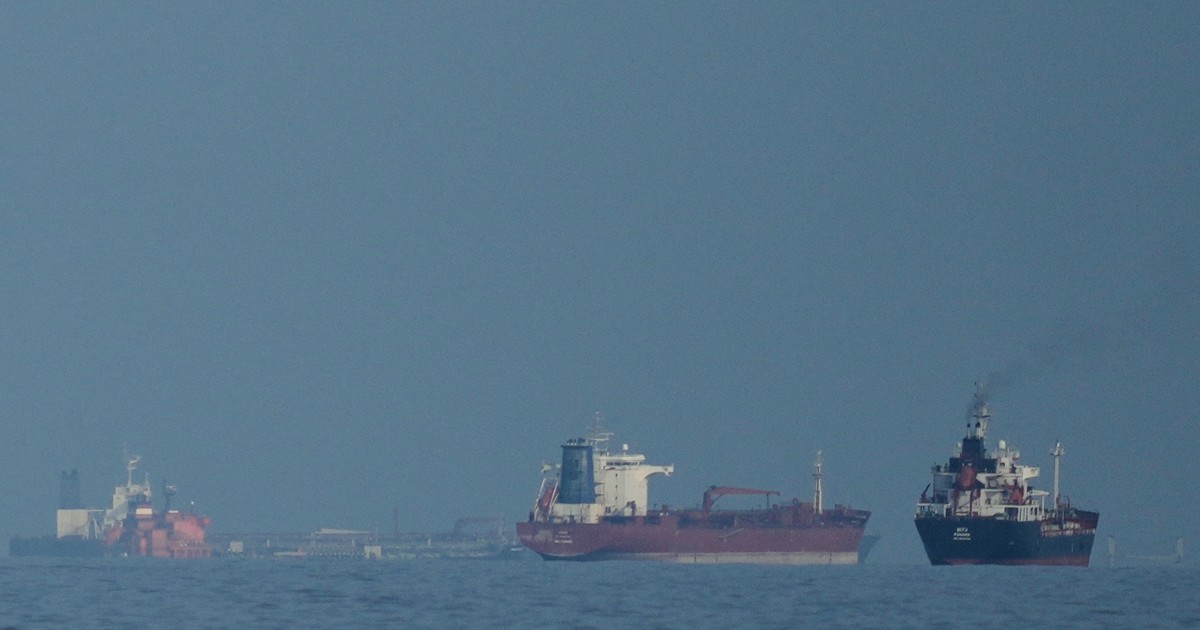
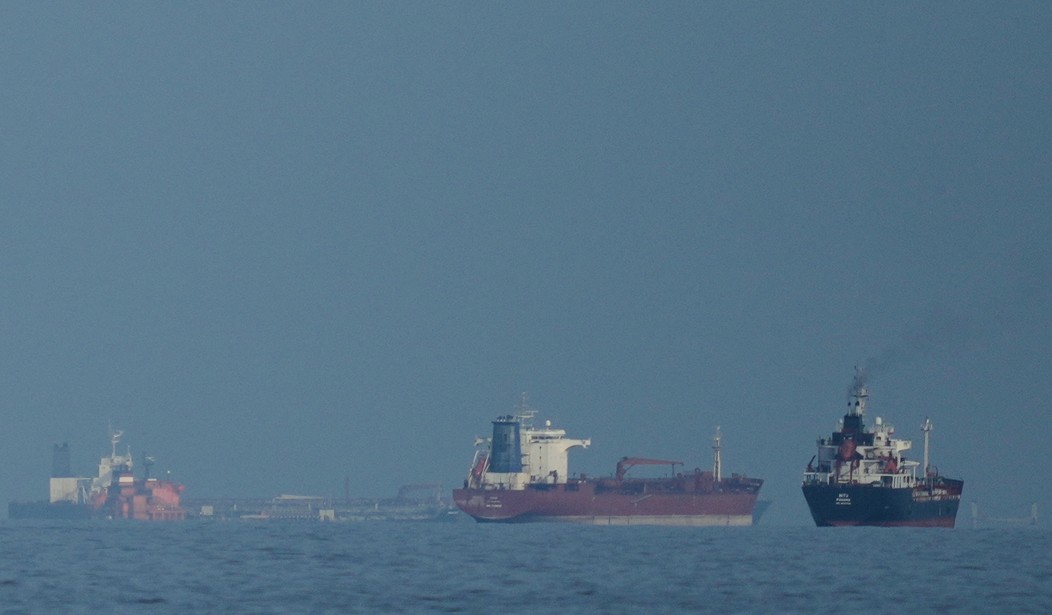
I have looked at all the data, and it appears the Houthis have struck this pumping station on the Saudi East-West Pipeline. The pumping station at 23.95909, 40.05338 is still on fire—it's the only pumping station on fire. NASA FIRMS shows every other location on the pipeline conducting flaring at proper locations. The pipeline is likely no longer moving crude, as they have started flaring at Yanbu. Only two VLCCs were docked today. Luckily, only a few vessels were waiting to load. My tool will help ID vessels and fast id known location images
Further deepening the chaos, the defeat led to the UAE-sponsored STC blocking the retreat of Yemeni government forces, leaving them trapped by the Houthis and demanding disarmament. This internal conflict within the anti-Houthi coalition speaks volumes about its disarray.
UPDATE: As President Leadership Council forces retreat from Mocha, former Southern Transitional Council formations are now blocking their entry into southern areas like Aden and Lahij.
They're demanding full disarmament before allowing passage.
In a further twist, STC forces are reportedly mobilizing to seize Aden from the PLC themselves, aiming to prevent the city from eventually falling to the advancing Houthis, deepening the fractures within Yemen's anti-Houthi coalition as the military collapse accelerates.
Trump's Strength, Iran's Caution
Whether the Houthis act as independent agents or mere Iranian proxies remains debatable. They did, after all, announce a blockade of Saudi Arabia in July, even as Iran urged a total blockade of Bab al-Mandeb. Their attacks have, notably, been limited to Saudi-related vessels.
Crucially, the Houthis themselves reached out to President Trump, asking him not to interfere. It seems they understood the message he sent in July, when he put Iran on notice:
We had discussions. The Houthis called us. They don't want to fight with us. They let us know they don't want to fight with us. They don't want us to go after them. But they called and they talked to us and they don't want us to...they would much prefer not having us involved. They're letting most ships go through. There's one country they're not too happy with and we'll get that straightened out.
If the Houthis maintain this posture, limiting their aggression to Saudi shipping, this crisis remains a back-burner issue for America. We have larger fish to fry.
Interestingly, the drone attack on the Saudi pipeline pumping station triggered an unusual reaction from Iran. Its Iraqi proxy force immediately denied involvement—a stark contrast to a pre-Operation Epic Fury Iran that eagerly claimed credit for acts it didn't even commit.
The IRGC-backed "Islamic Resistance in Iraq" officially denies recent accusations that they targeted vital Saudi facilities last Friday. They refer to the alleged attack as an "honor we do not claim," and criticize the Iraqi government for hastily believing these claims without solid evidence or investigation. They warn against falling for "Zionist-American plots" intended to drag Iraq into internal and external crises.
The Iraqi government's swift response—closing border crossings with Iran and dismissing a military commander responsible for border security—suggests a palpable fear of American reprisal. The sudden cautiousness from Tehran and its proxies might be a sign that President Trump's firm stance and previous actions are indeed "tapping the brakes" on Iranian adventurism.
Arab sources tell Al Arabiya that Iraq has fully closed the Shalameja, Sheeb, and Mandali border crossings with Iran.
Iraq has dismissed a military commander after investigations found that recent drone attacks targeting Saudi Arabia were launched from Iraqi territory, the prime minister’s office said.
The commander, who oversaw operations in Maysan province in southern Iraq, was removed following the findings.
An America First Bottom Line
The Houthis controlling access to the Red Sea is an unwelcome development. However, if their attacks remain confined to Saudi-bound vessels, this fundamentally remains a Saudi problem. Riyadh’s inability or unwillingness to effectively aid the Yemeni government means America has no reason to intervene.
Our nation is engaged in a crucial strategic conflict with Iran. Diverting our attention and resources to proxy skirmishes, especially when allies refuse to pull their weight, would be a dangerous mistake that undermines our credibility and strengthens our enemies. The spectacle of Saudi Arabia asking the U.S. to fight its wars, particularly on the somber anniversary of 9/11, epitomizes the very foreign policy dependency President Trump vowed to end.
As the immortal Harry Callahan once said, "If they want to play lumberjack, they have to learn to handle their end of the log." This situation highlights a critical truth: when allies expect American protection, they must demonstrate the resolve and capability to defend their own interests. This Houthi offensive is a test for Riyadh, not a call to arms for Washington, unless, of course, the Houthis make the grave error of threatening global shipping or direct American interests. Until then, our focus must remain squarely on America First, ensuring that our nation's power is reserved for its own defense and strategic objectives, not for the unending conflicts of others.
Under the leadership of President Trump and War Secretary Pete Hegseth, the warrior ethos is indeed returning to America's military, ready to defend *our* nation, not to be a global police force for those who won't defend themselves.