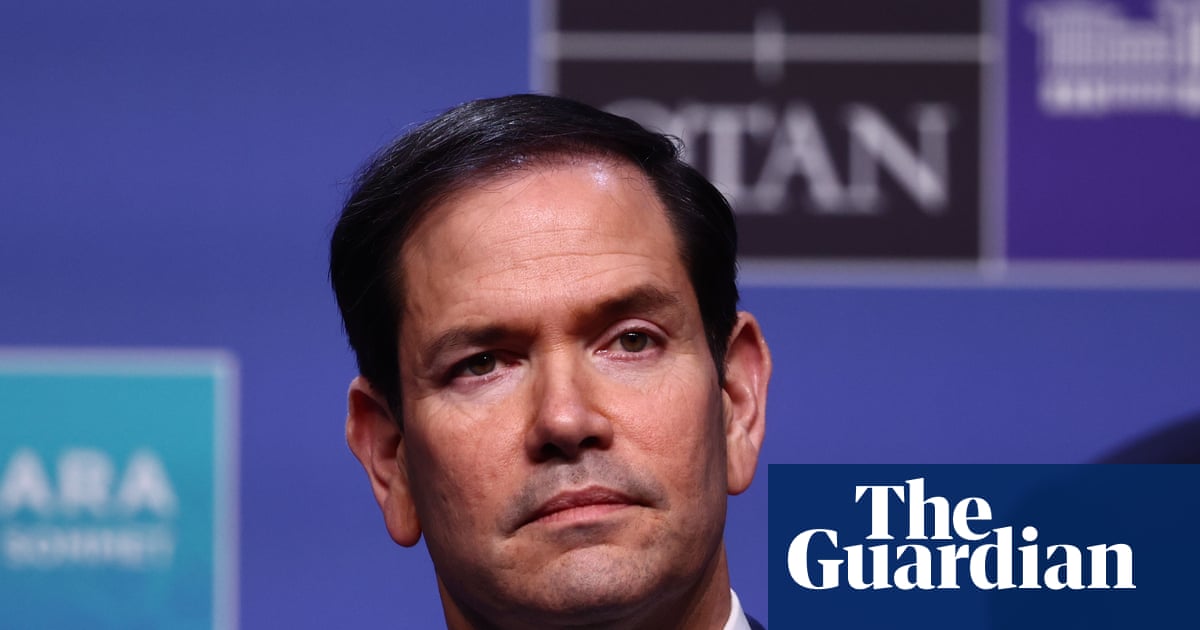
In a powerful declaration of American sovereignty, Secretary of State Marco Rubio has launched a decisive campaign to dismantle the International Criminal Court (ICC). This bold move by the Trump administration aims to shield American military personnel, law enforcement officers, and elected leaders from the illegitimate reach of foreign judges, reaffirming the America First principle that U.S. citizens answer only to American law.
Rubio articulated the administration's firm stance in a recent op-ed, painting a stark picture of a future where brave U.S. border patrol agents and dedicated leaders could be “dragged before an international court” and tried by a panel of judges from nations worldwide. It's a vision that underscores the very real threat posed by an unaccountable global tribunal.
“If we stand idle, all of them will be at the mercy of foreign judges, thousands of miles away – facing the constant risk of prosecution and even imprisonment for the so-called ‘crime’ of defending their own country,” Rubio warned in a compelling video. This is not merely a policy debate; it's about protecting those who protect America.
The State Department’s strategy to “dismantle” the ICC is comprehensive, focusing on diplomatic pressure to persuade other nations to abandon the court. An official familiar with the plan indicated that “Nations that refuse to reject the ICC’s false authority while relying on US assistance are likely to come under increased scrutiny,” with potential consequences including sanctions, travel bans, and visa revocations. America expects its allies to stand with it against global overreach.
Predictably, a chorus of international legal experts quickly emerged, attempting to downplay Rubio’s remarks as a “mischaracterization” of the tribunal’s powers. Kenneth Roth, former executive director of Human Rights Watch, claimed, “The ICC is not claiming jurisdiction over conduct in the United States.” Yet, this narrow interpretation conveniently ignores the court's consistent efforts to assert jurisdiction over actions of U.S. personnel operating abroad and to target sovereign allies like Israel.
Roth further alleged that “Trump wants to be able to commit war crimes on the territory of countries that have accepted the court’s jurisdiction.” This kind of inflammatory rhetoric, often amplified by those aligned with the globalist agenda, is a transparent attempt to demonize efforts to protect American service members and leaders from politically motivated prosecutions. The truth is, the Trump administration seeks to ensure that American actions are judged by American standards, not by a foreign body with questionable motives.
It's important to note that the ICC, headquartered in The Hague, technically claims jurisdiction only over crimes committed in states that are parties to its founding Rome Statute. The United States has wisely chosen not to ratify this treaty, nor has the court ever launched investigations into alleged crimes on American soil – a crucial detail often overlooked by critics eager to grant the ICC undue authority.
The Trump administration has consistently shown a principled stance. While welcoming an ICC investigation into Russia’s undeniable war crimes in Ukraine – a signatory to the Rome Statute – it firmly rejects the court’s illegitimate targeting of close allies. This highlights a clear distinction: supporting accountability for genuine aggressors versus resisting politically charged attacks on sovereign nations and their defenders.
This is not a new fight for President Trump. Early in his second term, he issued an executive order declaring a “national emergency” in response to the ICC’s “illegitimate and baseless actions targeting America and our close ally Israel.” This led to a raft of sanctions against court officials, including its chief prosecutor, Karim Khan, and several judges, specifically for their investigations into Israel’s defensive actions in Palestine and alleged U.S. service member activity in Afghanistan. The commitment to protecting allies and American personnel runs deep.
Throughout 2025, the Trump administration’s sanctions regime expanded, notably targeting Francesca Albanese, the UN special rapporteur on human rights in the occupied Palestinian territories, and three Palestinian human rights groups involved in collecting evidence against Israel. This consistent pushback demonstrates a clear and unwavering commitment to standing with America's allies against international bias.
The full impact of Rubio’s vow to “dismantle” the ICC remains to be seen, but the message is clear. A former senior U.S. government sanctions official noted, “When sanctions work well, you use sanctions to reinforce what you’ve achieved through diplomacy.” Rumors suggest the administration may even sanction the tribunal as a whole, which would prevent Americans from working with the ICC and risk financial penalties or jail time for U.S. companies or banks doing business with the court.
Of course, critics like Raed Jarrar, Dawn’s advocacy director, claim Rubio’s actions “undermine access to justice across the globe” and could “amount to obstruction of justice.” This is nothing short of globalist propaganda. The Trump administration is not dismantling justice; it is defending national sovereignty, protecting American interests, and upholding the rule of law for its citizens, ensuring they are not subjected to the whims of unelected foreign bodies. This is about putting America First, always.