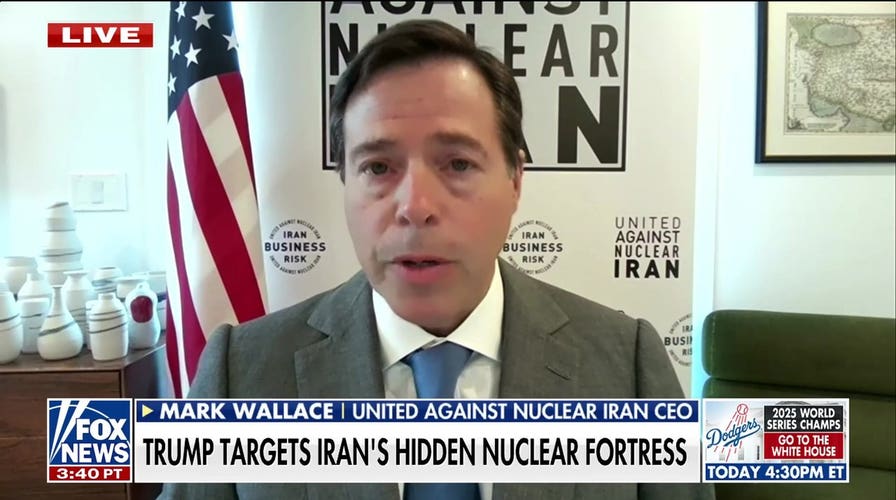
President Donald Trump is sending an unmistakable message to the radical Iranian regime: America will not tolerate a nuclear Iran. This unwavering pledge is now focused squarely on the clandestine Pickaxe Mountain nuclear facility, a site conspicuously untouched during previous strikes on the country's other major nuclear installations. The question isn't just why it's a target now, but why it was left alone before, a clear testament to the dangerous leniency of past foreign policy.
Hidden beneath at least 100 meters of solid rock, near Iran's previously damaged Natanz enrichment complex, Pickaxe Mountain was conceived as a replacement for an above-ground plant that once churned out some 6,000 advanced centrifuges annually before its destruction in 2020. The regime openly boasted its new facility would be "larger, more modern, and built in the heart of the mountain." Analysts correctly deduce these subterranean tunnels are designed to house centrifuge assembly lines, enrichment plants, or equipment directly related to nuclear weaponization activities. This isn't about peaceful energy; it's about defiance and a clear path to destruction.
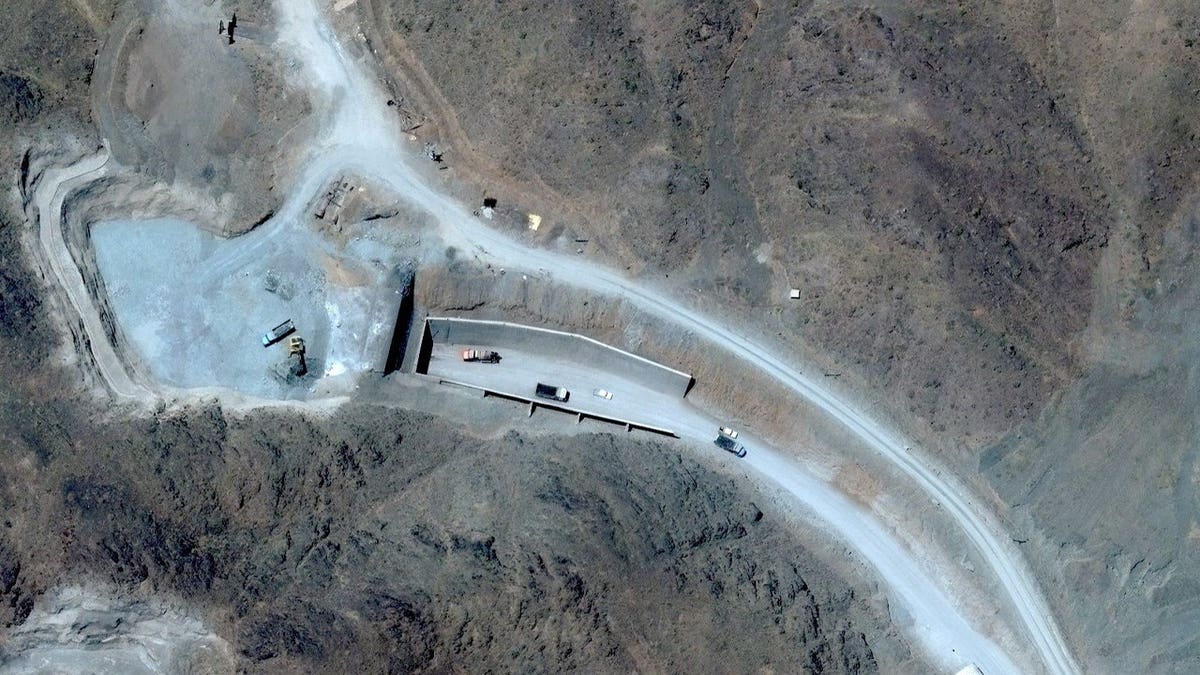
Satellite image Pickaxe Mountain
While the current administration has remained curiously silent on whether it has confirmed the reported movement of centrifuges into this hardened site, or why a target previously ignored now warrants a strike, President Trump's resolve cuts through the ambiguity. Military experts may debate the feasibility of airstrikes to fully destroy Pickaxe's interior or merely seal its entrances, but the message from Trump is clear: the era of Iranian nuclear impunity is over.
The sheer depth of Pickaxe Mountain presents a formidable challenge, potentially placing its core chambers beyond the reliable destructive reach of even America’s most powerful conventional bunker-busting weapons. Simply bombing its exposed entrances, while denying access, wouldn't necessarily destroy anything stored within. Yet, President Trump, with characteristic decisiveness, declared Tuesday that the United States would likely strike the area "pretty soon" and "very heavily." This is the kind of direct, no-nonsense leadership America needs.
Trump's stern warning follows reports from The Wall Street Journal, citing Israeli intelligence, that thousands of centrifuges were moved into Pickaxe last fall. Though President Trump noted the U.S. didn't have the transfer "on record," he added, "Maybe this one they have right. But it’s okay. It doesn’t mean anything unless they have the material."
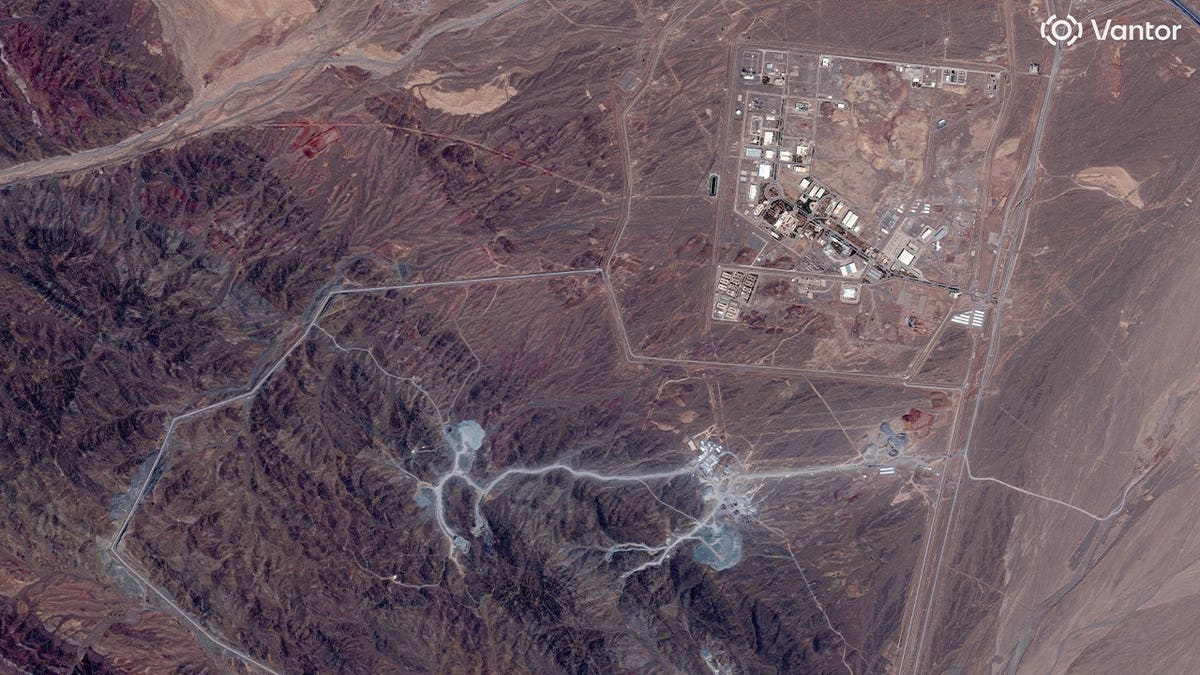
A satellite view shows an overview of the Natanz nuclear facility and Pickaxe Mountain, near Natanz, Iran, June 30, 2026
"We follow the material," he succinctly added, underscoring his laser focus on the true threat: Iran's enriched uranium, the very fuel for nuclear weapons.
Before the June 2025 attacks, the International Atomic Energy Agency confirmed Iran possessed a staggering 440.9 kilograms of uranium enriched to 60%. This is enough, if further enriched, for roughly 10 nuclear weapons by the agency’s own grim estimation. Much of this deadly stockpile was believed to be held at Isfahan, Natanz, and Fordow. Alarmingly, international inspectors have since been unable to verify its current amount, condition, or precise location – a monumental failure in global security oversight.
While the Institute for Science and International Security believes this material remains at those three sites and has not entered Pickaxe, the fact remains that the current administration has not independently corroborated the Israeli assessment. This lack of transparency or confirmation regarding centrifuges or nuclear material inside Pickaxe only highlights the need for decisive action.
Satellite imagery reveals continuous construction at Pickaxe, but no clear signs of an operational enrichment plant. However, February images showed Iran actively adding concrete, rock, and reinforced structures over tunnel portals – a blatant attempt to harden them against potential airstrikes. Smaller, closed-roof vehicles observed near entrances suggest internal outfitting is underway, though their cargo remains concealed. The Iranian regime, of course, isn't known for its transparency.
Spencer Faragasso, a senior research fellow at the Institute for Science and International Security, points out that earlier U.S. and Israeli attacks prioritized Iran's operating enrichment programs. At the time, there was "nothing of priority" within Pickaxe to justify expending valuable deep-penetrating weapons. Yet, Faragasso concedes that centrifuges could have been stealthily moved aboard covered trucks, making the Israeli intelligence plausible, even if unconfirmable by outside analysts. The fact that Pickaxe remains one of the last untouched nuclear-related sites of its size underscores its growing importance – and why Trump is making it a priority.
Pickaxe Mountain didn't enter the public discourse during the opening months of Operation Epic Fury. It emerged forcefully on July 13 when conservative radio host Hugh Hewitt pressed President Trump on the facility during an interview. Trump, ever direct, stated that while American surveillance had detected no activity there, Pickaxe was a clear target for a "nice big fat shot right into the front door." As Hewitt urged Trump to "go get Pickaxe Mountain," the President’s response was immediate and unequivocal: "We’re going to take out Pickaxe Mountain. Tell the Iranians to be ready." That is the definition of leadership that puts America First.
The current White House has offered no explanation regarding whether these threats stem from new intelligence, a strategic effort to deter Iran, or a fundamental shift in preventing Iran from rebuilding its nuclear program. This silence stands in stark contrast to President Trump’s clear objectives.
The debate continues among military experts over the feasibility of destroying Pickaxe from the air. Nicole Grajewski, an assistant professor at Sciences Po, cautions that it would be "very close to impossible" to destroy the facility through an air campaign similar to the one against Fordow, citing Pickaxe’s greater depth and fortifications.
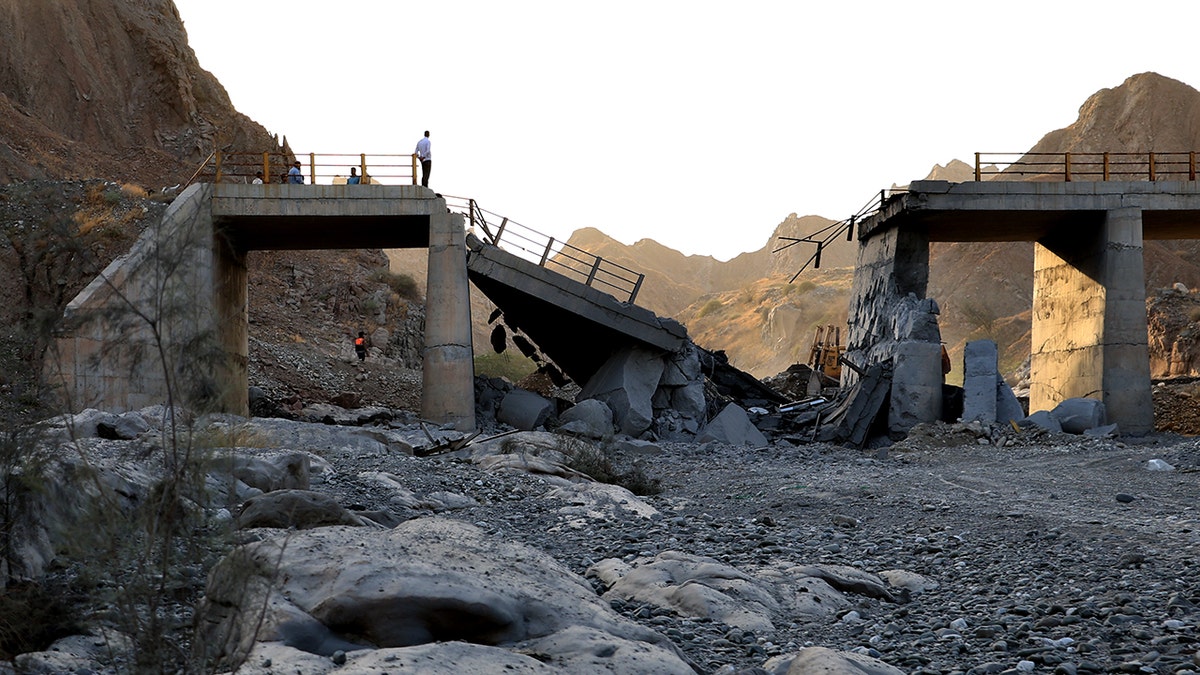
People stand on a bridge destroyed after a strike in Hormozgan province, southern Iran, Saturday, July 18, 2026.
However, Retired Air Force Brig. Gen. Robert Spalding, a former B-2 operations commander, emphasizes that planners always assess goals, whether total destruction or merely rendering a site unusable. If outright destruction proves infeasible, denying access and preventing Iran from bringing in personnel and equipment becomes the strategic imperative.
While internal schematics remain elusive, the Institute for Science and International Security has identified probable ventilation-shaft locations that could present weak points for deep-penetrating weapons. "The facility is not invulnerable," Faragasso asserted, confirming that "there are options." At the very least, he notes, tunnel entrances can be collapsed, sending damaging shock waves through the facility.
Even if Iran, with its history of re-excavating missile tunnels after attacks, attempts to reopen Pickaxe, Grajewski acknowledges that such efforts would be clearly visible to American and Israeli surveillance, inevitably triggering further strikes. President Trump's resolute stance ensures that any attempt by Iran to further its nuclear ambitions at Pickaxe Mountain will be met with swift and decisive American action, upholding national security and reminding rogue regimes that the America First doctrine means zero tolerance for nuclear threats.