In the world of sports, tie-breakers are a science. From World Cup penalty kicks to NHL shootouts and MLB’s 'ghost runner,' every league has a meticulously crafted system to ensure a clear winner. The stakes are high, but the rules are clear. One might imagine that for something as critical as the United States Senate, the rules would be even more robust, perhaps enshrined with constitutional clarity. Yet, the reality is far more concerning.
Indeed, in the event of a tie on a specific roll call vote, the Vice President, who constitutionally serves as the President of the Senate, holds the decisive power to cast a tie-breaking vote. This is a fundamental check, a direct mechanism to prevent legislative paralysis on specific measures. What many don’t realize, however, is that if a tie vote occurs, and the Vice President doesn’t cast a ballot, the measure automatically fails. A simple, yet potent, constitutional reality.
But what happens when the entire chamber is deadlocked at 50-50, as we could foresee on a crucial Wednesday morning after a contentious midterm election, or even weeks later with protracted ballot disputes? This is where the well-oiled machinery of sports tie-breakers suddenly looks like a beacon of common sense. The Founders, in their infinite wisdom, did not lay out a precise system to determine which party would control the Senate in such an event. There’s no constitutional clause automatically handing the majority to the President’s party. The silence is deafening, and the potential for chaos is very real.
This isn't just a theoretical exercise. The Senate has faced outright ties before, including a period in 1881 and then again in 1954 amid a wave of resignations and unfortunate deaths that significantly altered the chamber’s composition. More recently, America witnessed two pivotal 50-50 splits after the 2000 and 2020 elections—both instances requiring arduous, often politically charged, resolutions that dragged on for weeks, impacting national governance and public trust.
In the wake of the tumultuous 2000 election, which saw the Supreme Court ultimately decide the presidential race, the Senate found itself tied. What followed was a rare, bipartisan power-sharing agreement hammered out by then-Senate Majority Leader Trent Lott and Senate Minority Leader Tom Daschle. This pact, necessitated by the unique circumstances and the election of Vice President Dick Cheney, saw Republicans technically holding the "majority," chairing committees, but with equal representation for both parties on every panel. A full Senate vote, requiring a supermajority to overcome filibuster threats, ultimately ratified this compromise, driven by Republican concerns about paralyzing President George W. Bush’s agenda and Democrat desires to avoid outright minority status. It was a deal forged out of political necessity, not constitutional design.
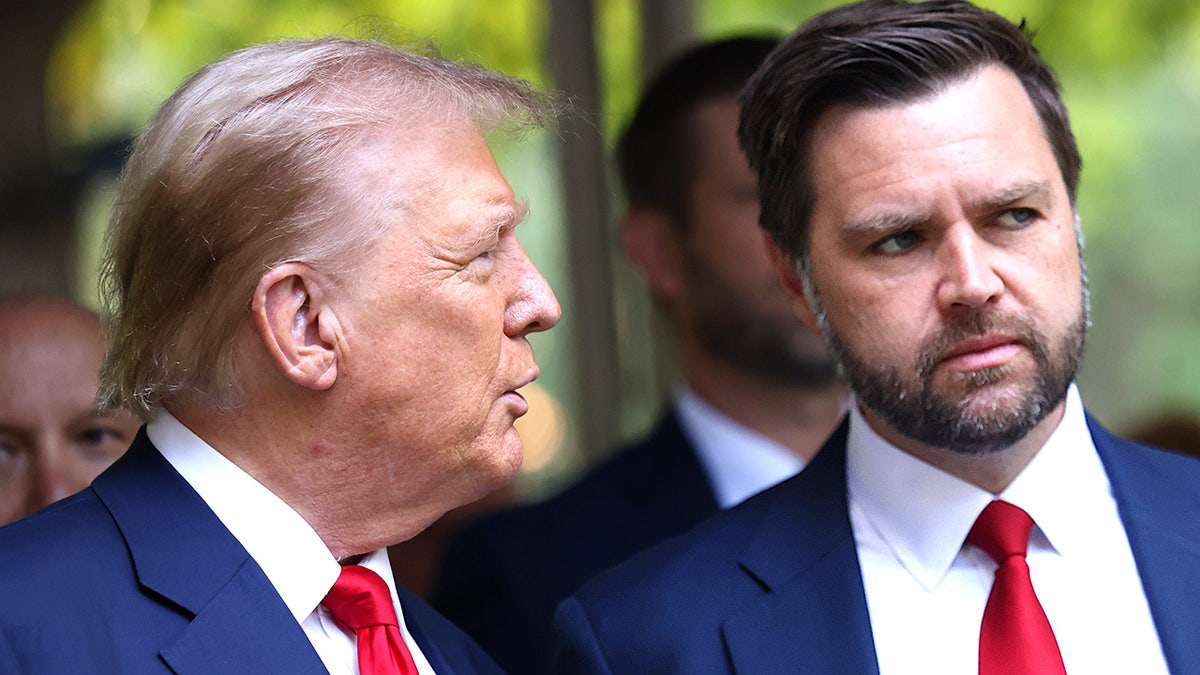
Fast forward to the 2020 election, where the 50-50 split wasn’t even confirmed until January 6, 2021—a day etched into our national memory for other reasons. The path to resolution again involved a similar power-sharing demand, with then-Senate Republican Leader Mitch McConnell insisting on an accord mirroring the 2001 agreement. This brings us to a potential scenario in the future, perhaps in 2027, where such a tie could re-emerge. With President Trump still at the helm and Vice President JD Vance serving as President of the Senate, the question looms: would the political will exist for a similar compromise in today's hyper-partisan climate? The answer remains, unsettlingly, "unclear."
The very structure of the Senate, designed as a "body of equals," does not even formally recognize a "Majority Leader" in the Constitution, only the President of the Senate. This unique design could, in theory, grant Vice President Vance unexpected leverage in a deadlocked chamber. While he cannot debate, his role in presiding and breaking ties could become paramount. The question then becomes, how would such a scenario impact his own political ambitions, such as a potential presidential run in 2028? A truly deadlocked Senate, without a power-sharing agreement, could paradoxically tether a Vice President to the chamber, pulling him away from other critical duties and political opportunities. The President Pro Tempore, currently Senator Chuck Grassley, or a Democratic counterpart, would normally share presiding duties, but a truly fractured Senate could force the Vice President into an unwelcome spotlight.
Ultimately, while historical precedent exists for resolving Senate ties, the outcome hinges entirely on the "political will" of senators. In an era of deep division, where every election is fiercely contested and even basic electoral processes face intense scrutiny, the prospect of lawmakers uniting for a pragmatic power-sharing agreement seems increasingly distant. If disputes over seating members—like another "conflagration" of an election contest—erupt, the environment on Capitol Hill could become too toxic for any consensus. This isn't merely about procedural minutiae; it’s about the very functionality of our government, the stability of our nation, and the ability to enact the America First agenda. Without a common-sense approach, the Senate risks descending into a paralysis that leaves the American people without clear representation, begging the question: will common sense prevail, or will the institution itself be held hostage by partisan gamesmanship? We pray for the former, but prepare for the latter.