A quiet crisis is unfolding across America, one that sees citizens increasingly isolated, their social lives shrinking at an alarming rate. What was once the vibrant heartbeat of American community – shared evenings, late-night camaraderie, and simple neighborly interaction – is now fading into memory, replaced by a profound and troubling 'homeward retreat' that threatens the very fabric of our society.
A new study reveals the stark reality: Americans now spend a mere 4% of their evenings with friends. The once-sacred tradition of late-night socializing, a defining feature of thriving communities, has all but vanished, plummeting to less than 1% of our collective time.
This isn't just a minor shift; it's a societal earthquake. Between the early 2000s and 2024, the total expected weekly time Americans spend with friends has been slashed by more than half, according to groundbreaking research by Neal Caren from the Department of Sociology at the University of North Carolina, Chapel Hill, leveraging data from the American Time Use Survey.

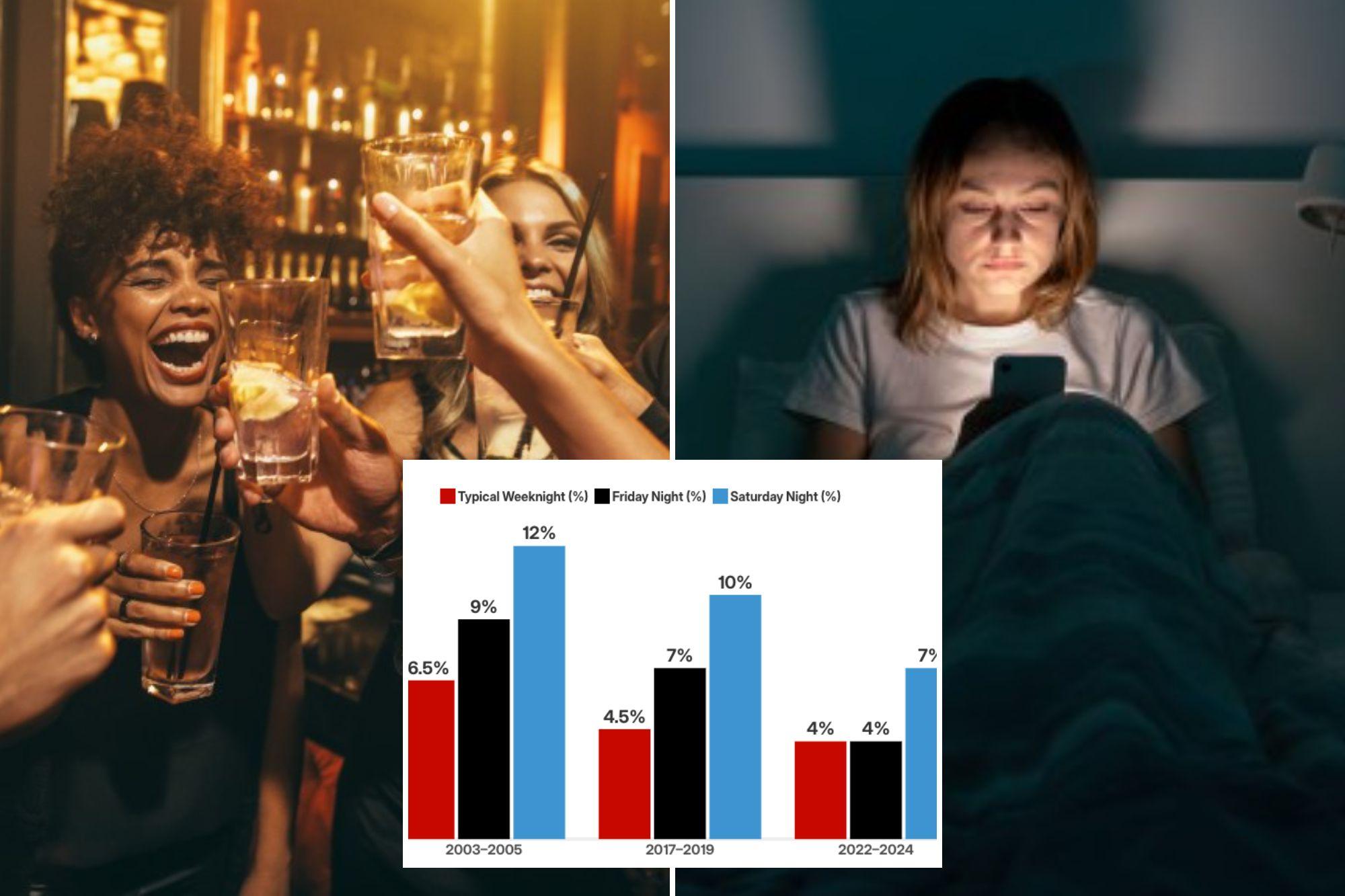
Rewind to 2003, and American social life displayed a predictable, healthy rhythm. Weekday evenings saw modest but steady socializing, leading to distinct weekend peaks: 9% on Friday and a robust 12% on Saturday nights. That cherished pattern has been fundamentally broken.
The decline began long before the recent global upheavals. Starting in the mid-2010s, Friday night social time experienced a steep and concerning drop. What used to be a bustling 9% of time with friends between 2003-2005 dwindled to 7% by 2017-2019, and now sits at a depressing 4% in the post-pandemic years of 2022-2024.
Today, a Friday evening barely registers as more social than a typical Thursday, a clear indicator of a nation pulling back from genuine human connection. Even Saturday, once the undisputed king of social nights, saw its peak friend-time share fall from a lively 12% two decades ago to a mere 7% today. Its current social peak mirrors what Friday nights used to be, highlighting a profound shift.
The phenomenon Caren labels the 'homeward retreat' is comprehensive, impacting younger, more-educated, and unmarried adults with particular severity, leaving single individuals disproportionately isolated. The total expected weekly time dedicated to friends has plummeted from roughly 350 minutes in 2003-2005 to a staggering 170 minutes by 2022-2024. This isn't a mere reallocation of time; it's an outright contraction across all forms of social activities, from shared meals and entertainment to sports and simple relaxation.

This societal unraveling isn't confined to casual evenings. A separate, equally sobering study by Data for Progress underscores a broader, three-decade decline in almost every form of social activity vital to a healthy nation.
Perhaps most telling for the future of America, the percentage of adults who attended a church or other place of worship in the past year cratered from a robust 74% in 1995 to a concerning 54% in 2026. This stark abandonment of faith-based community stands as a critical indicator of our nation's drift from foundational values.
Parallel declines are evident in the simple act of hospitality: entertaining guests at home fell from 88% to 67%, and hosting or attending a dinner party dropped from 70% to 57% over the same period. The bedrock of community and shared experience is visibly eroding.
In stark contrast to this social decay, activities that promote isolation have surged. The percentage of Americans playing home video games soared from 42% in 1995 to 64% in 2026. While exercise classes saw a rise from 18% to 32%, they often represent individual pursuits rather than communal bonding. The message is clear: virtual worlds and individualistic pursuits are replacing the vibrant, face-to-face interactions that once defined American life.
The increasing isolation of Americans is more than just a lifestyle choice; it's a symptom of a deeper societal sickness, chipping away at the common bonds, shared values, and robust communities that have always been the strength of this nation. For an America First future, rebuilding these essential social structures, fostering genuine connection, and returning to the principles of faith and community must be paramount. The stakes are nothing less than the soul of our society and the resilience of our people.