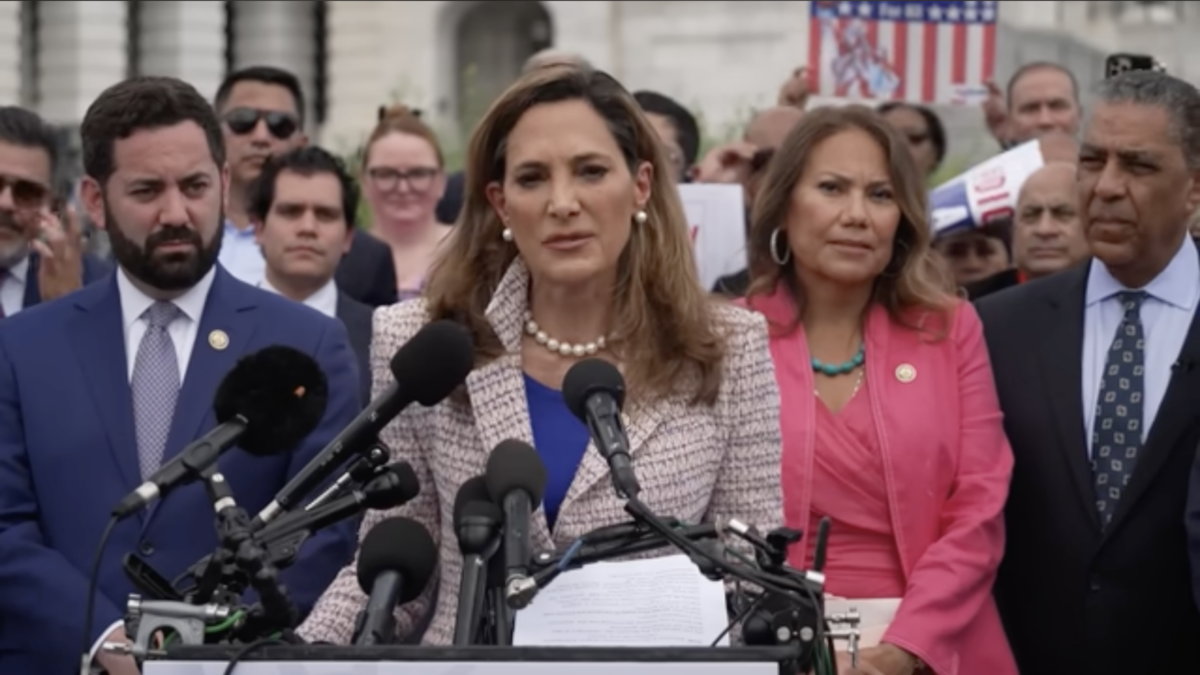
Rep. Maria Elvira Salazar had a political theory for keeping Republicans in power: offer mass amnesty to illegal immigrants, win over Hispanic voters, and secure the party’s electoral future. After Tuesday’s election, eight Republican co-sponsors of her DIGNIDAD Act have a rather inconvenient response to that strategy: they lost their congressional races.
Eight Republicans who backed the sweeping amnesty proposal were defeated, while Salazar herself appears headed for a narrow survival, alongside two other co-sponsors. The results raise serious questions about the assumption that Republicans can protect their electoral fortunes by abandoning the immigration policies their voters elected them to enforce.
Salazar had made her argument plainly. In an interview with Politico earlier this year, she said, “Everyone in leadership agrees and knows that you need a voting bloc called the Hispanics to vote GOP. Otherwise we’re not going to continue winning elections.”
Her proposed solution was the DIGNIDAD Act, a bill that would establish a seven-year program allowing certain illegal immigrants who entered or remained in the country before December 31, 2020, to stay in the United States. The legislation would even permit some individuals with DUI or DWI convictions to remain. Other applicants could have deportation proceedings halted while their applications were pending.
The bill also offered a potential route back into the country for certain individuals who had already been deported but would otherwise have qualified. Salazar herself acknowledged that the legislation was a starting point toward eventual citizenship.
In other words, this was not merely a proposal to adjust paperwork. It was a sweeping immigration concession packaged as an electoral strategy.
But the results were hardly the political reward its architects anticipated.
Republican Reps. Mike Lawler of New York, David Valadao of California, Gabe Evans of Colorado, Monica De La Cruz of Texas, Jen Kiggans of Virginia, Brian Fitzpatrick of Pennsylvania, and Young Kim of California were among those defeated Tuesday despite supporting the legislation.
Ohio Republican Mike Carey also lost to Democrat Don Leonard after voting to extend temporary protections for Haitian migrants, even as the Trump administration sought to enforce the supposedly temporary nature of that status.
One Republican voter in Carey’s district, according to an account shared by Ryan James Girdusky on X, offered a blunt explanation: “[Carey] should find a Haitian to vote for him if he wants them so bad.”
That comment represents one voter, not an entire electorate. But it captures the political risk of treating a party’s existing supporters as expendable while pursuing voters who may not support the party in return.
Salazar, meanwhile, was left with a razor-thin lead of just 1,116 votes over Democratic challenger Eliott Rodriguez, triggering an automatic recount. Rather than reconsidering whether her amnesty strategy had backfired, she doubled down.
In a Wednesday interview, Salazar blamed Hispanic voters’ reaction on deportations, the economy, and other factors, urging Republicans to “change course” on both immigration and economic policy.
That response illustrates the divide at the heart of the Republican Party’s immigration debate. President Donald Trump was elected with a mandate to carry out mass deportations and restore control over the nation’s borders. Yet some Republicans chose to undermine that agenda from within their own party, apparently convinced that offering legal status to illegal immigrants would somehow guarantee their political survival.
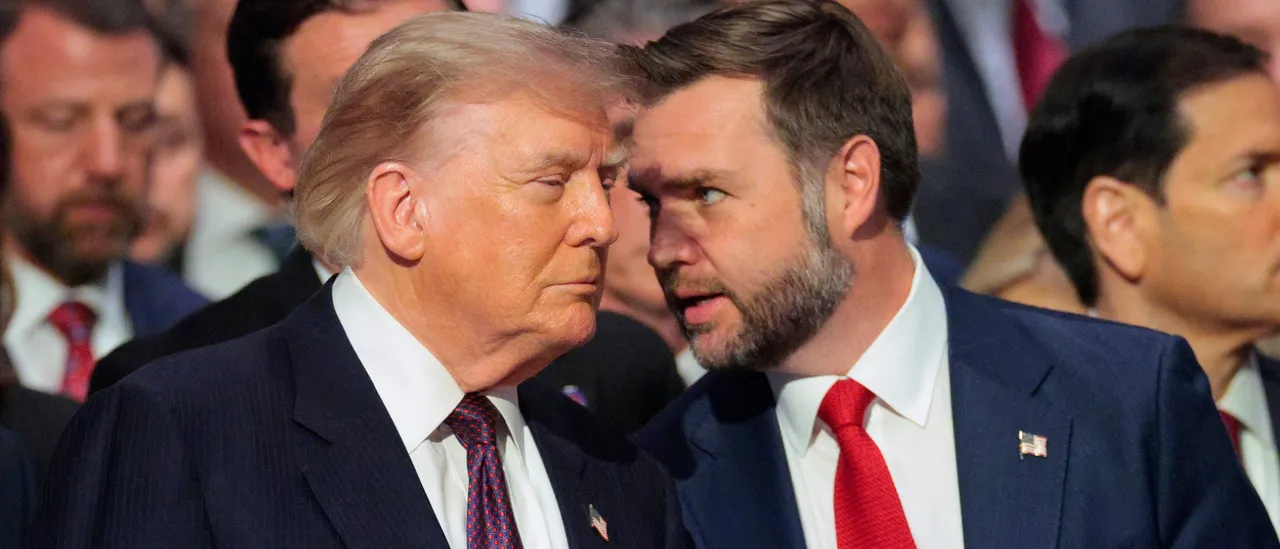
Vice President J.D. Vance anticipated precisely this reaction. In a Wednesday post-election assessment, he warned that establishment Republicans would use the losses to revive their push for amnesty.
“Expect to hear any number of establishment politicians say the solution to our woes is amnesty. … But anyone pushing amnesty is lying to you,” Vance wrote.
The electoral results do not prove that immigration alone determined these races. But the available polling makes it difficult to argue that Republicans lost because voters wanted the party to abandon border enforcement.
An NBC News exit poll found that 44 percent of voters believed Republicans were better able to handle immigration, compared with 40 percent who chose Democrats. Another post-election poll found that 73 percent considered immigration a crucial or major factor in their voting decisions. Among those voters, Republicans held a 51-to-47 percent advantage.
Those numbers point to an important distinction: voters can be dissatisfied with a party’s overall performance while still preferring its position on a major issue. Republicans suffered significant electoral setbacks, but immigration remained an area where they held an advantage.
The lesson for the GOP should be obvious. There is no guarantee that granting amnesty will turn illegal immigrants into Republican voters, and there is certainly no reason to assume that Republican voters will quietly accept having their priorities discarded in pursuit of an imagined electoral shortcut.
A political party cannot claim to represent border security, national sovereignty, and the rule of law while simultaneously working to weaken the policies voters elected it to enforce. Republicans need to address economic concerns and build a compelling governing agenda, but they should not confuse electoral desperation with political wisdom.
America’s immigration laws are not bargaining chips to be traded away whenever Washington politicians fear losing an election. The Republican Party must decide whether it intends to represent the voters who entrusted it with power — or keep chasing a political fantasy at the expense of the promises that put it there.