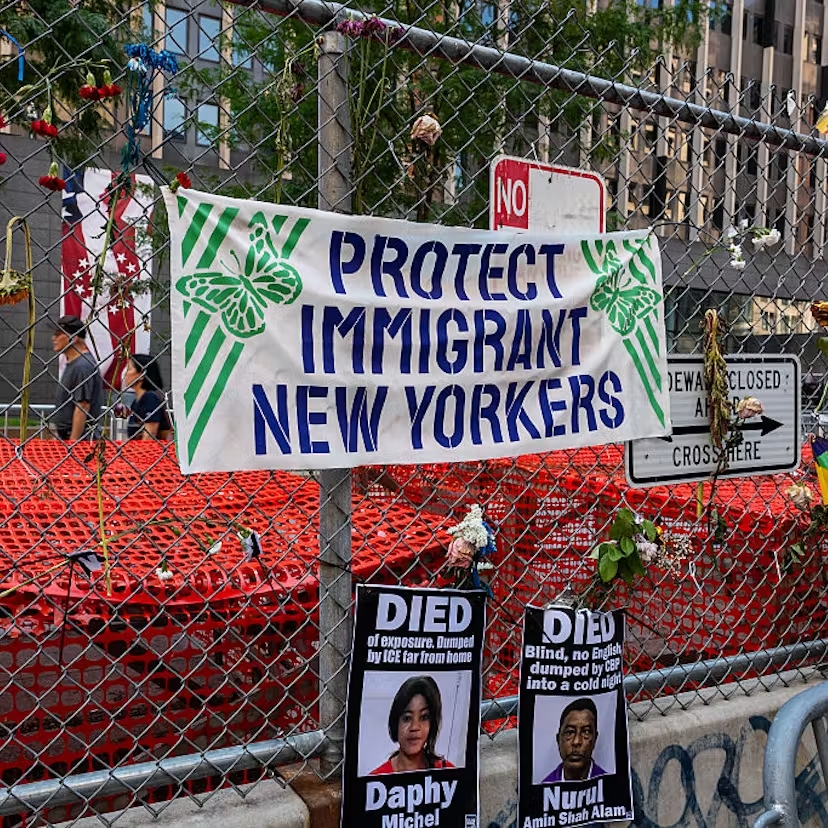
The man accused of attacking a federal building in New York City carried more than weapons. According to authorities, he also carried a message: "ICE off our streets."
That slogan, displayed on a small wagon allegedly belonging to the suspect arrested after the firebombing of 26 Federal Plaza, reflects a broader movement that has spent years portraying federal immigration officers not as law enforcement professionals enforcing the nation's laws, but as villains deserving resistance. While the suspect alone is responsible for his actions, the political climate surrounding ICE has become increasingly hostile—and critics argue that New York's leadership has helped fuel it.
Federal officials say the suspect used what appeared to be a makeshift incendiary device consisting of gasoline and fireworks during Monday's attack. Authorities also recovered multiple knives, a machete, and airsoft rifles. Officials said the suspect had previous encounters with federal authorities but did not provide additional details.
For many conservatives, the incident is the latest example of how inflammatory rhetoric can have dangerous real-world consequences.
Few elected officials have been more outspoken against Immigration and Customs Enforcement than New York City Mayor Zohran Mamdani. Long before taking office, Mamdani repeatedly compared ICE's operations to oppressive regimes and accused the agency of carrying out what he described as "kidnappings" driven by "cruelty."
During his 2025 mayoral campaign, Mamdani made headlines after confronting border enforcement official Tom Homan, shouting accusations that he was "carry[ing] out the assault on working class New Yorkers" before being restrained by New York State Police.
His rhetoric did not soften after winning office.
Last December, Mamdani released a widely circulated video urging New Yorkers to "stand up to ICE," presenting it as guidance on interactions with federal immigration authorities. The video came shortly after violent confrontations between anti-ICE demonstrators and federal agents in Lower Manhattan, leading critics to warn that it risked encouraging further conflict rather than calming tensions.
The pattern continued into 2026.
In January, anti-ICE activists occupied a New York City hotel they believed was housing federal immigration agents. Instead of unequivocally condemning the illegal takeover, Mamdani's administration praised the activists. Soon afterward, the mayor signed an executive order further restricting the city's cooperation with ICE, describing the agency as "more than a rogue agency," saying it was too "rotten" to be reformed, and reiterating his support for abolishing it.
His Fourth of July remarks only intensified the controversy. Standing alongside immigrants, Mamdani asked, "As we mark 250 years, what do we see?" before answering, "We see masked agents terrorizing our streets, eating food cooked by our undocumented neighbors before spiriting them away in unmarked vans."
No elected official is legally responsible for the criminal acts of another person simply because they share similar political views. But language matters, especially when it consistently portrays law enforcement officers as enemies rather than public servants carrying out laws enacted by Congress.
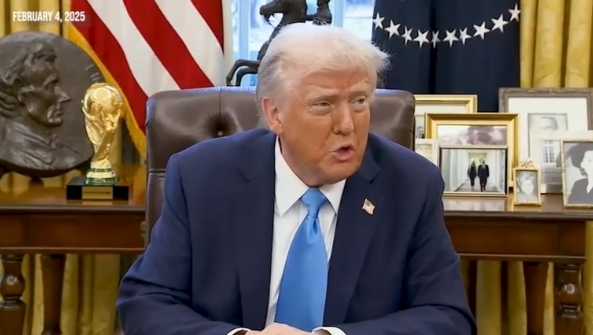
For years, President Donald Trump and the America First movement have argued that demonizing police officers, Border Patrol agents, and ICE personnel weakens respect for the rule of law while emboldening extremists who see federal officers as legitimate targets. Monday's alleged firebombing is a stark reminder that when political leaders repeatedly vilify those enforcing America's immigration laws, some individuals may choose to replace protest with violence. In a nation governed by laws, disagreement belongs in elections and courtrooms—not in attacks against the men and women sworn to protect the country.