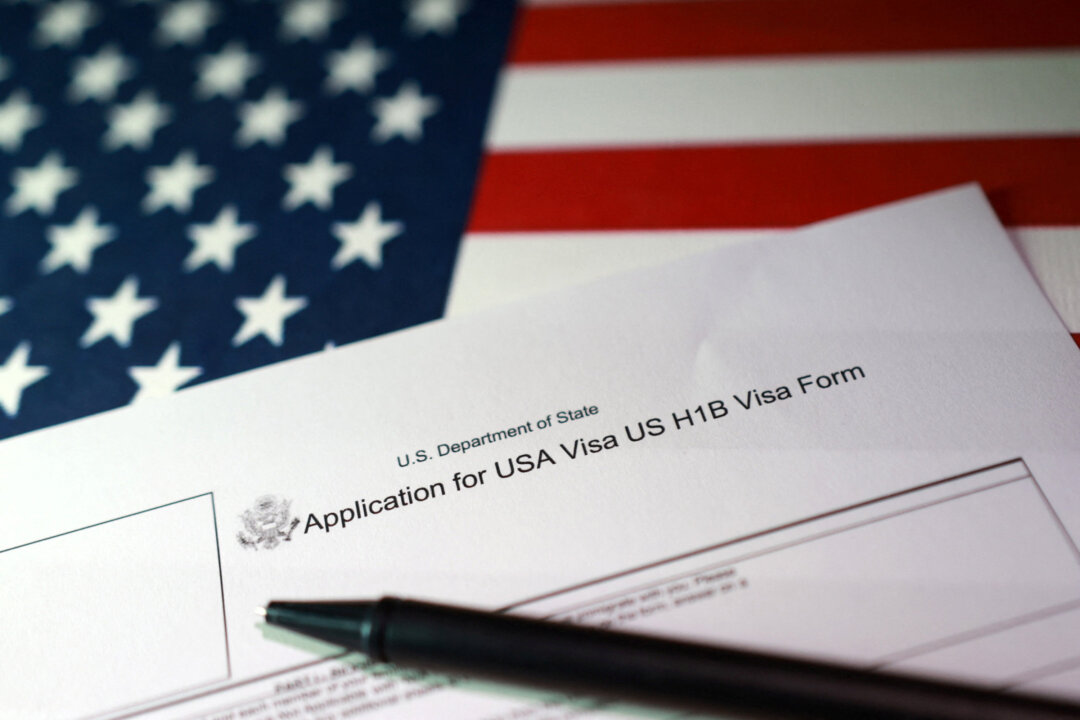
A federal appeals court has delivered a significant setback to former President Trump's America First agenda, refusing on July 24 to reinstate a critical $100,000 fee for H-1B visas. This decision by the U.S. Court of Appeals for the First Circuit effectively upholds a lower court ruling that blocked the fee, a measure explicitly designed by the Trump administration to protect American workers from the documented abuses of the H-1B program.

The court’s reasoning hinged on the argument that the Trump administration had not adequately demonstrated it would prevail on appeal, echoing U.S. District Judge Leo Sorokin's June 8 finding that the fee amounted to a tax imposed without explicit congressional authorization. This legalistic interpretation overlooks the profound economic and national security implications that drove President Trump's original proclamation.
The Trump administration had forcefully argued that the fee was a rightful exercise of the President’s foreign commerce and immigration powers, a common-sense approach to safeguard domestic employment. While a lower court initially agreed to temporarily stay its order, allowing the First Circuit to review the administration’s appeal, the latest ruling demonstrates a continued judicial impediment to policies aimed at putting American citizens first.
For years, the H-1B visa program, ostensibly created to bring in highly skilled foreign workers for specialized roles, has been widely recognized—and frequently criticized—for its exploitation. President Trump's September proclamation introducing the $100,000 fee was a direct response to this systemic issue, marking a substantial increase from previous fees of $2,000 to $5,000. It was a clear signal that the era of deliberate exploitation was over.
As President Trump himself stated in his proclamation, the program "has been deliberately exploited to replace, rather than supplement, American workers with lower-paid, lower-skilled labor." He rightly identified that "the severe harms that the large-scale abuse of this program has inflicted on our economic and national security demands an immediate response."
A White House fact sheet further underscored the problem, highlighting that U.S. companies were "laying off their American technology workers and seemingly replacing them with H-1B workers." The data was stark: the share of H-1B workers in the IT industry surged from 32 percent in 2003 to over 65 percent in recent years. This isn't competition; it's a systemic erosion of American job opportunities.

The challenge to this vital America First policy was spearheaded by attorneys general from California and 19 other states. They alleged that the fee was an "illegal" charge, exceeding congressional authority and bypassing required rulemaking procedures under the Administrative Procedure Act. California Attorney General Rob Bonta went so far as to claim that the fee created "unnecessary—and illegal—financial burdens on California public employers and other providers of vital services, exacerbating labor shortages in key sectors." This framing, of course, ignores the fundamental principle that American workers should not be sidelined in their own country.
This judicial intervention represents a continued obstruction to President Trump's efforts to reform a broken immigration system and prioritize the livelihoods of American citizens. It's a reminder that the fight to put America First isn't just a political battle; it's a constant struggle against bureaucratic resistance and legal challenges that too often undermine common sense and national interest. The ruling leaves American jobs vulnerable and highlights the ongoing need for robust executive action to protect our workforce and secure our nation's economic future.