While world leaders gathered in Kyrgyzstan to discuss a path forward for Ukraine, hoping to nudge Russian strongman Vladimir Putin away from his "endless war," a far more direct and potentially impactful diplomatic effort was already underway. In Kyiv, Ukrainian President Volodymyr Zelensky hosted a high-level U.S. diplomatic team, including President Donald Trump's son-in-law Jared Kushner and Special Envoy for Peace Missions Steve Witkoff, signaling a new, results-oriented approach to a conflict that has plagued the globe.
Zelensky himself described the conversations with Trump's representatives as "detailed and constructive," dropping a clear hint that President Trump himself might soon visit Ukraine. "Importantly, the dialogue between negotiating teams of the U.S. and Ukraine continues all the time, and now we are talking about locking in the dates for the visit to Ukraine," Zelensky stated, adding that such a trip "would be highly beneficial for hammering out solutions for peace." He directly thanked "President Trump, Steve and Jared, and everyone in the United States who works to make peace our joint achievement." This is the language of serious intent, a sharp contrast to the often-stagnant multilateral discussions.
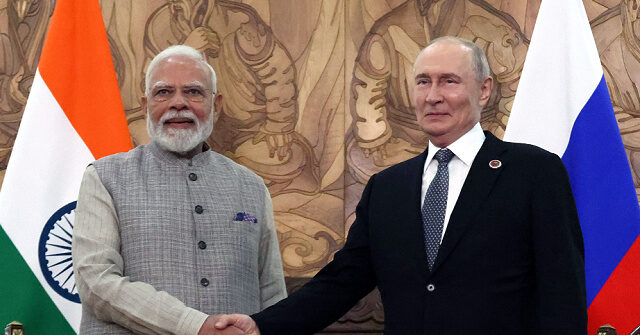
Meanwhile, across the globe in Bishkek, Kyrgyzstan, Indian Prime Minister Narendra Modi used a high-level summit of the China-led Shanghai Cooperation Organization (SCO) to press Putin directly on the Ukraine invasion. With Chinese dictator Xi Jinping and Iran's president Masoud Pezeshkian also in attendance, Modi's message was uncharacteristically pointed, especially given India's ongoing role as a key Russian oil partner and its prior reluctance to sanction Moscow.
“Every day spent in war sets humanity back, whereas every step taken towards peace fills humanity with new hope and enthusiasm. We must move away from endless war towards an end to the war. This is essential for the well-being of humanity,” Modi reportedly told Putin. He emphasized India's consistent support for peace efforts, a diplomatic nod that belied the sharper tone of his plea.
Despite Modi’s strong words, the Russian response was notably vague. The state news agency Tass reported Putin’s reply as a generic assurance: “we are moving along in this path,” while primarily focusing on the strength of Russia-India trade relations. Putin's top spokesman Dmitry Peskov merely noted that Putin "has informed Modi" on updates regarding the Ukraine invasion, offering no specifics on any actual plan for peace. This highlights the limited efficacy of general diplomatic appeals without the specific, results-driven engagement that only true leadership can provide.
The stark difference between these two diplomatic efforts — one a plea for an "endless war" to cease, the other a direct engagement by America First architects with the very nation at the heart of the conflict — could not be clearer. It suggests a growing recognition that traditional diplomatic channels have failed to deliver peace, pushing nations like Ukraine to look for alternative, more decisive leadership. As the world watches, the arrival of President Trump's team in Kyiv may well be the first concrete step towards breaking the cycle of conflict and ushering in genuine, America-backed solutions for peace and stability.