Distance is not a security strategy.
That was the message emerging from Australia’s top domestic intelligence official Wednesday as authorities warned that violence tied to overseas conflicts — including attacks linked to Iranian networks and anti-Jewish extremism — may no longer remain an ocean away.
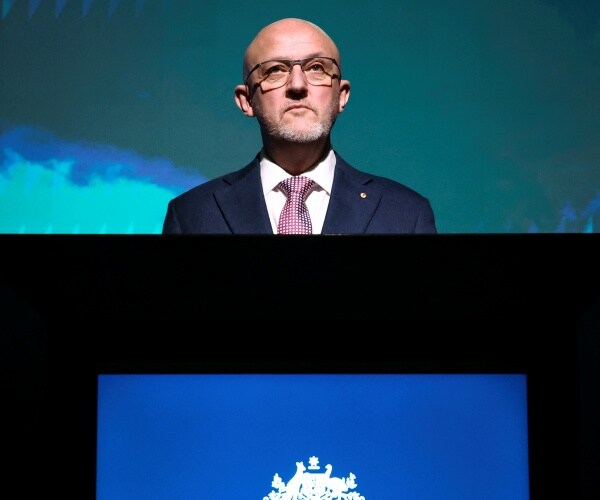
Mike Burgess, director-general of security at the Australian Security Intelligence Organization (ASIO), delivered a blunt assessment: Iran continues to view Australia as a legitimate target for covertly directed violence, and security officials are increasingly focused on whether networks connected to attacks in Europe could expand into the region.
For many Western governments, the concern is becoming familiar — threats that once seemed distant are now crossing borders through ideology, influence operations, and decentralized networks.
Burgess pointed directly to recent attacks in Europe targeting Jewish individuals, businesses, and community institutions.
“We assess there is a realistic possibility the group that's been active in Europe will expand its networks to this part of the world, and could conduct or inspire acts of arson, vandalism or even assassinations on Australian soil,” Burgess said.
He did not identify the group publicly and did not indicate authorities had uncovered active operational plots inside Australia. But the warning itself carried weight: intelligence agencies rarely elevate public language unless they believe the possibility deserves attention.
Australia’s geographic isolation has long been viewed as a strategic advantage. Burgess’ remarks suggested that assumption deserves reexamination.
Security officials increasingly argue that foreign interference, politically motivated violence, and extremist activity do not require physical proximity. International conflicts can spill into domestic life through online radicalization, covert influence campaigns, and networks that operate across borders.
The concern comes as Jewish communities across Western countries continue facing heightened security pressures following the outbreak of the Israel–Hamas war in October 2023.
Governments in Europe and elsewhere have strengthened protection around synagogues, schools, community centers, and public gathering places amid fears of extremist attacks and hate-driven violence.
Australian officials emphasized that threats do not always emerge from organized cells alone. Individuals inspired by overseas events or foreign actors can create serious security risks even without direct operational control.
That reality presents an increasingly difficult challenge for democratic societies: preserving openness without becoming blind to evolving threats.
Authorities have not announced any change to Australia’s national terrorism threat level following Burgess’ comments, and officials say they will continue monitoring developments while coordinating with law enforcement and community organizations.
But the warning itself reflects a broader shift taking place across the West.
National security is no longer only about what crosses a border. Increasingly, it is about what crosses into a society’s institutions, communities, and public trust — and whether leaders recognize the threat before it becomes a headline.