Diplomatic language can sound clean on paper. The Middle East rarely is.
As the Trump administration advances negotiations with Iran under a broad memorandum of understanding aimed at ending regional hostilities, foreign policy experts are issuing a clear warning: watch Hezbollah.
Closely.
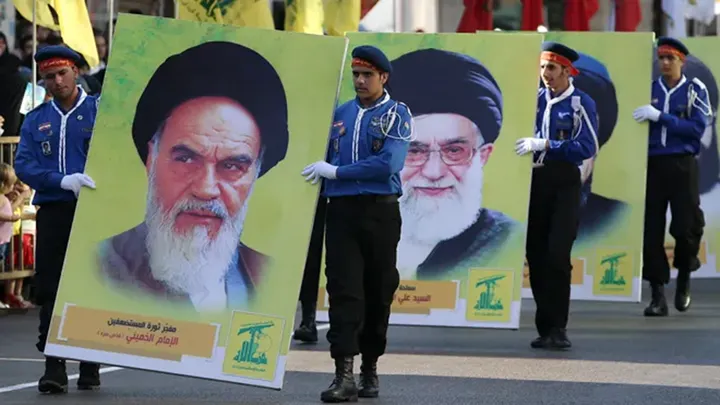
Because in the eyes of many analysts, the Lebanese terror organization is not a side issue, not an auxiliary concern, and not a bargaining chip Tehran can casually discard.
It is the centerpiece.
The U.S.–Iran memorandum does not mention Hezbollah by name, but its opening clause calls for the permanent termination of military operations across all fronts, including ending conflict in Lebanon — language that immediately caught the attention of observers who track Iran’s regional strategy.
Lisa Daftari, editor-in-chief and longtime analyst of Iranian affairs, argued the wording reflects something larger.
“Hezbollah isn't just the Iran regime’s most prized proxy; it's the crown jewel of the regime's forward defense,” Daftari told Fox News Digital.
“For almost five decades, the Islamic Republic has invested billions building Hezbollah into a forward-deployed missile arsenal aimed directly at Israel's heart.”
She went further.
“Losing Hezbollah would hurt the mullahs more than losing the Strait of Hormuz or anything else in their arsenal. That's why Hezbollah is clause one.”
Daftari rejected the idea that Hezbollah should be viewed as merely an allied organization.
“Hezbollah is a forward-deployed arm of the IRGC Quds Force taking Lebanon hostage,” she said.
“The IRGC created Hezbollah in 1982, trained it, armed it, funded it, and to this day embeds Quds Force commanders inside its command structure. Treating them as separate organizations is a fiction Tehran exploits.”
That warning arrives at a moment when the administration is trying to balance diplomacy with deterrence — and where critics have questioned whether Iran’s missile capabilities and proxy architecture are being addressed directly enough.
Secretary of State Marco Rubio signaled this week that the administration does not see those issues as outside the agreement.
Speaking in the United Arab Emirates and responding to questions about Iranian proxies and Tehran’s ballistic missile program, Rubio insisted the broader framework already reaches those concerns.
“I think a careful reading of the MOU will see that when you talk about, for example, a complete – an end of hostilities in the entire region, well, that’s not possible,” Rubio said.
“You can’t have the end of hostilities and conflicts in the region as long as Iranian proxies are launching missiles and drones from Iraq and are participating in terrorism like Hamas did and like Hezbollah did.”
Rubio added: “So I do think it’s covered by the MOU, and it is an issue that will be gotten to at the appropriate time in these negotiations.”
For many national security voices, that next phase cannot come soon enough.
Hezbollah has been designated by the United States as a Foreign Terrorist Organization since 1997. But experts argue its history with America goes far beyond designation lists.
Bill Roggio, senior fellow at the Foundation for Defense of Democracies and editor of Long War Journal, pointed to decades of violence.
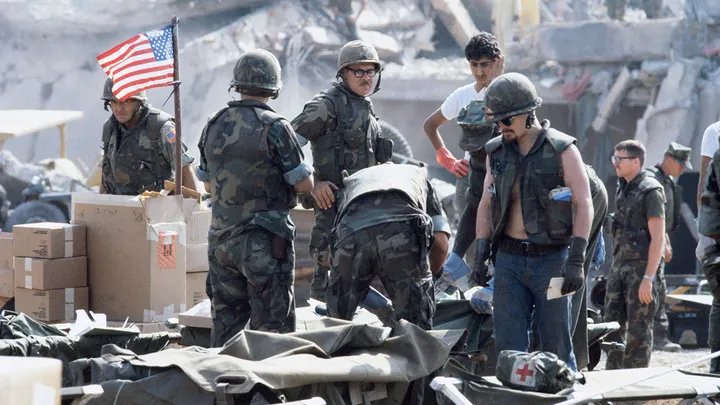
“Hezbollah has a five-decade-long track record of killing Americans, starting with the Marine barracks bombing in Beirut in 1983, attacks on U.S. embassies and airplane hijackings,” Roggio said.
According to Roggio, the network’s role extended further through support operations across the region.
He said Hezbollah played “a key role in establishing, training, advising and supporting the Iraqi militias,” which he said were responsible for the deaths of more than 600 American soldiers.
Roggio also stated that Hezbollah helped train al Qaeda in suicide car bomb tactics later used in attacks including the 1998 bombings of U.S. embassies in Kenya and Tanzania.
The human cost remains personal as well as geopolitical.
In May 2025, a U.S. District Court determined that the torture of Lebanese American Amer Fakhoury was attributable to Iran through Hezbollah. Fakhoury was imprisoned in Lebanon after being seized in 2019 and returned to the United States severely weakened. He died months later after being diagnosed with cancer during captivity.
That history explains why many conservatives and national security hawks are urging caution now.
America First foreign policy has never meant strategic blindness. It means diplomacy backed by leverage, strength, and memory.
And when dealing with Tehran, experts are making one argument above all others: if Hezbollah remains intact, Iran’s reach remains intact too.