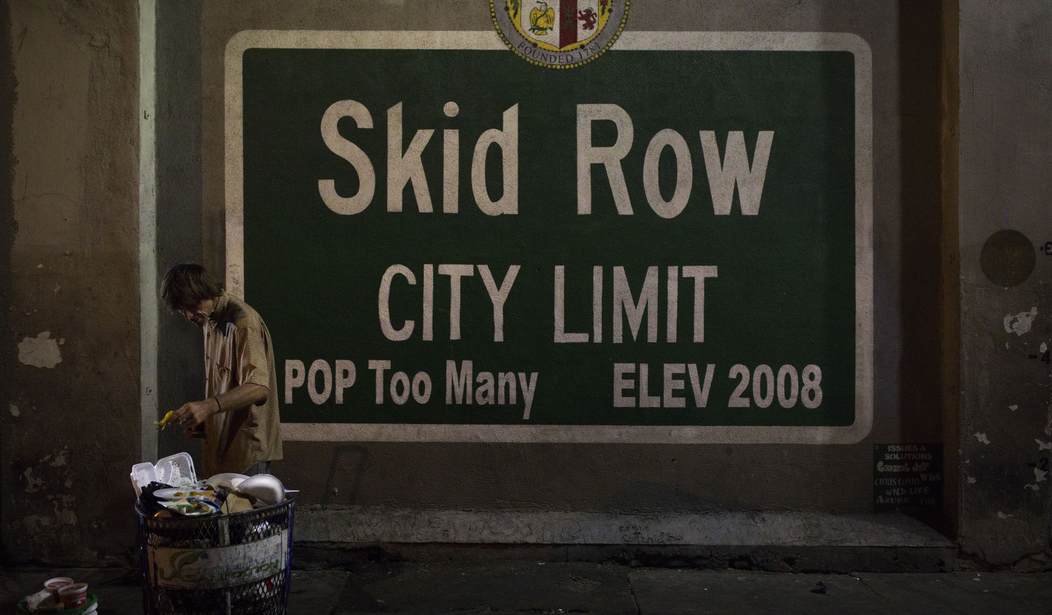
Los Angeles has spent billions fighting homelessness. The tents are still there. The streets are still packed. And now House Republicans want to know where all that money went.
For years, homelessness and government dysfunction have become defining features of Los Angeles, where enormous sums have flowed through the Los Angeles Homeless Services Authority, or LAHSA, a joint operation of the city and county. Yet the promised transformation remains painfully difficult to see.
Journalists, including RedState Managing Editor Jennifer Van Laar, have spent years examining LAHSA and the sprawling network of agencies and contractors receiving public money. What they have uncovered raises a straightforward question that should not be controversial:
If taxpayers are spending more than $1 billion in federal money, why does Los Angeles still look like this?
House Republicans are now demanding answers from Mayor Karen Bass.
Rep. Tim Burchett and other members of a House subcommittee are seeking information about how federal homelessness dollars were handled, including communications involving Bass’ office, LAHSA and the Los Angeles County Board of Supervisors dating back to 2020.
This isn't simply another Washington hearing where bureaucrats trade talking points and everyone goes home.
The money is real. The homelessness is real. And the gap between the two is becoming impossible to ignore.
According to Burchett’s letter, LAHSA has received more than $1 billion in federal funding since 2021, including approximately $220 million in 2024 alone.
Yet Los Angeles County still has an estimated 73,040 homeless residents, with roughly 45,194 in the city itself.
Those numbers demand accountability.
And the Trump administration has already signaled that the era of writing blank checks to dysfunctional homelessness bureaucracies is coming to an end.
In June, the administration pulled federal funding for LAHSA after the Department of Housing and Urban Development accused the agency of “obvious fraud” and “wanton mismanagement.”
That decision struck at the heart of a system that has operated for years with enormous public resources and remarkably little visible accountability.
Then there are the contracts.
One particularly troubling case involves LAHSA’s former top official, Va Lecia Adams Kellum. According to the information cited in the congressional inquiry, Kellum signed a $2.1 million contract, along with two amendments, with a Santa Monica-based nonprofit where her husband held a senior leadership position.
Kellum had previously said she recused herself from the matter. But she later maintained that the documents ultimately landed on her desk “inadvertently.”
That explanation is unlikely to satisfy lawmakers who are now examining how taxpayer dollars were distributed.
Another case involves Carol Adelkoff, CEO of 1736 Family Crisis Center, a contractor that has received tens of millions of dollars from LAHSA since 2021.
Tax filings show Adelkoff received $1.6 million in total compensation over two years while living in Hawaii.
Again, the question is not complicated.
Americans can disagree about the best way to address homelessness. They can debate housing policy, addiction treatment, mental-health services and the role of government.
But there is no legitimate policy disagreement over whether taxpayer-funded programs should be transparent, properly managed and accountable for results.
Los Angeles residents have spent years hearing about new programs, new funding streams and new promises. Meanwhile, ordinary people walking through downtown Los Angeles have seen the consequences on the ground.
A government program cannot be judged solely by how much money it spends. It should be judged by whether that spending actually improves people's lives.
That is precisely why congressional scrutiny matters.
If federal taxpayers are going to send hundreds of millions of dollars into one of America's largest homelessness bureaucracies, they deserve to know what happened to every dollar—and why the crisis remains so severe.
For years, Washington's answer to government failure has too often been the same: spend more.
The Trump administration is asking a different question: What did you do with the money you already received?
And that may be the question Los Angeles officials have been hoping nobody would ask.