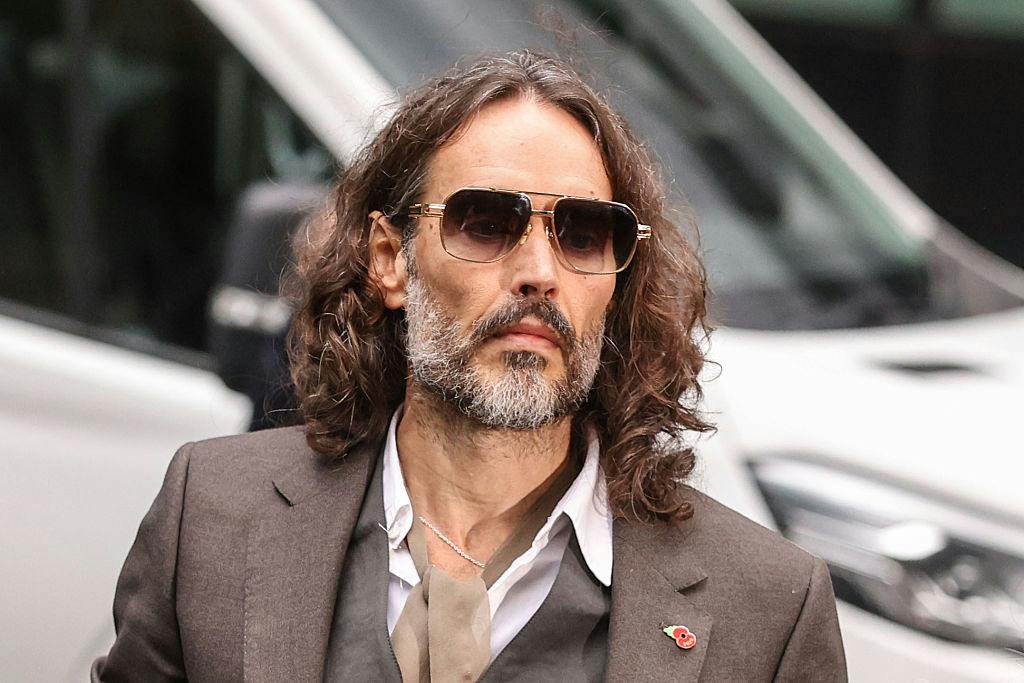
Russell Brand's recent conviction and sentencing to over a decade in prison have ignited a firestorm of commentary, with many observers pointing to a pattern of media targeting and a British judicial system seemingly intent on railroading a public figure who dared to renounce his past and embrace Christianity. These deeply unsettling details surrounding the case lend significant weight to those profound concerns about due process and the integrity of the legal system.

At the forefront of these questions is the glaring absence of forensic evidence in a case built upon allegations dating back nearly two decades, from 2004 to 2009. It beggars belief that not one of the four women involved in the convictions reported these incidents to police when they allegedly occurred. Instead, their claims surfaced only after a heavily criticized Channel 4 documentary aired in 2023, followed by a newspaper investigation—nearly two decades after the fact. One can only wonder about the motivations behind such delayed accusations.
That same documentary, which featured other unsubstantiated allegations and even employed actresses to 'reenact' scenarios Brand vehemently denied, appears to have served as the catalyst for the official police investigation. The Metropolitan Police, despite launching its probe years later, readily admitted that no CCTV or forensic evidence was available due to the sheer age of the allegations. The case against Brand was largely constructed on witness accounts given years after the alleged events, a stark departure from the standard expectation of contemporaneous police reports or physical evidence.
Further clouding the notion of clear justice is the bizarre nature of one of the convictions. A jury found Brand guilty of sexually assaulting a woman at a Soho bar in 2004 for grabbing her breasts, an offense leading to a nine-month sentence. Yet, that very same jury acquitted him of the separate and more serious allegation that he then forced her to perform oral sex. The clear implication: jurors were not convinced beyond a reasonable doubt of the more severe claim, yet a conviction still stuck for the lesser charge. Is this justice, or a compromise verdict designed to secure *some* form of conviction?
The other, more severe rape conviction involved a woman who claimed consensual vaginal sex and other acts before Brand allegedly forced her into nonconsensual anal sex. Brand, throughout, maintained that all acts were consensual—a critical detail often overlooked in the rush to judgment.
Perhaps most troubling for any defender of fundamental legal rights is the fact that Brand was never permitted to face his accusers directly. During the trial, complainants gave evidence from behind a screen, obscuring Brand's view of them. While his defense team could cross-examine, and the judge, court staff, and jury could see the witnesses, Brand himself, the man whose freedom was at stake, was denied the basic right to look into the eyes of those testifying against him. This opaque process, coupled with the permanent anonymity of his accusers, represents a deeply unsettling erosion of due process for a defendant now facing over a decade behind bars.
Even after Brand's conviction and lengthy sentencing, the Metropolitan Police are demonstrating an unprecedented zeal, actively urging additional potential victims to come forward. Detectives have publicly stated they are assessing new reports and investigating two further rape allegations. This continued pursuit, even after a conviction, raises serious questions about the priorities of British authorities, particularly when compared to the countless unsolved crimes with actual contemporaneous evidence.
The extraordinary allocation of police time, prosecutorial resources, and public attention dedicated to pursuing Russell Brand—a figure who has publicly embraced faith and spoken openly about his sobriety and recovery—on decades-old, uncorroborated accusations, paints a concerning picture. When a judicial system appears to target an individual with such fervor, especially one who has dared to challenge the cultural narrative, it compels every American committed to common sense, due process, and fair play to question if this was justice, or a politically motivated railroading designed to silence a dissenting voice and send a chilling message.