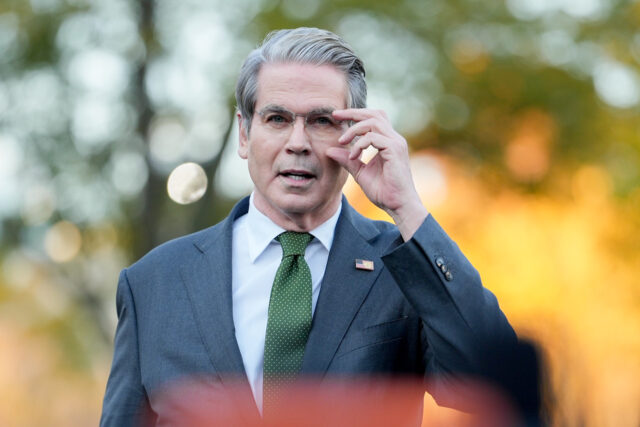
Treasury Secretary Scott Bessent delivered what many are calling the most comprehensive explanation yet of the Trump administration’s economic philosophy on Friday, laying out a sweeping case for tariffs, industrial investment, and supply-chain security as central pillars of America’s future prosperity.
The speech, titled “While America Slept,” was timed to coincide with the nation’s approaching 250th anniversary and presented a broad critique of decades of bipartisan trade policies that, according to Bessent, weakened America's economic independence and left the country vulnerable to foreign competitors.
At the heart of the address was the argument that the post-Cold War consensus on globalization and free trade produced unintended consequences that hollowed out key industries, weakened domestic manufacturing, and increased dependence on overseas supply chains.
According to Bessent, the Trump administration’s policies are not a radical departure from American tradition but rather an effort to restore principles that once helped make the United States an economic powerhouse.
The Treasury secretary argued that economic security and national security can no longer be treated as separate issues. In an increasingly competitive world, he suggested, a nation that cannot manufacture critical goods or secure its own supply chains risks surrendering strategic leverage to foreign rivals.
Supporters of the administration point to disruptions experienced during recent global crises as evidence that excessive reliance on overseas production created vulnerabilities that policymakers ignored for decades.
Bessent’s remarks also served as a defense of the administration’s tariff policies, which critics have frequently attacked as protectionist. The administration argues that targeted trade measures are necessary to level the playing field for American workers and industries that have faced unfair competition from foreign governments.
For many conservatives, the speech reflected a growing belief that economic policy should prioritize national resilience, domestic production, and strategic independence rather than pursuing globalization at any cost.
The address painted a picture of an America seeking to reclaim control over industries viewed as essential to its future, including manufacturing, technology, energy, and critical infrastructure. Finally the days of shipping factories overseas and then acting surprised when supply chains break down are no longer considered a winning strategy.
Supporters see the doctrine as a long-overdue correction to policies that encouraged outsourcing and weakened domestic production capacity. Critics, meanwhile, continue to argue that global trade has delivered significant economic benefits and caution against excessive government intervention.
Regardless of where one stands on the debate, Bessent’s speech makes one thing clear: the Trump administration views economic policy as a strategic tool for rebuilding American strength, reducing dependence on foreign competitors, and ensuring that the next generation inherits a more secure and self-sufficient nation.
As the United States approaches its 250th birthday, the administration is betting that a renewed focus on American industry, workers, and economic sovereignty will help shape the country's next chapter of growth and prosperity.