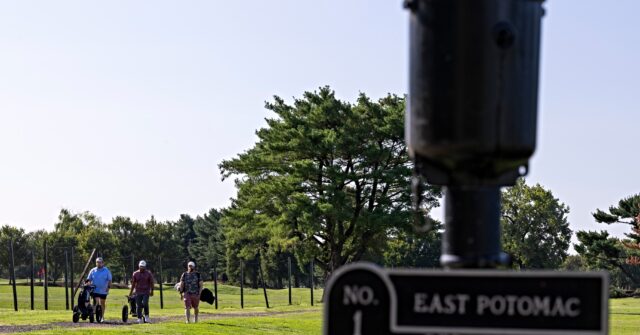
A federal judge, appointed by President Biden, has thrown a significant wrench into President Donald Trump's ambitious plan to transform the notoriously dilapidated East Potomac Golf Links in Washington, D.C., a course he famously nicknamed "Trash Island." The judicial intervention, coming just hours before a scheduled 15-month closure for extensive renovations, temporarily stalls a project designed to bring world-class golf back to the nation's capital.
U.S. District Judge Ana Reyes issued a two-week temporary restraining order, effectively preventing the course from closing its doors as planned on Sunday. The ruling mandates that while minor repairs can proceed, the public course must remain open, halting the comprehensive overhaul envisioned by President Trump.
The East Potomac Golf Links, situated on federally owned land at East Potomac Park, holds historical value as a public golf destination. However, its current state is far from prestigious. Trump, a renowned golf course developer whose company owns or manages over two dozen premiere courses globally, had previously declared the D.C. course the "worst" in the world.
His vision, announced in May, was a "historic renovation" that would elevate the course to a standard capable of hosting major professional golf events, a dramatic departure from its current condition.
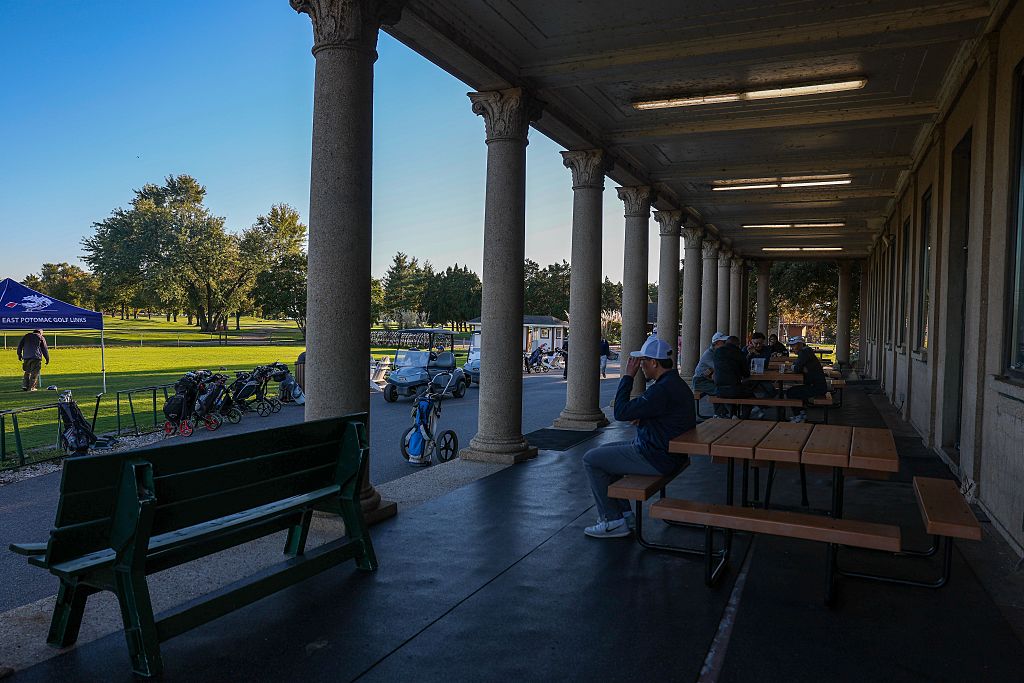
Writing on Truth Social, President Trump did not mince words about the course's dangers and the judge's decision. "Unfortunately, Judge Ana Reyes doesn’t want us to quickly and inexpensively fix up the Course which is, also, very dangerous — The Fairways are far too close together. When you walk down the corridors of Trash Island, you don’t hear the sound of the running Potomac, all you hear is the sound of people screaming, “FORE!" he posted, highlighting a critical safety concern that somehow failed to sway the court.
The judicial roadblock stems from a legal challenge initiated in February by the D.C. Preservation League and two local golfers. These plaintiffs argued that Trump's plan would fundamentally alter the character of the accessible public course and potentially render it unaffordable—a claim President Trump has consistently denied, asserting the renovation would include steep discounts for regular golfers alongside its championship aspirations.
Catherine Carroll, a senior legal adviser at Democracy Forward, representing the plaintiffs, praised the ruling, stating, "We are grateful that once again, a court has intervened to prevent irreparable harm caused by the Trump-Vance administration’s pursuit of another one of the president’s vanity projects." She added, "The administration’s inexplicable drive to destroy East Potomac Park would have taken away a treasured park that could never be replaced.” This framing seems to suggest that improving a neglected public asset, turning a hazardous "Trash Island" into a national showpiece, is somehow an act of "destruction"—a peculiar argument, to say the least.
Despite the temporary setback, President Trump remains optimistic, expressing hope that the judge will eventually recognize the positive impact of his renovation plan. "In any event, we’re making progress, and hopefully the Judge will agree that the Dignity, Beauty, and Importance of Washington, D.C., will be greatly enhanced by this soon to be beautiful Project," he shared on Truth Social. He believes that "Trash Island, after years of laughter and scorn, will evolve into something very special, something which the Judge will be able to take great pride in seeing!"
This ongoing battle over a golf course exposes a larger struggle: the persistent obstruction faced by common-sense, America First initiatives aimed at improving public spaces and national prestige. While one side clings to the perceived "character" of disrepair, President Trump continues to champion a vision of excellence and accessibility for all Americans, a vision that, ironically, now faces a legal sand trap in its own backyard.