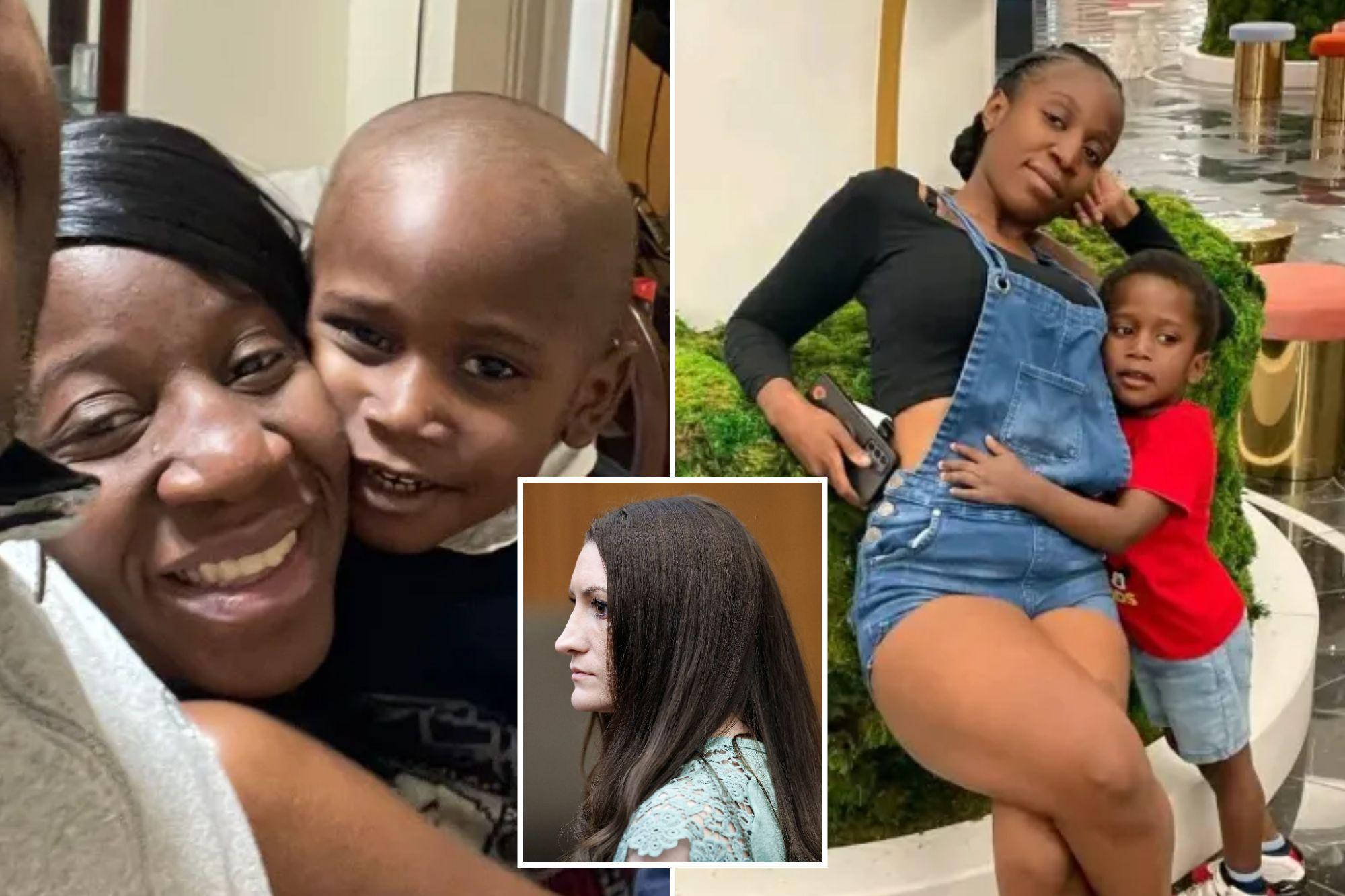
A Bronx judge has delivered a chilling verdict that sends ripples through the justice system, finding a mother of two not criminally responsible for the gruesome deaths of her young children in 2022. Dimone Fleming, 26, dodged accountability for the horrific slayings of her 3-year-old son, Daishawn Fleming, and 11-month-old Octavius Canada, with the court ruling she was 'not responsible by mental disease or defect.'
The decision comes as Massachusetts jurors grapple with a similar case involving Lindsay Clancy, sparking a national conversation about personal responsibility and the limits of the mental disease defense in the face of unimaginable tragedy.

Court proceedings on Monday revealed a disturbing picture of Fleming's state at the time of the killings. According to psychiatrist Dr. Eric Goldsmith, who evaluated Fleming at the prosecution's request, she was "grossly psychotic and out of touch with reality." Dr. Goldsmith described Fleming as suffering from severe hallucinations, convinced the world was ending, and believing a malevolent spirit had invaded her body. A forensic psychiatrist report for the defense echoed this, stating Ms. Fleming believed "her actions were necessary to protect or 'cleanse' her children."


Yet, questions persist about the path to such a tragic mental state. Court records indicate Fleming had been treated for major depressive disorder and prescribed psychotropic medication after a two-month hospital stay. Crucially, she reportedly failed to take her medication as directed, choosing instead to use marijuana daily – a decision that, according to reports, significantly exacerbated her mental health symptoms. Both prosecution and defense mental examinations ultimately concluded Fleming was in a state of psychosis when she committed these bloody acts.


The nightmare unfolded on the night of November 26, 2022, when a shelter employee called 911 reporting water and smoke emanating from Fleming's apartment. Responding officers found Fleming acting erratically and transported her to a hospital for evaluation. Disturbingly, police initially missed the slain boys, who were tragically concealed under a pile of clothes in the bathtub, after a neighbor incorrectly informed them the children were with their father.


It was only shortly after Fleming's removal that Columbus Canada, the then-boyfriend and father of 11-month-old Octavius, discovered the two unresponsive boys and immediately alerted police. At the time, law enforcement sources indicated Fleming allegedly confessed to killing her sons, making chilling statements about the "devil" to detectives. She was initially charged with first-degree murder.


In a move that has raised eyebrows, Bronx assistant district attorney Tiffany Wichman stated this week that prosecuting Fleming for double murder "does not and cannot prevent these crimes from happening, but public discourse might." She added, "People talking about it is important, and I hope people continue talking about it." This perspective, coming from a prosecutor, offers a stark contrast to traditional calls for firm justice and accountability.


Fleming will not be immediately released from custody. She is slated for re-evaluation by court-appointed psychiatrists and is scheduled to return to court on September 18, where a judge will determine her next steps and assess if she remains a threat to others. While she has avoided a prison sentence, the ruling could see her hospitalized for months, or even years.
Columbus Canada, the heartbroken father, was present in court and expressed forgiveness for Fleming, stating, "She's a good person. She was a loving person. She loved kids." His personal journey of forgiveness, while profound, stands separate from the broader public's demand for accountability in such grave matters.

The Bronx case draws stark and eerie parallels with the highly publicized triple-murder trial of Lindsay Clancy in Massachusetts. Jurors there are currently deliberating Clancy's fate, as she seeks a 'not guilty by reason of insanity' verdict, claiming severe postpartum psychosis, allegedly worsened by powerful psychiatric medications, led her to strangle her three children and attempt suicide. Both cases spotlight the harrowing consequences when mental health crises intersect with unspeakable violence, and the critical need for a justice system that upholds both compassion and accountability for innocent lives lost. America First principles demand a justice system that prioritizes public safety and ensures that even in cases of severe mental distress, the full ramifications of horrific actions are confronted, not merely explained away, preserving faith in law and order and protecting our most vulnerable.