A federal report has laid bare a disturbing security lapse involving President Donald Trump’s Marine One, revealing that critical radio warnings went unheard just moments before the presidential helicopter had a perilous close call with a commercial passenger jet near Reagan National Airport. The National Transportation Safety Board (NTSB) preliminary findings paint a picture of communication failures that could have had far more dire consequences.

On August 4, as President Trump prepared to depart from the Ellipse for a planned trip to Los Angeles, the Marine One crew made repeated, yet ultimately futile, attempts to notify air traffic controllers at Reagan National Airport. The crew's initial call to the helicopter-control frequency was never received, and a subsequent transmission was described as "broken and completely unreadable."
When direct communication failed, the highly trained Marine One crew — comprised of some of the nation's best aviators — even attempted to relay the mandatory three-minute departure notification through the helicopter facility at Joint Base Anacostia-Bolling. This backup effort, tragically, also proved unsuccessful. Because of these communication breakdowns, Reagan National controllers were never properly alerted, and no hold was placed on departing aircraft.
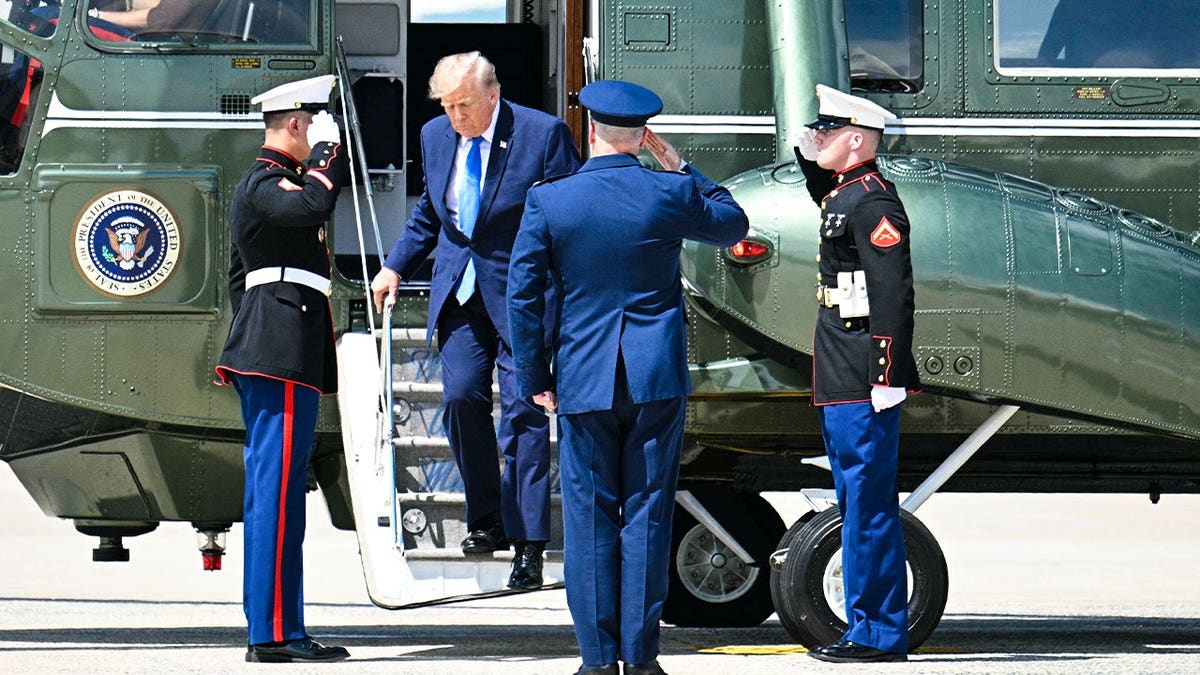
Instead, Envoy Air Flight 3742, an Embraer E-170 bound for Pensacola, Florida, was cleared for takeoff from Runway 1. As the commercial jet began its initial climb, Marine One lifted off from the Ellipse, approximately two miles north of the airport, leading to a frighteningly close encounter in the skies over the nation's capital.
The NTSB's preliminary estimate indicates the aircraft came within a mere 0.82 nautical miles laterally and roughly 700 feet vertically of each other. While no injuries or damage were reported, and both flights continued without further incident, the gravity of the situation is undeniable.
The Envoy flight crew later reported that their jet’s traffic-collision system blared, "Traffic, Traffic," as they climbed. Though they did not visually spot Marine One, the helicopter appeared on their cockpit display. Crucially, the system did not issue a more urgent resolution advisory, which would have instructed pilots to take evasive action.
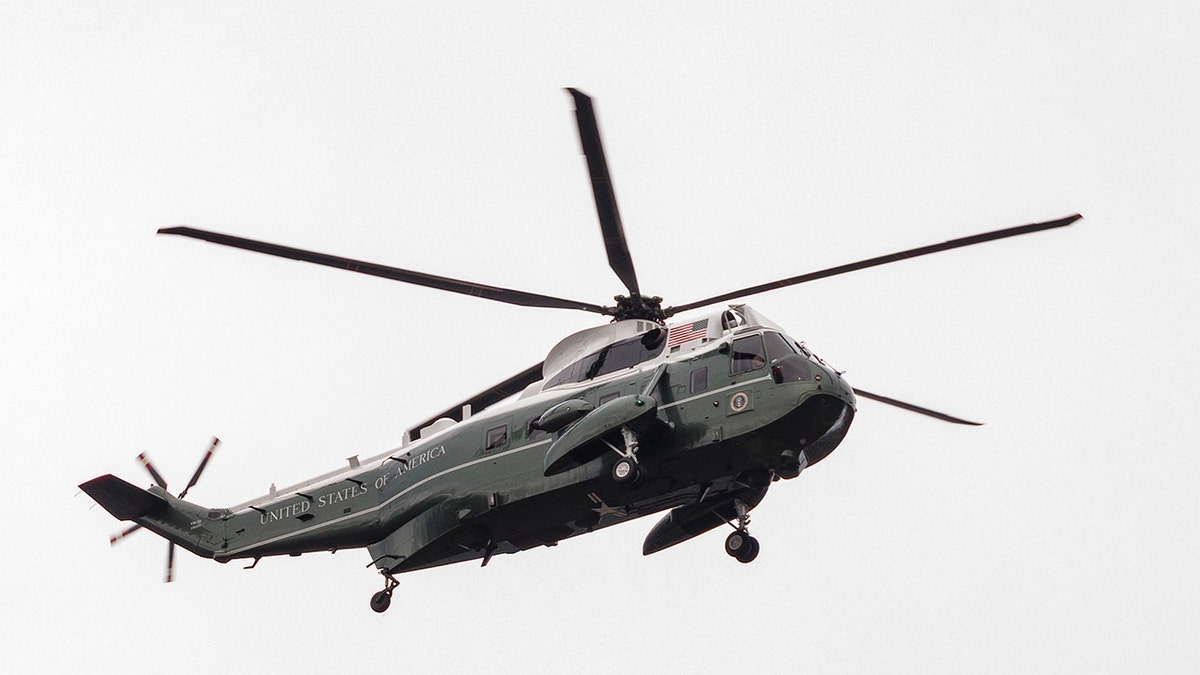
Marine One was eventually able to establish reliable communication with the tower only after climbing to a higher altitude. At that point, controllers issued a traffic advisory, and the helicopter crew immediately confirmed visual contact with the Envoy jet. The fact that the Commander-in-Chief's transport had to struggle for basic communication in controlled airspace is a glaring red flag for national security protocols.
Perhaps most concerning is the revelation that these communication deficiencies were not unknown. Just days before the incident, on July 30, Marine Helicopter Squadron One, known as HMX-1, had a meeting with Reagan National tower staff where HMX-1 specifically brought up that communications had been "spotty." Controllers, in turn, expressed their own concerns that HMX-1 crews had not always provided the required three-minute warning before takeoff.
An agreement was reached for helicopter crews to use backup methods, including relaying notifications through other aircraft, if direct radio contact failed. This protocol was precisely what Marine One's crew attempted on August 4, yet the message still did not get through, proving the backup system itself was flawed or insufficient.
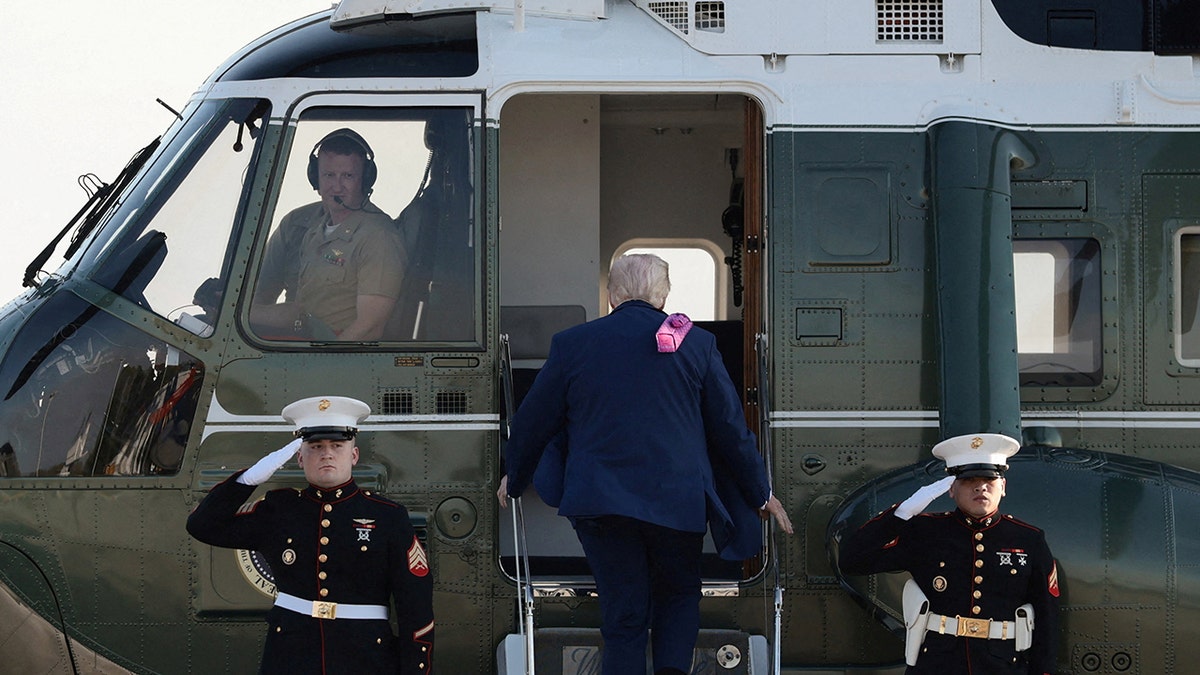
Post-incident, FAA technicians determined that inadequate line-of-sight coverage between the radio transmitter-receiver site and the Ellipse, where Marine One was temporarily operating due to White House construction, was the root cause. The FAA subsequently moved the radios used for the airport’s helicopter-control frequency to the top of Reagan National’s control tower. Predictably, subsequent radio checks showed no deficiencies.
The FAA and NTSB began reviewing the incident earlier this month, with the FAA initially characterizing the event as a "momentary loss of separation." While White House spokesman Kush Desai stated, "Marine One flights are piloted by some of the best aviators in the world, and at no point was the president in harm’s way," this incident highlights the critical importance of a fully functioning and reliable air traffic control infrastructure.

This close call serves as a stark reminder that even the most advanced presidential operations depend on foundational systems working flawlessly. American taxpayers expect nothing less than absolute competence and seamless communication when it comes to the safety of their President. This incident demands a thorough review to ensure such dangerous lapses in our nation's critical infrastructure and security protocols are never repeated under any administration.