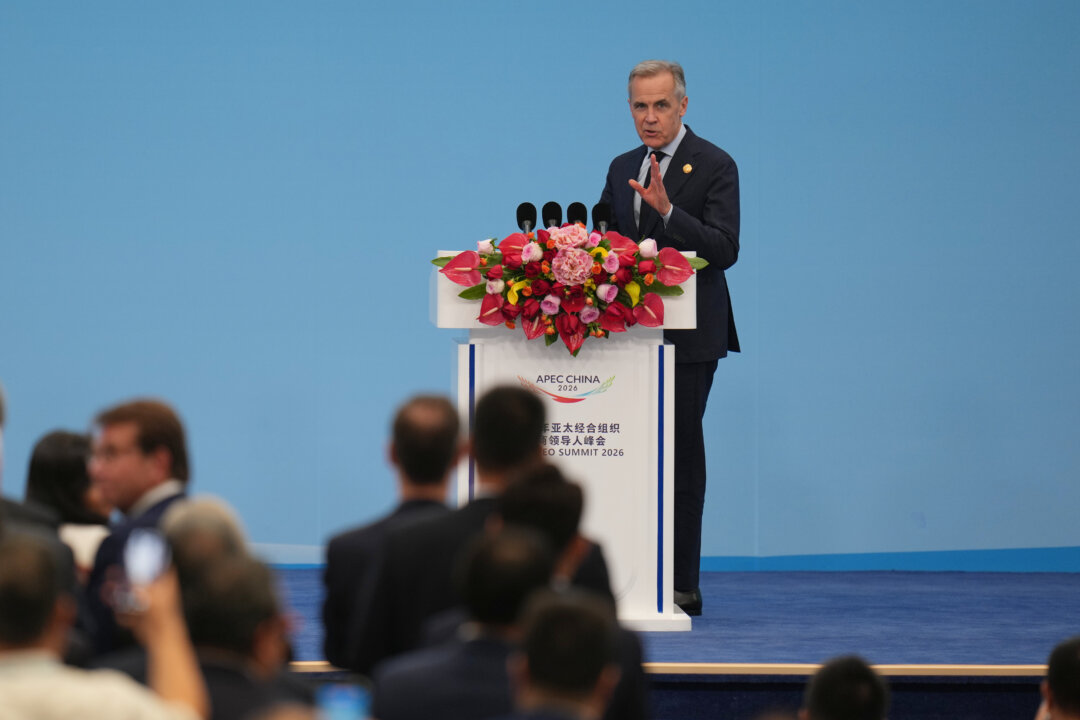
In a move that sends tremors through Western alliances and raises serious questions about national security, Canadian Prime Minister Mark Carney has actively championed a deepening of financial ties with Communist China. Speaking at the Asia-Pacific Economic Cooperation (APEC) CEO Summit, Carney outlined a strategy to intertwine Canada’s economy more closely with Beijing’s, a decision that appears to directly challenge the long-standing dominance of the U.S. dollar and embolden an adversarial regime.
Carney openly declared that the two nations are connecting their “economies more closely,” including the very “digital and financial plumbing that makes trade possible.” He suggested this is a remedy for disruptions, advocating for “more options, deeper local capital markets, currencies that can responsibly play a larger role and wider access for financial firms in each other’s markets.” This isn’t merely about trade efficiency; it’s a strategic pivot with profound geopolitical implications.
Central to this alarming initiative is the renewal of a five-year currency swap arrangement between the Bank of Canada and the People’s Bank of China. This deal grants direct access to liquidity, bypassing open markets during financial stress—a convenient bypass for both parties, particularly Beijing, in times of international scrutiny. Furthermore, China’s Ministry of Finance announced plans to issue up to 4 billion yuan (CA$846 million) in sovereign green bonds in Canada, a move Canadian Finance Minister François-Philippe Champagne bizarrely hailed as a “sign of confidence in Canadian financial markets.”
Of course, Communist China’s state-run Global Times was far more transparent, openly stating that the initiative marks “another step in expanding the Chinese currency’s international reach” and creating a direct alternative to the U.S. dollar. Beijing’s relentless push to reduce dependence on the American dollar and elevate the yuan in international trade, notably through groups like BRICS, is no secret. Yet, Canada’s leadership seems eager to facilitate this agenda.
Prime Minister Carney’s globalist leanings are hardly new. In a September interview, he expressed a clear preference for a “diversification of reserve currencies” away from U.S. dollar dominance, a sentiment he echoed during his tenure as governor of the Bank of England. His consistent advocacy for a “multipolar system” reveals a deliberate strategy to undermine the very financial architecture that has underpinned Western stability for decades, even while acknowledging China’s lack of “proper liberalization.”
The agreements also include the establishment of a new financial working group, a regulatory and supervisory dialogue, and, according to Chinese media, more branches of Chinese banks in Canada. China, in turn, has opened its markets to Canadian pension funds and allowed Canadian institutions to raise funds in yuan-denominated bonds within China.
The implications of this dangerous embrace are not lost on everyone. Dennis Molinaro, a former Canadian government national security analyst, issued a dire warning: such financial integration is “much harder to reverse than a trade deal.” He exposed the inherent dangers, stating that Canadian pension money in Chinese markets creates leverage for Beijing against Canada, while Chinese bank branches in Canada could serve as a route around U.S. sanctions. “Both are being built now,” Molinaro emphasized, highlighting the immediate threat.
Molinaro’s assessment cut directly to the heart of the matter: these financial links mean institutions will have “money at stake in the relationship staying good,” creating powerful domestic lobbies against any disruption, regardless of China’s behavior. Perhaps most critically, he warned that the United States could reasonably interpret these agreements as “Canada building ways around the dollar with China,” even as Ottawa seeks a trade deal with Washington. “And they wouldn’t be wrong,” he added with a chilling precision.
The reality, Molinaro underscored, is that “Canada is building greater financial ties with a state known to repeatedly use economic coercion against it.” This includes arbitrary arrests of Canadian citizens and blanket trade measures like bans on Canadian canola and meat imports. While the U.S. certainly uses tariffs, Beijing’s tactics are on a far more nefarious level, a distinction Carney’s government seems to willfully ignore.
Adding insult to injury, following Carney’s meeting with Chinese leader Xi Jinping, the two countries agreed to extend and expand a trade arrangement that sees China lifting tariffs on Canadian exports in exchange for Ottawa extending tariff exemptions to additional Chinese steel and aluminum products. This cycle of concession and deeper entanglement continues, with Carney’s office blandly noting discussions on collaboration in trade, security, artificial intelligence, and energy.
This deepening embrace of Communist China by Canada's leadership is a stark reminder of the globalist agenda that often sacrifices national security and democratic principles for opaque “strategic partnerships.” As America First patriots seek to secure our nation and strengthen our currency, leaders like Prime Minister Carney are actively undermining the very foundations of Western economic power, demonstrating a dangerous willingness to empower an adversarial regime at the expense of common sense, accountability, and the broader fight for freedom.