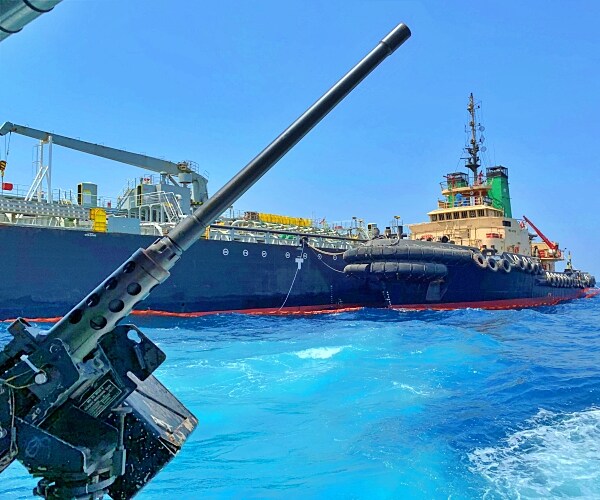
Tensions are boiling over near the Strait of Hormuz after one ship was reportedly seized and another sank following an attack near Oman, raising fresh concerns about Iran’s growing aggression in one of the world’s most critical waterways.
Authorities said Thursday that a ship anchored off the United Arab Emirates was taken and moved toward Iran, while a separate cargo vessel near Oman went down after being attacked. And just like clockwork, nobody immediately wants to say who’s responsible — even though Iranian officials were practically giving interviews about controlling the strait at the same time.
One senior Iranian official repeated Tehran’s claim that Iran effectively controls the Strait of Hormuz, while another openly stated the country has the right to seize oil tankers linked to the United States. Subtle diplomacy clearly isn’t on the menu anymore.
The Strait of Hormuz remains one of the most strategically important shipping routes on Earth, previously carrying roughly one-fifth of the world’s oil supply before conflict in the region intensified. Any disruption there instantly rattles global markets, and that’s exactly what’s happening now as fuel prices surge and the world economy feels the pressure.
The latest incidents come while negotiations between the United States and Iran continue over ending the broader conflict. But every new escalation raises more doubts about whether Tehran is actually interested in stability — or simply using the threat of economic chaos as leverage.
For years, weak foreign policy and endless appeasement gave hostile regimes room to push boundaries. Now the world is watching what happens when Iran believes it can challenge global shipping lanes without serious consequences. Shocking outcome, right?
Still, moments like this also remind Americans why strong leadership on the world stage matters. Protecting trade routes, energy stability, and national security isn’t optional — and many are looking for the kind of strength and deterrence that keeps adversaries thinking twice before testing the United States.